x

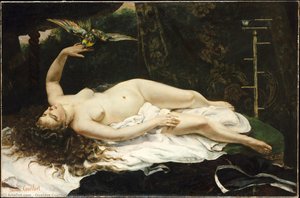
 1880
1880 83.0 x 134.0 cm
Köp en högupplöst, förbättrad digital bild med betydligt högre kvalitet än förhandsvisningen online.
Varje fil är noggrant förberedd av våra interna specialister med hjälp av avancerade verktyg och professionell manuell retuschering. Vi säkerställer att varje bild har exceptionell skärpa, exakt färgåtergivning och fina detaljer.
Den slutgiltiga filen levereras via e-post inom 72 timmar, optimerad för omedelbar användning i professionella sammanhang, redaktionellt bruk och tryckmiljöer. Detta är samma kvalitet som med förtroende används av ledande designstudior, förlag och gallerier.
Ladda ner en högupplöst fil för personlig visning, utskrift och kreativa projekt. ( Beställ tryck Beställ handmålad reproduktion)
När du väljer Most-Famous-Paintings.com får du inte bara en bild – du får ett professionellt förädlat digitalt konstverk, skapat med precision och med en garanterad tillfredsställelse. Här är allt som ingår i din beställning, automatiskt:

Din högupplösta digitala bild skickas till dig via e-post inom 72 timmar efter beställning – redo för omedelbar användning.

Ditt konstverk optimeras professionellt med hjälp av avancerade AI-verktyg och manuell redigering, vilket garanterar maximal detaljrikedom, skärpa och färgnoggrannhet.

Har du råkat radera eller tappa bort din fil? Ingen oro – vi skickar den kostnadsfritt till dig när som helst.

Njut av ditt konstverk omedelbart utan tull, importavgifter eller leveranskostnader – digitala nedladdningar är alltid skattefria.

Vi säkerställer att din digitala bild återger de ursprungliga färgerna så exakt som möjligt med hjälp av professionella verktyg och färghantering.

Om du inte är nöjd med din digitala bild kommer vi att revidera den eller återbetala 100% inom 60 dagar – utan frågor.

Inte nöjd? Få full återbetalning inom 60 dagar efter att du har tagit emot din digitala fil – utan frågor och diskussioner.

Köp 3 bilder, spara 10% – Köp 5, spara 15% – Köp 10+, spara 20%. Perfekt för kreativa projekt, gallerier och byråer.

The story of Sarah Biffin (1784-1850) is a remarkable testament to resilience, ingenuity, and the enduring human spirit. Born without arms or legs in Somerset, England, she defied societal expectations and established herself as a respected miniaturist artist during a period when opportunities for disabled individuals were severely limited. Her life was one of quiet determination, marked by both hardship and surprising success, offering a poignant glimpse into the realities faced by those marginalized by disability in the early 19th century.
Biffin’s early years were shaped by her family's circumstances as laborers. While details about her childhood are scarce, it is understood that she received minimal formal education. However, her parents recognized her artistic talent and provided her with basic instruction in sewing and drawing – skills crucial to her later career. The spectacle of a disabled woman engaging in skilled craftwork was undoubtedly a novelty at the time, and Biffin’s family capitalized on this by presenting her as a ‘curiosity’ at Bartholomew Fair, a popular traveling fair held annually in London. This arrangement, while providing some income, also exposed her to public scrutiny and potentially limited her artistic development.
A pivotal moment in Biffin's life was her encounter with Emmanuel Dukes, a showman who specialized in exhibiting unusual individuals at fairs. Dukes recognized her potential as an artist and took her under his wing, providing her with more structured instruction and securing commissions. He effectively transformed her from a curiosity into a professional artist, arranging exhibitions of her miniature portraits – primarily of members of the British royal family and the aristocracy. This association proved to be both beneficial and challenging; while it provided financial stability and artistic training, it also involved considerable public attention and potentially exploited her disability.
Biffin’s style in her miniatures was characterized by a delicate realism and an impressive level of detail. She meticulously rendered fabrics, jewelry, and facial features, demonstrating a keen eye for observation and skillful technique. Her portraits often featured a formal, elegant pose, reflecting the conventions of miniature portraiture at the time. Notably, she frequently depicted herself in her work, offering a rare and intimate portrayal of a disabled woman navigating societal expectations. These self-portraits are particularly significant as they provide valuable insights into her identity and perspective.
Beyond her commissions, Biffin also engaged in teaching and demonstrated her artistic skills at fairs. Her presence at Bartholomew Fair was a regular event, attracting considerable attention and solidifying her reputation as a talented artist. The fair itself was a vibrant and chaotic spectacle, filled with performers, vendors, and curiosities – an environment that likely shaped her artistic sensibilities and understanding of public perception. The experience is vividly described by Thomas Rowlandson in his 1799 etching, *Bartholomew Fair*, which captures the energy and eccentricity of the event.
While Biffin’s work predates the formal establishment of major art movements like Romanticism and the Pre-Raphaelite Brotherhood, her career unfolded during a period of significant artistic innovation. The burgeoning interest in landscape painting, particularly within the Romantic movement, influenced artists to seek beauty and emotion in nature – a theme frequently explored in Biffin’s portraits, often depicting subjects in natural settings or wearing clothing that reflected the latest fashions.
The Pre-Raphaelite Brotherhood, founded in 1848, challenged academic artistic conventions by advocating for a return to the style and subject matter of Renaissance art. Biffin's work shares some stylistic similarities with the Pre-Raphaelites, particularly in her attention to detail and realistic depiction of fabrics and textures. Her portraits often evoke a sense of intimacy and emotional depth, qualities that resonated with the movement’s emphasis on sincerity and beauty.
Furthermore, Biffin's story itself aligns with broader themes explored by Romantic artists – the celebration of individual resilience, the exploration of human experience, and the questioning of societal norms. Her ability to overcome physical limitations and pursue a career as an artist serves as a powerful example of human potential and determination.
Biffin’s miniature portraits were executed primarily in watercolor on ivory or paper. The use of ivory provided a smooth, reflective surface ideal for capturing the delicate details of fabrics and skin tones. Watercolor allowed her to achieve subtle gradations of color and create a luminous effect. She employed fine brushes and meticulous layering techniques to build up the image gradually, achieving remarkable precision and realism.
Her process involved careful observation of her subjects, as well as an understanding of anatomy and perspective. She likely used sketches and studies to plan her compositions and ensure accuracy. The miniature format demanded a high degree of skill and control, requiring Biffin to work with small details and limited space. Her ability to master these challenges speaks volumes about her talent and dedication.
The materials she utilized—ivory, watercolor, fine brushes—were all indicative of the upper-class clientele she served, reflecting the status and wealth of those who commissioned her portraits. The choice of ivory, in particular, suggests a level of sophistication and refinement in her artistic practice.
Sarah Biffin’s legacy extends beyond her artistic achievements. Her story is one of remarkable perseverance in the face of adversity – a disabled woman who defied societal expectations and established herself as a successful artist. She represents a largely overlooked figure in art history, whose contributions have been historically marginalized due to her disability.
Her portraits offer valuable insights into the social and cultural attitudes towards disability in the 19th century. While she was often presented as a ‘curiosity,’ Biffin’s work reveals a complex relationship between public fascination and artistic recognition. Her self-portraits, in particular, provide a powerful testament to her identity and agency.
Today, Sarah Biffin is increasingly recognized for her talent and resilience. Her works are housed in museums and private collections around the world, serving as reminders of her extraordinary life and artistic legacy. Her story continues to inspire and challenge us to reconsider our understanding of disability, art, and the power of human potential.

1850 - 1906


Håll dig uppdaterad med de senaste konstnyheterna, exklusiva erbjudanden och inredningsidéer.
Berätta om ditt projekt så kommer våra konstexperter att ge dig 3 personliga konstförslag.
Vi skapar ett urval av 3 alternativ helt anpassat för dig – gratis!


 Förhandsvisa
 Skicka
 Dela
Dela
 Visa detaljer

 Ladda ner
 Liknande objekt
 Röntgen
 Bildspel
 Visa mer