Sanatınızı Satın
İstek Listesi Alışveriş Sepeti Cart
Önizleme yapÖnizleme yap AR ile önizleAR ile önizle Baskıya Geç Baskıya GeçGörsele Geç Görsele Geç PaylaşPaylaş
Detayları GörDetayları Gör Favorilere ekle Favorilere ekle İndirİndir Benzerlerini görBenzerlerini gör X-IşınıX-Işını Slayt GösterisiSlayt Gösterisi

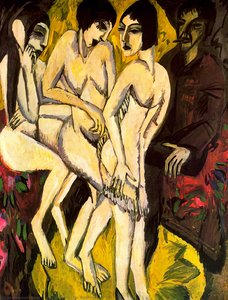
Coffee Table

Experience the vibrant emotional intensity of Ernst Ludwig Kirchner's 1923 Expressionist masterpiece Coffee Table, a soulful depiction of intimate connection that invites you to bring this timeless moment into your home.

Ernst Ludwig Kirchner (1880-1938): Alman Ekspresyonizminin önde gelen ismi ve Die Brücke grubunun kurucu üyesiydi. Şehrin atmosferini, insan figürünü çarpıcı renklerle ve duygusal ifadelerle yakalayan eserleriyle sanat tarihine geçti.

El Yapımı Yağlı Boya Reproduksiyon

Sanatçılarımız tarafından sipariş üzerine hazırlanan; istediğiniz boyut ve çerçevede, tuval üzerine el boyaması yağlı boya. (Baskıya Geç Baskıya GeçGörsele Geç Görsele Geç)

P118B $10
P118H $10
P118W $10
P438Z $10
P508JH $12
P508YH $12
P805H $10
P805Z $10
P919BZ $10
P919G $10
P919XJ $10
P959ZH $10
P968JZ $12
W106C $8
W218G $10
W218JH $8
W218Y $10
W307PJ $10
W316G $10
W316PJ $8
W316Y $10
W398PJ $8
W4111J $10
W500HY $15
W500JH $15
W692G $12
W849H $8
W940BG $15
W953PJ $8

Standard
custom
CM
INCH

Eserin orijinal oranlarıyla uyumlu, önceden belirlenmiş boyutlarımız arasından seçim yapın.

genişlik
yükseklik

Belirli bir çerçeveye veya alana uyması için kendi boyutlarınızı girebilirsiniz. Seçtiğiniz boyut orijinal görüntünün oranlarıyla eşleşmiyorsa, sanat eserini kırparak veya ek el boyaması öğelerle resmi uzatarak ayarlayacağız. Üretim başlamadan önce onayınız için dijital bir taslak gönderilecektir.
Lütfen ekrandaki önizlemenin gerçek kırpmayı veya uzatmayı yansıtmadığını unutmayın. Nihai kompozisyonu yalnızca hazırlanan taslak doğru şekilde gösterecektir.
Özel boyutlar mevcut olsa da, orijinal oranları korumak adına önceden tanımlanmış listeden bir boyut seçmenizi öneririz.

Değiştirilebilecek örneklere dair: Yüzün müşteri fotoğrafıyla değiştirilmesi; Evcil hayvan eklenmesi (örneğin kedinin köpek ile değiştirilmesi); Arka plana gizli bir mesaj dahil edilmesi; Arka plan manzarasının veya öğelerinin değiştirilmesi.
Siparişten sonra, Most-Famous-Paintings.com ekibi talimatlar için müşteriye e-posta gönderecek ve bir taslak önizleme sunacaktır

Dünya Çapında Teslimat (); standart 5 hafta yerine 3/4 haftada. (3 Ağustos). Kaliteden ödün verilmez.

why_choose_icon
Dünya Çapında Ücretsiz Ekspres Kargo
why_choose_icon
Yüksek Kaliteli Keten Tuval
why_choose_icon
Tam Kapsamlı Nakliye Sigortası
why_choose_icon
Gümrük Vergisi İade Garantisi
why_choose_icon
Gerçek Renk Uyumu Garantisi
why_choose_icon
60 Günlük İade Politikası (Sadece Kusurlu Ürünler İçin)
why_choose_icon
%100 Para İade Garantisi
why_choose_icon
Toplu Alım İndirimi

Toplam Fiyat

$ 272

reproduction

Coffee Table

Reproduksiyon Tekniği

Reproduksiyon Boyutu

-

Toplam Tutar

$ 272

Hızlı Bilgiler

  • Subject or theme: Interior Scene
  • Artist: Ernst Ludwig Kirchner
  • Influences: Dürer
  • Title: Coffee Table
  • Artistic style: Bold brushstrokes
  • Notable elements or techniques: Figural relief, Color palette

Sanat Bilgisi Testi

Her soru için yalnızca bir doğru cevap bulunmaktadır.

Soru 1:
What artistic movement is Ernst Ludwig Kirchner’s ‘Coffee Table’ associated with?
Soru 2:
According to Kirchner, what makes 'Coffee Table' particularly noteworthy?
Soru 3:
Who were the guests depicted in ‘Coffee Table’, and where was Kirchner residing at the time?
Soru 4:
Kirchner’s furniture designs reflect his broader artistic interests. What other art forms did Kirchner explore alongside painting?
Soru 5:
What is notable about the chair featured in ‘Coffee Table’?

Eser Açıklaması

A Moment Frozen in Expressionist Color

Ernst Ludwig Kirchner’s “Coffee Table” is far more than a mere depiction of an interior scene; it is a distilled essence of the anxieties and profound complexities inherent in German Expressionism. Painted circa 1923, during a pivotal period when Kirchner had relocated to Davos alongside his wife, Erna Schilling, the artwork captures a snapshot of daily life infused with deep psychological resonance. The painting invites us into a modest restaurant setting, where a dining table is occupied by six individuals—including the artist himself and his wife—whose identities remain deliberately obscured. This ambiguity fosters a sense of quiet contemplation, allowing the viewer to peer into the unspoken dialogues and inner lives of these figures as they exist within a shared, yet deeply personal, moment.

The composition unfolds with a meticulous eye for detail that balances domestic intimacy with artistic tension. One can almost feel the weight of the atmosphere through the rendering of cups brimming with drink, plates laden with food, and cutlery arranged with purposeful precision. Yet, Kirchner’s true focus lies not in these tangible objects, but in the human presence itself. The figures are positioned in close proximity, their arrangement conveying a sense of closeness that is simultaneously interrupted by an underlying tension. This duality makes the piece particularly captivating for collectors who appreciate art that offers both aesthetic beauty and intellectual depth.

The Vibrancy of Technique and Style

Kirchner’s signature Expressionist style dominates every inch of the canvas, creating a textured surface that seems to vibrate with its own internal energy. His use of bold, rhythmic brushstrokes is characteristic of the movement, rejecting the polished perfection of academic idealism in favor of a raw, emotive truth. The color palette is masterfully balanced; while it favors earthy, grounded tones, these are punctuated by sudden, brilliant splashes of vibrant reds and yellows. This deliberate use of color mirrors the emotional intensity of the scene, transforming a simple meal into a luminous event that commands attention.

For interior designers and lovers of fine art, the technical brilliance of this piece offers incredible versatility. The painting’s ability to harmonize muted, sophisticated tones with energetic highlights allows it to serve as a powerful focal point in a variety of modern settings. Whether placed in a minimalist gallery-style room or a more textured, eclectic space, a high-quality reproduction of “Coffee Table” brings a sense of historical gravity and artistic vitality to any wall.

Historical Resonance and Symbolic Depth

To understand the emotional impact of this work, one must look toward the historical context of post-World War I Germany. The era was defined by a pervasive sense of disillusionment and a search for meaning amidst reconstruction. Kirchner and his contemporaries sought to confront uncomfortable truths about the human experience, using art as a vessel for expressing inner turmoil. Within this piece, the inclusion of a carved bench frame bearing a figural relief of a mother and child serves as a poignant symbol of maternal care and stability amidst the pervasive anxieties of the time. This motif aligns perfectly with the broader Expressionist exploration of familial bonds and the vulnerability of life.

Ultimately, “Coffee Table” is an invitation to join the conversation. It captures a moment of intimate familiarity and serene tranquility that, despite its underlying tension, remains profoundly inviting. For those seeking to adorn their homes with a piece that speaks of history, emotion, and the enduring beauty of the human spirit, this masterpiece stands as a timeless choice. Owning a reproduction of such a significant work allows one to bring a fragment of the German Expressionist soul into the contemporary living space, fostering an environment of constant inspiration and reflection.
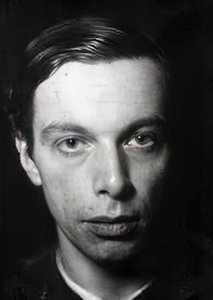

Sanatçı Özgeçmişi

Ernst Ludwig Kirchner (1880-1938): A Life Forged in Expression

Ernst Ludwig Kirchner, a name inextricably linked to the visceral heart of German Expressionism, emerged from a period brimming with transformative upheaval—a genesis marked by displacement and fueled by an unwavering artistic conviction. His birth in Aschaffenburg, Bavaria, in 1880, initiated a journey profoundly shaped by familial circumstance and imbued with an early awareness of societal shifts. The landscapes of his formative years – dictated largely by his father’s profession as a paper scientist— instilled within him a sense of detachment that would become a recurring motif throughout his oeuvre, informing not only his subject matter but also the very essence of his artistic vision. From Frankfurt to Perlen, and ultimately settling in Chemnitz, Kirchner absorbed the anxieties inherent in Germany's accelerating modernization, immersing himself in an intellectual milieu characterized by fervent debate regarding artistic direction and social reform. Despite initial inclinations toward architecture at Königliche Technische Hochschule Dresden—a pursuit that provided him with foundational technical skills alongside exposure to humanist ideals—it was painting, driven by admiration for masters like Albrecht Dürer and a resolute rejection of academic formalism, that cemented his artistic path. He found kinship amongst fellow rebels – Fritz Bleyl, Karl Schmidt-Rottluff, Erich Heckel – forging bonds that irrevocably altered the trajectory of 20th-century art.

Early Life and Artistic Formation

Kirchner’s childhood was marked by frequent relocations due to his father's career demands, fostering a sensitivity to change and observation—qualities that would translate into meticulous detail in his paintings. He attended schools in Frankfurt and Perlen until securing the prestigious professorship at Chemnitz College of Technology, where he honed his artistic skills alongside kindred spirits who shared a radical worldview. This formative period witnessed the blossoming of his intellectual curiosity and cemented his commitment to exploring new artistic horizons—a pursuit that would culminate in his enrollment at Dresden’s Hochschule für Bildende Künste (Royal Academy of Fine Arts), where he studied architecture alongside fellow Expressionist pioneers. However, it was not architectural design alone that captivated him; rather, the intensive study of drawing and painting—particularly life drawing—provided him with invaluable techniques for capturing human form and emotion. His early artistic explorations were profoundly influenced by the works of Dürer and Rembrandt, whose mastery of etching and chiaroscuro served as models for Kirchner’s own printmaking endeavors. He recognized in these artists a kindred spirit—a dedication to portraying reality with uncompromising honesty and an unwavering belief in the transformative power of art.

Die Brücke: A Collective Pursuit of Expression

Kirchner's artistic trajectory took its decisive turn in 1905 when he joined *Die Brücke* (“The Bridge”), an avant-garde collective dedicated to forging a new aesthetic language—one that rejected the conventions of Impressionism and Academic painting. Alongside Bleyl, Schmidt-Rottluff, and Heckel, Kirchner established a studio in Dresden where they engaged in collaborative experimentation—a crucible for artistic innovation fueled by shared intellectual convictions. The group’s inspiration drew heavily from sources outside the mainstream art world—primitive art from Africa and Oceania; the bold chromatic palette of Vincent van Gogh; and Edvard Munch's haunting exploration of psychological anxieties. Rejecting idealized beauty, *Die Brücke* embraced distortion, jarring color combinations, and expressive brushwork to convey the pervasive sense of alienation and unease characterizing modern life. Kirchner’s early paintings—such as *The Street* (1908)—capture this atmosphere with remarkable acuity, depicting urban landscapes populated by figures rendered in fragmented forms and vibrant hues—a stylistic hallmark that distinguishes him from his contemporaries. The collective's ethos extended beyond mere artistic technique; it encompassed a broader philosophical stance—a rejection of bourgeois complacency and an embrace of spontaneity and emotional intensity.

Style and Technique: Exploring Psychological Depth

Kirchner’s distinctive artistic style is characterized by several key elements—most notably, his masterful manipulation of color and brushstroke. He eschewed the subtle gradations of Impressionistic painting in favor of bold, unmixed hues that heightened the expressive force of his compositions. His brushstrokes were energetic and visible, conveying a palpable sense of movement and dynamism—a technique he honed through extensive plein air studies and meticulous studio practice. Kirchner’s figures—often depicted nude or semi-nude—were rendered with unflinching realism but also subjected to distortion—a stylistic device that served to amplify emotional impact and convey psychological complexity. He employed techniques borrowed from Expressionist predecessors like Munch and Picasso, prioritizing subjective experience over objective representation. The influence of primitive art—particularly African sculpture—is evident in Kirchner’s sculptural works and informs his approach to form—a deliberate rejection of academic conventions in favor of a more primal aesthetic. His meticulous attention to detail—captured with charcoal and pastel—further underscores his commitment to portraying the human figure with uncompromising honesty.

Legacy and Recognition

Kirchner's artistic output spanned decades, culminating in a prolific oeuvre encompassing paintings, prints, sculptures, and decorative arts. Despite facing considerable opposition from conservative critics and institutions—particularly during the Nazi era—his work gained posthumous acclaim as a cornerstone of German Expressionism. In 1933, the Nazis deemed Kirchner’s art “degenerate”—a designation that resulted in the confiscation and destruction of numerous artworks—representing a devastating blow to his artistic career and personal life. Tragically afflicted by illness—likely schizophrenia—Kirchner retreated to Davos, Switzerland, where he continued to paint landscapes imbued with melancholic beauty. He succumbed to suicide on June 15, 1938, marking the end of a remarkable artistic journey. Nevertheless, Kirchner’s legacy persists as an enduring testament to the transformative power of art—a voice that continues to resonate across generations of artists and critics alike. His paintings—characterized by their uncompromising honesty and profound psychological depth—remain among the most iconic images of the Expressionist movement—solidifying his place as one of Germany's foremost artistic innovators.
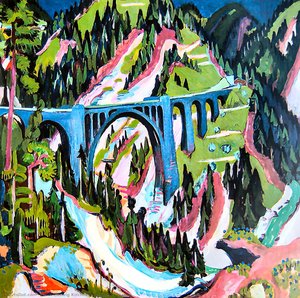
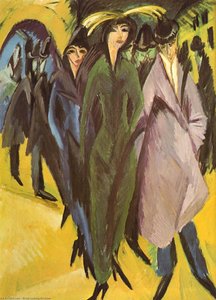
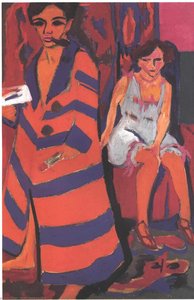
  • Notable Works: *The Street*, *Nude Dancers*, *Five Women*, *Landscape with Figures*
  • Influences: Albrecht Dürer, Vincent van Gogh, Edvard Munch, Primitive Art (African & Oceanic)
Current Meta Description: Ernst Ludwig Kirchner (1880-1938): Key German Expressionist & Die Brücke co-founder. Explore bold, emotive paintings of urban life, nudes & landscapes. Current Meta Keywords: Ernst Ludwig Kirchner, Kirchner paintings, German Expressionism, Die Brücke, Expressionist art, Berlin street scenes, Woodcut prints, Modern German art, Nude figures, Kirchner artwork
Ernst Ludwig Kirchner

Ernst Ludwig Kirchner

1880 - 1938 , Almanya

Kısa Bilgiler

  • Artistic Movement Or Style: İkinci Dünya Savaşı Ekspresyonizmi
  • Artists Who Influenced This Artist:
    • Albrecht Dürer
    • Vincent van Gogh
    • Edvard Munch
  • Date Of Birth: 6 Mayıs 1880
  • Date Of Death: 15 Haziran 1938
  • Full Name: Ernst Ludwig Kirchner
  • Nationality: Alman
  • Notable Artworks:
    • Şehir Sokakları
    • Dansçı Üçlüsü
    • Kendinden Portresi
  • Place Of Birth: Aschaffenburg, Almanya
Temalara, stillere ve özelliklere göre düzenlenmiş sanat eserlerini keşfedin.