
Sanatınızı Satın
İstek Listesi Alışveriş Sepeti Cart
Önizleme yapÖnizleme yap AR ile önizleAR ile önizle Baskı satın al Baskı satın alEl yapımı tablo satın al El yapımı tablo satın al PaylaşPaylaş
Detayları GörDetayları Gör Favorilere ekle Favorilere ekle İndirİndir Benzerlerini görBenzerlerini gör X-IşınıX-Işını Slayt GösterisiSlayt Gösterisi

Shepherdess with Sheep

Franz Marc’ın ikonik hayvan tabloları, canlı renkleri ve ruhsal temalarıyla öne çıkan Alman dışavurumcu sanatçı Franz Marc (1880-1916)’nın mirasıdır. Doğanın özünü anlamaya yönelik bir arayış olan bu sanatçı yaşamında derin bir ruhsal arayış yaşadı. Münih Güzel Sanatlar Akademisi’nde eğitim aldıktan sonra Wassily Kandinsky ile birlikte Der Blaue Reiter grubunu kurdu ve Alman dışavurumculuğunun dor

Çevrimiçi önizlemeden çok daha üstün, yüksek çözünürlüklü ve iyileştirilmiş bir dijital görüntü satın alın.

Her dosya, uzman ekibimiz tarafından gelişmiş araçlar ve titiz manuel rötuş teknikleri kullanılarak özenle hazırlanır. Her görüntünün olağanüstü netliğe, kusursuz renk doğruluğuna ve ince ayrıntılara sahip olduğundan emin oluruz.

Son dosya; profesyonel, editoryal ve baskı süreçlerinde anında kullanıma uygun şekilde optimize edilerek 72 saat içinde e-posta yoluyla teslim edilir. Bu, seçkin tasarım stüdyoları, yayıncılar ve galerilerin güvendiği aynı kalite standartlarındadır.

Dijital Görsel

Kişisel sergileme, baskı ve yaratıcı projeleriniz için yüksek çözünürlüklü bir dosya indirin. (Baskı satın al Baskı satın alEl yapımı tablo satın al El yapımı tablo satın al)

Toplam Tutar

$ 24,90

Her Dijital Görüntü Siparişinde Dahil Olanlar

Uzman Dijital Teslimat, Garantili

Most-Famous-Paintings.com seçtiğinizde, sadece bir görsel edinmekle kalmaz; titizlikle hazırlanmış, profesyonelce iyileştirilmiş dijital bir sanat eserine sahip olur ve memnuniyet garantisiyle güvence altına alınırsınız. Siparişinizle birlikte otomatik olarak sunulan her şey şunlardır:

shipping_icon
Hızlı E-posta ile Teslimat

Yüksek çözünürlüklü dijital görüntü dosyanız, siparişinizin üzerinden en geç 72 saat geçmeden e-posta ile size gönderilecektir; hemen kullanıma hazırdır.

canvas_icon
Yapay Zeka İle İyileştirilmiş Dijital Dosya

Sanat eseriniz; maksimum detay, netlik ve renk doğruluğu sağlamak amacıyla gelişmiş yapay zeka araçları ve manuel düzenleme kullanılarak profesyonelce optimize edilmektedir.

insurance_icon
Ömür Boyu Ücretsiz Yeniden Gönderim

Dosyanızı yanlışlıkla mı sildiniz yoksa kayıp mı oldu? Endişelenmeyin; dosyanızı dilediğiniz zaman size ücretsiz olarak tekrar göndereceğiz.

tax_icon
Hiçbir Zaman İthalat Ücreti Ödemeyin

Sanat eserinizin tadını gümrük vergisi, harç veya teslimat ücreti ödemeden anında çıkarın; dijital indirmeler her zaman vergiden muaftır.

color_icon
Renk Doğruluğu Garantisi

Profesyonel araçlar ve renk yönetimi kullanarak dijital görselinizin orijinal renklere mümkün olduğunca yakın yansıtılmasını sağlıyoruz.

return_icon
60 Günlük Memnuniyet Garantisi

If you're not satisfied with your digital image, we'll revise it or refund 100% within 60 days - no questions asked.

guarantee_icon
100% Para İadesi Garantisi

Memnun kalmadınız mı? Dijital dosyanızı aldıktan sonraki 60 gün içinde, hiçbir soru sorulmaksızın tam iade alın.

discount_icon
Toplu Sipariş İndirimleri

Buy 3 images, save 10% - Buy 5, save 15% - Buy 10+, save 20%. Great for creative projects, galleries, and agencies.

Hızlı Bilgiler

  • Location: Private Collection
  • Movement: Expressionism
  • Medium: Watercolor
  • Artistic style: Bold lines, vibrant hues
  • Subject or theme: Nature, spirituality
  • Notable elements: Symbolic colors
  • Influences: Van Gogh

Sanat Bilgisi Testi

Her soru için yalnızca bir doğru cevap bulunmaktadır.

Soru 1:
What artistic movement is Franz Marc’s ‘Shepherdess with Sheep’ most closely associated with?
Soru 2:
In Marc's painting, what do the dominant blue tones primarily symbolize?
Soru 3:
The painting’s watercolor technique contributes to which of the following effects?
Soru 4:
Franz Marc believed that art could serve what purpose?
Soru 5:
The composition of ‘Shepherdess with Sheep’ features the woman positioned towards which side of the scene?

Koleksiyon Detayları

A Moment of Serene Transcendence: Franz Marc’s “Shepherdess with Sheep”

Franz Marc's "Shepherdess with Sheep," painted in 1908, isn’t merely a depiction of a rural scene; it’s a profound meditation on spirituality and the interconnectedness of nature. This watercolor, born from the heart of the Expressionist movement, invites us into a world where color sings and form embodies emotion—a realm meticulously crafted by an artist deeply attuned to the soul of the natural world. Marc, a pivotal figure in German art’s late 19th and early 20th centuries, sought to move beyond representational accuracy, aiming instead to capture the *feeling* of existence through his palette and brushstrokes. “Shepherdess with Sheep” exemplifies this ambition perfectly, offering a glimpse into a world where the boundaries between humanity and nature blur, creating an atmosphere of quiet contemplation.

The Language of Color: Symbolism in Action

Marc’s masterful use of color is central to understanding the painting's emotional resonance. The dominant blue tones—a deep, almost melancholic azure—are not simply descriptive; they represent masculinity and a profound spiritual depth, anchoring the scene with an underlying sense of longing. Juxtaposed against this coolness are vibrant yellows, radiating from the woman and subtly woven throughout the sheep’s wool, symbolizing femininity, emotion, and perhaps even the warmth of life itself. The strategic placement of small, deliberate red accents—found in the rocks and hinting at the earth—ground the composition with a physicality that balances the ethereal quality of the blues and yellows. Marc believed color possessed an inherent symbolic power, and he expertly deployed it to create layers of meaning within his work.

Expressionist Technique: Delicacy and Boldness

The painting’s distinctive style is rooted in the Expressionist movement's desire to convey subjective experience. Marc employed a loose, almost childlike watercolor technique, allowing washes of color to bleed into one another, creating an atmospheric haze that softens the forms and imbues the scene with a dreamlike quality. Yet, within this fluidity lies a surprising boldness—the strong outlines defining the woman’s form and the sheep's silhouettes assert themselves against the background, preventing the image from dissolving into pure abstraction. This interplay of delicacy and strength mirrors the painting’s central theme: the harmonious coexistence of vulnerability and resilience.

A Vision of Harmony: Historical Context and Marc’s Philosophy

Created during a period of significant social and artistic upheaval, “Shepherdess with Sheep” reflects Franz Marc's broader philosophical concerns. He viewed modern society as decadent and spiritually barren, yearning for an art that could reconnect humanity to the fundamental truths of nature. Marc’s paintings often depicted animals—particularly those inhabiting rural landscapes—as symbols of purity, innocence, and a return to a simpler, more authentic way of life. The shepherdess herself embodies this ideal – a figure removed from the complexities of urban existence, immersed in the quiet beauty of the countryside. This painting isn't just a pretty picture; it’s an articulation of Marc’s belief that art could serve as a vital force for spiritual renewal.

Most-Famous-Paintings offers exquisite, hand-painted reproductions of Franz Marc’s “Shepherdess with Sheep,” meticulously crafted by skilled artists who understand the nuances of Marc's style and symbolism. Each reproduction captures the painting’s luminous colors and evocative atmosphere, allowing you to bring this timeless masterpiece into your home or office – a testament to the enduring power of art to inspire and uplift.

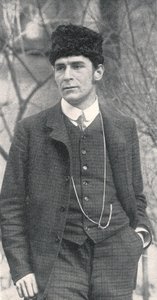
Sanatçı Özgeçmişi

Franz Marc (1880-1916): Pioneer of German Expressionism

Franz Moritz Wilhelm Marc, born on February 8, 1880, in Munich, Germany, was a painter whose brief but intensely focused career irrevocably altered the course of German Expressionism. His story is one of profound spiritual seeking translated into a vibrant visual language—a quest to understand the essence of life through the purity he found in the natural world, particularly within the animal kingdom. Initially influenced by his father, Wilhelm Marc, a landscape painter, young Franz’s artistic path wasn't immediately certain. He briefly contemplated theology, grappling with questions of faith and existence before ultimately dedicating himself to art at the Academy of Fine Arts in Munich. These early explorations into religious thought would remain deeply embedded within his work, shaping his belief that art could be a conduit for spiritual experience. His academic training provided him with technical foundations, but it was encounters with the works of Vincent van Gogh during visits to Paris that truly ignited his artistic vision. Van Gogh’s emotive use of color and raw expression resonated profoundly with Marc, liberating him from conventional techniques and setting him on a path toward a more subjective and emotionally charged style.

Early Influences and Artistic Development

Marc's formative years were marked by a fascination with both Romantic literature and theology—a duality that would permeate his artistic sensibility throughout his life. His father’s landscape paintings instilled in him an appreciation for the grandeur of nature, while his mother’s Calvinist upbringing fostered a contemplative spirit. He studied drawing first with Gabriel Hackl and then painting with Wilhelm von Diez at Munich Academy, absorbing the stylistic conventions of academic naturalism alongside nascent explorations into Impressionistic color innovations. However, it was his encounter with Van Gogh's paintings during Parisian excursions that fundamentally reshaped his artistic perspective. As Marc himself eloquently expressed, “Van Gogh is for me the most authentic, the greatest, the most poignant painter I know.” He recognized in Van Gogh’s bold use of color and unflinching portrayal of emotion a liberation from formal constraints—a freedom to express inner spiritual truths without resorting to representational accuracy. This influence propelled him toward simplification and heightened emotional intensity, mirroring Symbolist ideals that championed the artist as martyr.

The Birth of Der Blaue Reiter

Marc’s artistic journey took an extraordinary turn in 1907 with his relocation to Paris—a pivotal moment fueled by a desire for creative renewal following a period of personal turmoil. During this time, he immersed himself in the vibrant artistic milieu of the city and encountered artists who profoundly impacted his stylistic evolution. Notably, Robert Delaunay’s exploration of abstract forms and chromatic harmonies broadened Marc's horizons beyond traditional representation. This encounter spurred him toward experimentation with geometric abstraction—a departure from Impressionistic color palettes that signaled a decisive shift toward conveying spiritual concepts through simplified shapes and bold hues. Simultaneously, he cultivated friendships with fellow artists who shared his conviction that art could transcend the material realm and engage in dialogue with deeper existential questions. He joined August Macke and Wassily Kandinsky to establish *Der Blaue Reiter* (The Blue Rider) in 1911—a collective dedicated to forging a new artistic path rooted in Symbolist principles. This group’s inaugural exhibition showcased not only Marc's own work but also that of other avant-garde artists, cementing Der Blaue Reiter’s reputation as the epicenter of German Expressionism and initiating a dialogue about art’s capacity for spiritual expression.

Animal Painting: A Spiritual Quest

Marc’s artistic preoccupation with animals began in earnest around 1907—a fascination driven by both anatomical curiosity and a profound belief that animals embodied an inherent purity and connection to nature absent from human society. He viewed animals as symbols of innocence, harmony, and spiritual transcendence—subjects he approached with reverence and meticulous attention to detail. Unlike Impressionists who sought to capture fleeting visual impressions, Marc aimed to distill the essence of his subjects into their fundamental forms—reducing figures to geometric shapes that conveyed emotional intensity without resorting to realistic depiction. Paintings like *The Tiger* (1912) exemplify this stylistic approach—a monumental composition characterized by assertive color choices and a deliberate simplification of form that encapsulates Marc’s artistic vision. He believed animals possessed an inner luminosity—a spiritual radiance—that mirrored the divine presence he perceived in the natural world. This conviction fueled his relentless pursuit of expressive abstraction, mirroring Symbolist ideals that championed the artist as martyr.

Legacy and Recognition

Franz Marc tragically perished on March 4, 1916, during the Battle of Verdun—a devastating loss for the art world and a poignant reminder of the fragility of artistic creativity amidst the tumult of wartime conflict. Despite his untimely demise, Marc’s influence endured—inspiring generations of artists who embraced his stylistic innovations and championed his unwavering commitment to conveying spiritual truths through abstract forms and symbolic color. His paintings continue to captivate audiences today with their emotional depth and profound contemplation of existential themes—a testament to the enduring power of art to transcend the boundaries of time and place. Marc’s legacy extends beyond his artistic achievements; he remains a symbol of intellectual integrity, spiritual courage, and unwavering devotion to his craft—a figure whose work continues to resonate with viewers seeking solace and inspiration in the face of adversity. His contribution to German Expressionism solidified his position as one of the most important artists of the 20th century—a visionary who dared to explore the intersection between art, spirituality, and the sublime beauty of the natural world.
Franz Marc

Franz Marc

1880 - 1916 , Almanya

Kısa Bilgiler

  • Artistic Movement Or Style: Dışavurumculuk
  • Artists Who Influenced This Artist:
    • Vincent van Gogh
    • Robert Delaunay
  • Date Of Birth: 8 Şubat 1880
  • Date Of Death: 4 Mart 1916
  • Full Name: Franz Moritz Wilhelm Marc
  • Nationality: Alman
  • Notable Artworks:
    • Tierschicksale
    • Kızıl Geyik
    • Gökyüzü Şelalesi
  • Place Of Birth: Münih, Almanya

