
İstek Listesi Alışveriş Sepeti Cart
Önizleme yapÖnizleme yap AR ile önizleAR ile önizle Baskı satın al Baskı satın alGörsel satın al Görsel satın al PaylaşPaylaş
Detayları GörDetayları Gör Favorilere ekle Favorilere ekle İndirİndir Benzerlerini görBenzerlerini gör X-IşınıX-Işını Slayt GösterisiSlayt Gösterisi

Le Calvaire

The painting depicts Jesus Christ crucified, surrounded by angels and mourners, with horses and symbolic figures reflecting Moreau's Symbolist aesthetic.

Gustave Moreau’nın ikonik eserleri ve sembolizm tarzıyla sanat tarihine yön verdiğini vurgulayarak etkileyici bir Türkçe meta açıklaması oluşturuldu. İncil temalı tabloları ve benzersiz görsel diliyle öne çıkan Moreau, sanatseverlerin ilgisini çekmeyi hedefledi.

El Yapımı Yağlı Boya Reproduksiyon

Sanatçılarımız tarafından sipariş üzerine hazırlanan; istediğiniz boyut ve çerçevede, tuval üzerine el boyaması yağlı boya. (Baskı satın al Baskı satın alGörsel satın al Görsel satın al)

P118B $10
P118H $10
P118W $10
P438Z $10
P508JH $12
P508YH $12
P805H $10
P805Z $10
P919BZ $10
P919G $10
P919XJ $10
P959ZH $10
P968JZ $12
W106C $8
W218G $10
W218JH $8
W218Y $10
W307PJ $10
W316G $10
W316PJ $8
W316Y $10
W398PJ $8
W4111J $10
W500HY $15
W500JH $15
W692G $12
W849H $8
W940BG $15
W953PJ $8

Standard
custom
CM
INCH

Eserin orijinal oranlarıyla uyumlu, önceden belirlenmiş boyutlarımız arasından seçim yapın.

genişlik
yükseklik

Belirli bir çerçeveye veya alana uyması için kendi boyutlarınızı girebilirsiniz. Seçtiğiniz boyut orijinal görüntünün oranlarıyla eşleşmiyorsa, sanat eserini kırparak veya ek el boyaması öğelerle resmi uzatarak ayarlayacağız. Üretim başlamadan önce onayınız için dijital bir taslak gönderilecektir.
Lütfen ekrandaki önizlemenin gerçek kırpmayı veya uzatmayı yansıtmadığını unutmayın. Nihai kompozisyonu yalnızca hazırlanan taslak doğru şekilde gösterecektir.
Özel boyutlar mevcut olsa da, orijinal oranları korumak adına önceden tanımlanmış listeden bir boyut seçmenizi öneririz.

Değiştirilebilecek örneklere dair: Yüzün müşteri fotoğrafıyla değiştirilmesi; Evcil hayvan eklenmesi (örneğin kedinin köpek ile değiştirilmesi); Arka plana gizli bir mesaj dahil edilmesi; Arka plan manzarasının veya öğelerinin değiştirilmesi.
Siparişten sonra, Most-Famous-Paintings.com ekibi talimatlar için müşteriye e-posta gönderecek ve bir taslak önizleme sunacaktır

Dünya Çapında Teslimat (); standart 5 hafta yerine 3/4 haftada. (23 Ağustos). Kaliteden ödün verilmez.

why_choose_icon
Dünya Çapında Ücretsiz Ekspres Kargo
why_choose_icon
Yüksek Kaliteli Keten Tuval
why_choose_icon
Tam Kapsamlı Nakliye Sigortası
why_choose_icon
Gümrük Vergisi İade Garantisi
why_choose_icon
Gerçek Renk Uyumu Garantisi
why_choose_icon
60 Günlük İade Politikası (Sadece Kusurlu Ürünler İçin)
why_choose_icon
%100 Para İade Garantisi
why_choose_icon
Toplu Alım İndirimi

Toplam Fiyat

$ 272

reproduction

Le Calvaire

Reproduksiyon Tekniği

Reproduksiyon Boyutu

-

Toplam Tutar

$ 272

Hızlı Bilgiler

  • Title: Le Calvaire
  • Artistic style: Mystical; Surrealist
  • Location: Private Collection
  • Artist: Gustave Moreau
  • Medium: Oil on canvas
  • Subject or theme: Christian iconography

Sanat Bilgisi Testi

Her soru için yalnızca bir doğru cevap bulunmaktadır.

Soru 1:
What artistic movement is Gustave Moreau considered a pioneer of?
Soru 2:
What central biblical event is depicted in the painting 'Le Calvaire'?
Soru 3:
In terms of color, how is the central figure of Jesus described in the painting?
Soru 4:
What was Gustave Moreau's primary artistic goal instead of capturing objective reality?
Soru 5:
Which of these elements is mentioned as being present in the scene alongside the central figure?

Eser Açıklaması

A Visionary Encounter with the Divine

In the vast, often turbulent landscape of nineteenth-century art, few figures command as much mystique as Gustave Moreau. His masterpiece, Le Calvaire, serves as a profound gateway into the soul of Symbolism, inviting the viewer to step away from the tangible world and into a realm of spiritual introspection. Completed in 1867, this work transcends the traditional boundaries of religious iconography. Rather than presenting a mere historical documentation of the crucifixion, Moreau crafts a dreamlike meditation on the intersection of human suffering and divine transcendence. The painting does not simply depict an event; it evokes an atmosphere, pulling the observer into a sacred space where the boundaries between the earthly and the ethereal become beautifully blurred.

The composition is anchored by the luminous presence of Christ, whose figure emerges from the canvas with a celestial radiance. Moreau utilizes a striking palette of golds and deep, swirling crimsons to create a sense of cosmic drama. This deliberate use of color serves a dual purpose: the gold signifies the incorruptible nature of the divine, while the surrounding reds evoke the visceral reality of sacrifice and passion. As your eyes wander through the scene, you encounter a tapestry of figures—angels, mourners, and observers—each rendered with a meticulous attention to detail that suggests a deeper, hidden narrative. The interplay of light and shadow creates a chiaroscuro effect that lends weight to the emotional gravity of the moment, making the scene feel both monumental and intimately personal.

The Language of Symbolism and Technique

To understand Le Calvaire is to understand Moreau’s rejection of the fleeting impressions favored by his contemporaries. While the Impressionists sought to capture the transient effects of light on nature, Moreau turned his gaze inward, seeking to paint the intangible. His technique is characterized by an opulent, almost jewel-like application of pigment, which lends the work a sense of preciousness and permanence. Every brushstroke feels intentional, contributing to a dense texture of meaning. The figures are not merely characters in a story; they are symbols of human emotion—grief, devotion, and awe—woven into a complex visual language that rewards repeated contemplation.

The presence of horses and secondary figures adds layers of movement and tension to the composition, preventing the scene from feeling static. The way light catches the edges of the drapery and the subtle glint in the eyes of the onlookers creates a sense of living breath within the paint. For the collector or the interior designer, this piece offers more than just aesthetic beauty; it provides a focal point of profound intellectual and emotional depth. A high-quality reproduction of Le Calvaire brings this sense of historical grandeur and spiritual mystery into a contemporary space, acting as a window into an era where art was a vessel for the most profound mysteries of the human condition.

An Eternal Legacy for the Discerning Collector

Integrating a work of such magnitude into a curated collection or a sophisticated interior requires an appreciation for its transformative power. Le Calvaire is not a passive decoration; it is an active participant in the room's atmosphere. Its rich, warm tones and dramatic subject matter can anchor a large-scale gallery wall or serve as a contemplative centerpiece in a study or library. The painting’s ability to evoke both melancholy and hope makes it a timeless addition, appealing to those who value art that challenges the intellect while soothing the spirit.

Owning a reproduction of this caliber allows one to preserve the legacy of Gustave Moreau, a master who dared to dream in color and symbol. Whether you are drawn to the historical significance of the Symbolist movement or the sheer technical brilliance of Moreau’s hand, Le Calvaire stands as a testament to the enduring power of religious art reimagined through a modern, psychological lens. It is an invitation to linger, to reflect, and to find beauty in the profound depths of the human experience.

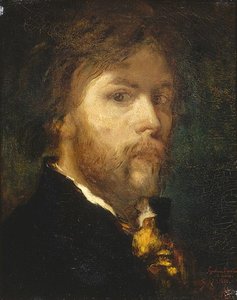
Sanatçı Özgeçmişi

A Dream Weaver of Symbolism: The Life and Art of Gustave Moreau

Gustave Moreau, a name synonymous with the ethereal beauty and enigmatic depths of Symbolist painting, emerged from 19th-century Paris as a singular artistic voice. Born in 1826 into a bourgeois family—his father an architect and archivist—Moreau’s early life was steeped in intellectual curiosity and aesthetic sensibility. From a young age, he displayed a remarkable gift for drawing, nurtured through traditional academic training at the École des Beaux-Arts under figures like François-Édouard Picot. However, Moreau's artistic path would diverge sharply from the prevailing Realist and Impressionist currents of his time. He wasn’t interested in capturing fleeting moments or objective reality; instead, he sought to unlock the hidden realms of myth, religion, and the human psyche through a deeply personal and symbolic visual language. His journey was one of inward exploration, translating subjective emotions and spiritual yearnings onto canvas with an obsessive attention to detail and a vibrant, often opulent palette.

The Forge of Imagination: Influences and Artistic Development

Moreau’s artistic development wasn't born in a vacuum. While rejecting the dominant trends of his era, he drew inspiration from diverse sources. The dramatic use of color and exotic subject matter found in the works of Eugène Delacroix resonated deeply with him, igniting a passion for narrative painting imbued with emotional intensity. He also held Renaissance masters like Michelangelo and Leonardo da Vinci in high esteem, admiring their mastery of composition, anatomy, and psychological insight. Yet, Moreau wasn’t merely imitating these artists; he was synthesizing their influences into something entirely new. His travels to Italy in the 1850s proved pivotal, immersing him in the art of antiquity and the Renaissance, providing a wealth of motifs and stylistic cues that would populate his future works. He meticulously copied Old Master paintings, not as an exercise in replication, but as a means of absorbing their techniques and unlocking their secrets. This dedication to craft, combined with his burgeoning interest in mythology and literature, laid the foundation for his unique artistic vision. Moreau’s formative years were marked by a profound engagement with intellectual currents—particularly Neo-Platonism—which profoundly shaped his worldview and informed his artistic practice. Influenced by thinkers like Plato and Plotinus, Moreau believed that art possessed the capacity to elevate the soul beyond the limitations of earthly existence, striving for transcendence through symbolic representation. This conviction fueled his relentless pursuit of stylistic innovation and aesthetic grandeur, propelling him toward the forefront of Symbolist painting. His early training at the École des Beaux-Arts instilled in him a disciplined approach to artistic technique—a cornerstone of his distinctive style—while fostering connections with fellow artists who shared his passion for exploring psychological depths and spiritual mysteries. The friendship he cultivated with Théodore Chassériau, a kindred spirit captivated by Delacroix’s expressive power, served as an invaluable catalyst for artistic experimentation and collaborative creativity.

A World of Symbols: Themes and Techniques

Moreau's paintings are not simply illustrations of myths or biblical stories; they are complex allegories that invite contemplation and interpretation. He delved into narratives like those of Salome, Orpheus, Jupiter and Semele, and countless others, not to retell them literally, but to explore their underlying psychological and spiritual truths. His canvases teem with symbolic imagery—serpents representing temptation, jewels signifying earthly desires, and figures embodying abstract concepts like grief, loss, or redemption. He masterfully created a dreamlike atmosphere through intricate detail, rich textures, and an often unsettling juxtaposition of light and shadow. Moreau’s technique was characterized by meticulous layering of paint, creating surfaces that shimmer with iridescent colors and evoke a sense of otherworldly beauty. His use of gold leaf further enhanced this effect, lending his works a Byzantine quality that underscored their spiritual dimension. He wasn't concerned with capturing realistic textures or perspectives; instead, he prioritized the expressive power of color and form to convey mood and meaning. Moreau’s artistic output spanned decades—producing over 15,000 paintings, watercolors, and drawings—a testament to his unwavering commitment to creative exploration. His stylistic evolution mirrored broader trends in European art during the latter half of the 19th century—moving from Academic Realism toward Symbolist abstraction while retaining a fascination with classical motifs and Byzantine influences. He achieved considerable renown for his depictions of biblical figures and mythological subjects, earning recognition at the Paris Salon and establishing himself as one of the most prominent artists of his generation. His enduring legacy resides not merely in the sheer volume of his artistic creations but also in their profound exploration of human psychology and spiritual yearning—a contribution that continues to inspire artists and scholars alike. ## Notable Works
  • Salome Dancing before Herod: Perhaps his most famous work, this painting exemplifies Moreau’s opulent style and fascination with biblical narratives.
  • Jupiter and Semele: A dramatic depiction of the Greek myth, showcasing Moreau's mastery of composition and color.
  • Orpheus: Several paintings by Moreau explore the myth of Orpheus, reflecting themes of loss, grief, and artistic inspiration.
  • The Apparition: Demonstrates his skill in creating ethereal and otherworldly scenes.
  • Desdemona: A poignant portrayal of Shakespeare's tragic heroine.
## Legacy and Influence: The Enduring Power of Symbolism Though initially met with mixed reactions, Moreau became a central figure in the burgeoning Symbolist movement during the 1890s. Unlike some of his contemporaries who actively sought public attention, he remained somewhat reclusive, preferring to work independently and avoid artistic debates. However, his influence was undeniable. In 1893, he accepted a professorship at the École des Beaux-Arts, where he profoundly impacted generations of artists, including Henri Matisse and Georges Rouault. He encouraged his students to embrace imagination, symbolism, and individual expression, urging them to break free from conventional artistic norms. While Symbolism eventually waned in popularity after Moreau’s death in 1898, his work experienced a significant reevaluation in the latter half of the 20th century. Today, he is widely regarded as one of the most important figures in the movement and a precursor to modern art. The Musée Gustave Moreau, housed in his former studio and home in Paris, stands as a testament to his enduring legacy—a sanctuary where visitors can immerse themselves in the captivating world of this extraordinary artist. His paintings continue to resonate with audiences today, offering glimpses into the hidden depths of the human soul and reminding us of the power of art to transcend the boundaries of reality.
Gustave Moreau

Gustave Moreau

1826 - 1898 , Fransa

Kısa Bilgiler

  • Artistic Movement Or Style: Sembolizm
  • Artists Who Influenced This Artist:
    • Eugène Delacroix
    • Michelangelo
    • Leonardo da Vinci
  • Date Of Birth: 6 Nisan 1826
  • Date Of Death: 18 Nisan 1898
  • Full Name: Gustave Moreau
  • Nationality: Fransa
  • Notable Artworks:
    • Salome Dansante devant Hérod
    • Jupiter et Sémèle
    • Orphée
  • Place Of Birth: Paris, Fransa
Temalara, stillere ve özelliklere göre düzenlenmiş sanat eserlerini keşfedin.




































