x

Hızlı üretim ve esnek bitiş seçenekleriyle müze kalitesinde giclée veya kanvas baskı. ( El yapımı tablo satın al Görsel satın al)





























Eserin orijinal oranlarıyla uyumlu, önceden belirlenmiş boyutlarımız arasından seçim yapın.

Belirli bir çerçeveye veya alana uyması için kendi ölçülerinizi girebilirsiniz. Seçtiğiniz boyut orijinal görüntünün oranlarıyla eşleşmiyorsa, sanat eserini kırpacağız veya görüntüyü aynalanmış ya da düz dolgulu bir kenarlıkla genişleteceğiz. Üretim başlamadan önce onayınız için bir dijital taslak gönderilecektir.
Lütfen ekrandaki önizlemenin gerçek kırpma veya genişletmeyi yansıtmadığını unutmayın. Nihai kompozisyonu yalnızca taslak doğru bir şekilde gösterecektir.
Özel boyutlar mevcut olsa da, orijinal oranları korumak için önceden tanımlanmış listeden bir boyut seçmenizi öneririz.
Dünya Çapında Teslimat (); standart 4/5 hafta yerine 2 haftada. (19 Ağustos)


Seashore.
Reproduksiyon Boyutu
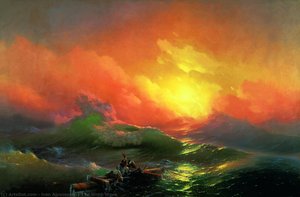
Ivan Konstantinovich Aivazovsky's "Seashore," painted in 1840, isn’t merely a depiction of a seascape; it’s an immersive experience, a visceral journey into the heart of the Black Sea. More than just a landscape, this work represents a pivotal moment in Russian art – a shift towards Romanticism deeply influenced by Aivazovsky's profound connection to the ocean. Born in Feodosia, Crimea, a city intrinsically linked to the sea through its maritime history and turbulent geopolitical shifts, Aivazovsky’s entire life was shaped by its moods, its power, and its relentless beauty. He didn’t simply paint what he saw; he painted what he felt – the salty spray on his face, the rumble of distant storms, the ethereal glow of twilight reflecting off the waves.
The painting itself is a masterclass in atmospheric perspective and color theory. Aivazovsky expertly utilizes a muted palette dominated by deep blues, greens, and grays, punctuated by flashes of white foam and the warm ochre of distant cliffs. The sky isn’t a uniform expanse; it's layered with swirling clouds, rendered with delicate brushstrokes that capture the dynamic movement of the atmosphere. Notice how he employs a technique known as ‘sfumato,’ blurring the edges of objects to create an illusion of depth and distance – the boats become almost spectral, swallowed by the vastness of the sea. This masterful use of light and shadow isn’t just aesthetic; it serves to evoke a sense of drama and impending change.
“Seashore” is a quintessential example of Russian Romanticism, a movement that prioritized emotion, individualism, and the power of nature. Unlike earlier Neoclassical depictions of the sea as a symbol of order and reason, Aivazovsky presents it as an untamed force – both beautiful and terrifying. The painting embodies the concept of the ‘sublime,’ a term coined by Edmund Burke to describe experiences that inspire awe and terror simultaneously. The sheer scale of the ocean, combined with the suggestion of an approaching storm, creates a feeling of vulnerability and insignificance in the face of nature’s grandeur.
The inclusion of several sailing vessels adds another layer of complexity. These aren't heroic explorers charting new territories; they are humble boats, dwarfed by the immensity of the sea. They represent humanity’s fleeting presence within this vast and ancient realm. The placement of these small figures on the horizon subtly underscores the insignificance of human endeavors against the backdrop of nature’s enduring power.
Aivazovsky revolutionized marine painting through his innovative technique, largely developed in his studio in Feodosia. He meticulously prepared his canvases with a special mixture of oil and turpentine to create a smooth, absorbent surface – crucial for achieving the luminous effects he so expertly employed. He often worked *en plein air* (outdoors) for extended periods, directly observing the sea’s changing light and color. This direct engagement informed every brushstroke, resulting in an unparalleled sense of immediacy and authenticity.
Furthermore, Aivazovsky was a pioneer in using layering techniques to build up his paintings gradually, applying thin glazes of paint over previous layers to create depth and luminosity. This painstaking process, combined with his mastery of color mixing, allowed him to capture the subtle nuances of light reflecting off the water’s surface – a feat that had previously eluded most artists.
“Seashore” is more than just a beautiful painting; it's a meditation on humanity’s relationship with nature, a reflection on the power of memory, and an exploration of the human condition. The painting’s enduring appeal lies in its ability to evoke a profound emotional response – a sense of wonder, awe, and perhaps even a touch of melancholy. It speaks to our primal connection to the sea, a force that has shaped civilizations and inspired countless artists throughout history.
Aivazovsky's influence on subsequent generations of marine painters is undeniable. His work continues to captivate viewers today, reminding us of the beauty and power of the natural world and the enduring legacy of one of Russia’s greatest artistic masters. Reproductions like this offer a remarkable opportunity to bring this iconic image into your home, allowing you to experience the magic of Aivazovsky's vision firsthand.


1817 - 1900 , Россия

Explore the profound evolution of Russian art, from Imperial grandeur and religious icons to the radical geometric revolution of Malevich and the Avant-Garde. Discover a journey through history, soul, and the enduring legacy of Russia's greatest masterpieces.


En son sanat haberlerinden, özel tekliflerden ve dekorasyon fikirlerinden haberdar olun.
Projenizden bize bahsedin; sanat uzmanlarımız size özel 3 sanat eseri önerisi sunsun.
Size Özel 3 Seçeneği Ücretsiz Olarak Hazırlayalım!


 Önizleme yap
 Paylaş
 Paylaş
 Detayları Gör

 İndir
İndir
 Benzerlerini gör
 X-Işını
 Slayt Gösterisi


 Tümünü Gör







 Cam seçeneği yalnızca 110 cm altındaki boyutlar için mevcuttur.