x

 Acrylic On CanvasWallArtExpressionist Symbolism
 1891
1891 38.0 x 46.0 cm
Sanatçılarımız tarafından sipariş üzerine hazırlanan; istediğiniz boyut ve çerçevede, tuval üzerine el boyaması yağlı boya. ( Baskı satın al Görsel satın al)





























Eserin orijinal oranlarıyla uyumlu, önceden belirlenmiş boyutlarımız arasından seçim yapın.

Belirli bir çerçeveye veya alana uyması için kendi boyutlarınızı girebilirsiniz. Seçtiğiniz boyut orijinal görüntünün oranlarıyla eşleşmiyorsa, sanat eserini kırparak veya ek el boyaması öğelerle resmi uzatarak ayarlayacağız. Üretim başlamadan önce onayınız için dijital bir taslak gönderilecektir.
Lütfen ekrandaki önizlemenin gerçek kırpmayı veya uzatmayı yansıtmadığını unutmayın. Nihai kompozisyonu yalnızca hazırlanan taslak doğru şekilde gösterecektir.
Özel boyutlar mevcut olsa da, orijinal oranları korumak adına önceden tanımlanmış listeden bir boyut seçmenizi öneririz.
Dünya Çapında Teslimat (); standart 5 hafta yerine 3/4 haftada. (17 Ağustos). Kaliteden ödün verilmez.


The Wise Judges
Reproduksiyon Boyutu
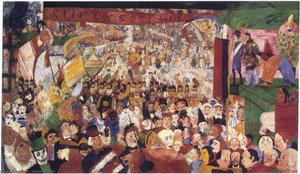
James Ensor's "The Wise Judges," painted in 1891, isn’t merely a depiction of a courtroom scene; it’s a carefully constructed interrogation of power, authority, and the very nature of judgment. This tempera work, measuring just 38 x 46 cm, now residing within the Royal Museums of Fine Arts of Belgium, possesses an unsettling beauty that continues to resonate with viewers over a century later. Ensor, born in Ostend—a town steeped in maritime history and a vibrant crossroads of cultures – expertly utilizes a muted palette and deliberately simplified forms to create an atmosphere thick with unease and subtle critique. The painting immediately draws the eye to the figures seated around the table, their faces rendered with childlike simplicity, almost as if they’ve been sketched by a young child themselves. This deliberate lack of detail isn't accidental; it serves to expose the potential naiveté or inherent flaws within those entrusted with wielding judicial power.
“The Wise Judges” firmly establishes Ensor as a pivotal figure within the burgeoning Expressionist movement, though he predates its formal definition. His style is characterized by bold lines, vibrant yet restrained colors, and a fascinating interplay between realism and abstraction. He doesn’t shy away from distortion; the figures are slightly skewed, their proportions subtly off-kilter, creating a sense of unease and disorientation. This deliberate manipulation of form reflects Ensor's broader artistic project – to expose the anxieties and contradictions inherent in modern society. The influence of Symbolism is also evident, particularly in the use of objects as symbols rather than simply decorative elements. The empty chairs scattered around the table are a powerful visual metaphor for absence, suggesting that justice isn’t always served, or perhaps that there are unseen forces at play.
Created in Brussels during a period of significant social and political upheaval, “The Wise Judges” can be understood as a commentary on the established order. Belgium itself was grappling with questions of national identity and governance, and Ensor’s work reflects this broader sense of uncertainty. The painting's satirical edge speaks to a growing disillusionment with institutions – particularly those claiming authority – prevalent throughout Europe at the time. It’s important to remember that Ensor wasn’t simply depicting a courtroom; he was offering a critique of the *idea* of justice, questioning whether the system truly served its intended purpose. The painting's creation coincided with a period of intense artistic experimentation and social commentary, making it a vital document of its era.
“The Wise Judges” continues to captivate viewers not just for its technical skill but also for its profound emotional impact. The painting’s unsettling atmosphere, combined with the ambiguous nature of the scene, invites us to confront uncomfortable questions about power, truth, and justice. A high-quality reproduction captures this essence beautifully, allowing you to bring this thought-provoking artwork into your home or office. Most-Famous-Paintings offers meticulously crafted hand-painted reproductions that faithfully recreate Ensor’s unique style and symbolic depth. Whether you're an art collector, a design enthusiast, or simply someone seeking a piece with historical significance and emotional resonance, “The Wise Judges” is a compelling addition to any collection. Consider how the muted tones and simplified forms can contribute to a contemplative atmosphere within your space – a subtle reminder of the complexities inherent in our pursuit of justice.

James Sidney Edouard Ensor (Ostend, 13 April 1860-19 November 1949) was a Belgian painter and printmaker, an important influence on expressionism and surrealism who lived in Ostend for almost his entire life. He was associated with the artistic group Les XX.
Ensor’s father, James Frederic Ensor, born in Brussels to English parents, was a cultivated man who studied engineering in England and Germany. Ensor’s mother, Maria Catharina Haegheman, was Belgian. Ensor himself lacked interest in academic study and left school at the age of fifteen to begin his artistic training with two local painters. From 1877 to 1880 he attended the Académie Royale des Beaux-Arts in Brussels, where one of his fellow students was Fernand Khnopff. Ensor first exhibited his work in 1881.
During the late 19th century much of Ensor’s work was rejected as scandalous, particularly his painting Christ’s Entry Into Brussels (1888–89). The Belgium art critic Octave Maus famously summed up the response from contemporaneous art critics to Ensor's innovative (and often scathingly political) work: “Ensor is the leader of a clan. Ensor is the limelight. Ensor sums up and concentrates certain principles which are considered to be anarchistic. In short, Ensor is a dangerous person who has great changes. ... He is consequently marked for blows. It is at him that all the harquebuses are aimed. It is on his head that are dumped the most aromatic containers of the so-called serious critics.” Some of Ensor's contemporaneous work reveals his defiant response to this criticism.
Ensor’s artistic style evolved dramatically over time, reflecting a profound engagement with psychological exploration and social critique. Initially influenced by Rembrandt, Redon, Goya, Japanese woodcuts, Brueghelian images and contemporary spoofs, Ensor developed a highly personal iconography and design. He rejected French Impressionism and Symbolism and lent himself to the expressive qualities of light, line, colour and the grotesque and macabre motifs such as carnival masks and skeletons, which he rendered in massive tableaux such as *The Aureoles of Christ* (1885–86) and *Skeletons Fighting over a Hanged Man* (1891). These grotesque metamorphoses culminate in Ensor’s most well-known and monumental mask tableau: *Christ’s Entry Into Brussels* (1888–89, oil on canvas, Los Angeles, J. Paul Getty Museum).
Ensor is now widely recognized as a pivotal figure in the transition from 19th-century Symbolism to early 20th-century Expressionism and Surrealism—a true pioneer of modern art. His fearless exploration of the subconscious, his embrace of grotesque imagery, and his rejection of academic conventions paved the way for future generations of artists who dared to challenge artistic norms. Despite facing initial resistance, Ensor eventually gained recognition in his later years, being named a Baron by King Albert I in 1929 and awarded the Légion d’honneur in 1933. He died in Ostend in 1949, leaving behind a body of work that continues to captivate, disturb, and inspire.

1860 - 1949 , Belçika
James Abbott McNeill Whistler'ın en iyi 25 eserini keşfedin! Amerikan empresyonizminin öncüsü Whistler'ın nocturne resimleri, portreleri ve sanat tarihine damga vuran diğer başyapıtları Most-Famous-Paintings.com'da. Ev dekorasyonunuz için lüks tabloları inceleyin.

Explore the unsettling yet captivating world of James Ensor, a pioneer of Expressionism. Discover his satirical masterpieces, symbolic imagery & lasting influence on modern art. High-quality reproductions available at Most-Famous-Paintings.

Explore 25 iconic Sir Alfred Munnings paintings! Discover the beauty of British Impressionism, equine art & rural England. Find museum-quality reproductions and elevate your home decor with Most-Famous-Paintings. Explore the full collection online.
Explore the powerful world of Figurative Expressionism with Most-Famous-Paintings. Discover key artists like Kirchner & Beckmann, understand its emotional depth, and learn how to collect this influential 20th-century art movement.

Explore the raw emotion of Expressionism with Most-Famous-Paintings. Discover its history, key artists like Kirchner & Munch, and lasting influence on modern art. Expert insights for collectors & enthusiasts.


En son sanat haberlerinden, özel tekliflerden ve dekorasyon fikirlerinden haberdar olun.
Projenizden bize bahsedin; sanat uzmanlarımız size özel 3 sanat eseri önerisi sunsun.
Size Özel 3 Seçeneği Ücretsiz Olarak Hazırlayalım!


 Önizleme yap
 Paylaş
 Paylaş
 Detayları Gör

 İndir
İndir
 Benzerlerini gör
 X-Işını
 Slayt Gösterisi
 Tümünü Gör







 Cam seçeneği yalnızca 110 cm altındaki boyutlar için mevcuttur.