


x

 Rococo/Neoclassical
 38.0 x 28.0 cm
 Calouste Gulbenkian Müzesi
Sanatçılarımız tarafından sipariş üzerine hazırlanan; istediğiniz boyut ve çerçevede, tuval üzerine el boyaması yağlı boya. ( Baskı satın al Görsel satın al)





























Eserin orijinal oranlarıyla uyumlu, önceden belirlenmiş boyutlarımız arasından seçim yapın.

Belirli bir çerçeveye veya alana uyması için kendi boyutlarınızı girebilirsiniz. Seçtiğiniz boyut orijinal görüntünün oranlarıyla eşleşmiyorsa, sanat eserini kırparak veya ek el boyaması öğelerle resmi uzatarak ayarlayacağız. Üretim başlamadan önce onayınız için dijital bir taslak gönderilecektir.
Lütfen ekrandaki önizlemenin gerçek kırpmayı veya uzatmayı yansıtmadığını unutmayın. Nihai kompozisyonu yalnızca hazırlanan taslak doğru şekilde gösterecektir.
Özel boyutlar mevcut olsa da, orijinal oranları korumak adına önceden tanımlanmış listeden bir boyut seçmenizi öneririz.
Dünya Çapında Teslimat (); standart 5 hafta yerine 3/4 haftada. (21 Ağustos). Kaliteden ödün verilmez.


Lady Hamilton as a Bacchante
Reproduksiyon Boyutu
Élisabeth Louise Vigée Le Brun’s “Lady Hamilton as a Bacchante,” painted in 1792, is more than just a portrait; it's a carefully constructed tableau vivant, brimming with theatricality, historical allusion, and the simmering intensity of a forbidden love. The painting captures Emma Hart Hamilton – later Lady Hamilton – not merely as a beautiful woman, but as a figure drawn from ancient mythology, embodying both earthly allure and ethereal grace. Le Brun, a prominent artist in the French court, skillfully employs the conventions of Neoclassicism while subtly injecting elements of Romanticism, creating an image that is simultaneously formal and deeply emotive.
The subject herself, Emma Hamilton, was a captivating figure. A former dancer and actress, she possessed a remarkable beauty and charm, which quickly caught the eye of Sir William Hamilton, the British Ambassador to Naples. Their affair became legendary, fueled by mutual admiration and a shared passion for art and culture. Le Brun’s choice to depict her as a Bacchante – a follower of Dionysus, the god of wine, revelry, and ecstasy – is profoundly symbolic. It speaks to the intoxicating nature of their relationship, suggesting a world of unrestrained pleasure and passionate abandon. The pose itself—hand raised to her chin, eyes gazing directly at the viewer—commands attention, inviting us into this private, almost illicit, scene.
“Lady Hamilton as a Bacchante” is executed in mezzotint, a printmaking technique that lends itself beautifully to capturing both subtle tonal variations and dramatic contrasts. This process, perfected by John Raphael Smith (a key figure in the painting’s creation), involved meticulously roughening a metal plate with ink, creating areas of deep blackness that would then be selectively wiped away to reveal the white paper beneath. The result is an image rich in texture and shadow, reminiscent of Rembrandt's masterful use of chiaroscuro. Smith’s engraving, which served as the basis for Le Brun’s painting, further amplified this effect, adding layers of detail and emphasizing the theatricality of the scene.
Le Brun masterfully utilizes lighting to heighten the drama. The figure is bathed in a soft, diffused light that highlights her flowing white dress and the delicate folds of her hair. This luminosity contrasts sharply with the darker background, creating a sense of depth and drawing our attention to Hamilton’s face—a study in composure and vulnerability. The careful manipulation of light and shadow not only enhances the visual impact but also contributes to the painting's overall mood of restrained passion.
To fully appreciate “Lady Hamilton as a Bacchante,” it’s crucial to understand its historical context. The painting was created during the tumultuous years following the French Revolution, a period marked by political upheaval and social change. The Neoclassical style, of which Le Brun was a prominent proponent, sought to revive the ideals of ancient Greece and Rome—a deliberate reaction against the excesses of the Baroque era. By depicting Hamilton as a Bacchante, Le Brun subtly references Roman mythology, specifically the Bacchanalia – frenzied religious rites dedicated to Dionysus that were outlawed by Roman authorities.
The choice of the Bacchantes motif also reflects the broader cultural anxieties of the time. The bacchantic frenzy represented both liberation and chaos—a potent symbol for a society grappling with uncertainty and moral decay. Hamilton’s embrace of this mythological role can be interpreted as an assertion of her own agency, a defiant rejection of societal constraints.
“Lady Hamilton as a Bacchante” remains one of the most captivating portraits of the late 18th century. It’s a testament to Le Brun's artistic skill, Smith’s masterful printmaking, and the enduring power of myth and romance. The painting continues to fascinate viewers with its blend of beauty, drama, and historical significance. Reproductions offer a remarkable opportunity to experience this iconic image firsthand, bringing its timeless allure into any setting—from grand galleries to intimate interiors.

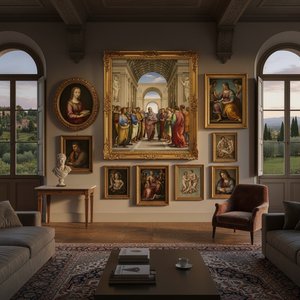
Raffaello'nun en iyi 25 eserini keşfedin! Rönesans sanatının zirvesinden ikonik tablolar, freskler ve portrelerin hikayelerini okuyun. Ev dekorasyonunuz için yüksek çözünürlüklü sanat baskıları Most-Famous-Paintings'ta. Koleksiyonu şimdi keşfedin!

John Singer Sargent'ın en iyi 25 eserini keşfedin! Amerikan empresyonizminin ustası Sargent’ın portrelerindeki zarafeti, tekniği ve renkleri inceleyin. Ev dekorasyonunuz için lüks sanat baskıları Most-Famous-Paintings.com'da. Koleksiyonu şimdi keşfedin!
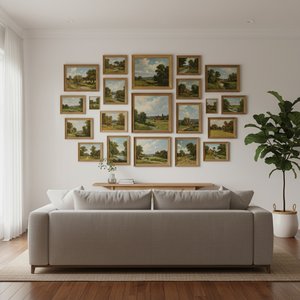
John Constable'ın en iyi 25 eserini keşfedin! İngiliz manzara sanatının büyülü dünyasına dalın, romantizm akımını ve kırsal yaşamı yansıtan tablolarla evinizi zenginleştirin. Sanat reproduksiyonları Most-Famous-Paintings'ta.

Explore the captivating world of Thomas Stuart Smith (1815-1869), a Scottish painter bridging Romantic realism and British Impressionism. Discover his genre scenes, philanthropic legacy & stunning interiors.

Explore the captivating world of Gwen John, a pioneering Welsh artist renowned for her intimate portraits & subtle style. Discover her life, legacy, and how to bring her timeless beauty into your home with Most-Famous-Paintings.


En son sanat haberlerinden, özel tekliflerden ve dekorasyon fikirlerinden haberdar olun.
Projenizden bize bahsedin; sanat uzmanlarımız size özel 3 sanat eseri önerisi sunsun.
Size Özel 3 Seçeneği Ücretsiz Olarak Hazırlayalım!


 Önizleme yap
 Paylaş
 Paylaş
 Detayları Gör

 İndir
İndir
 Benzerlerini gör
 X-Işını
 Slayt Gösterisi
 Tümünü Gör







 Cam seçeneği yalnızca 110 cm altındaki boyutlar için mevcuttur.


