


x

Hızlı üretim ve esnek bitiş seçenekleriyle müze kalitesinde giclée veya kanvas baskı. ( El yapımı tablo satın al Görsel satın al)





























Eserin orijinal oranlarıyla uyumlu, önceden belirlenmiş boyutlarımız arasından seçim yapın.

Belirli bir çerçeveye veya alana uyması için kendi ölçülerinizi girebilirsiniz. Seçtiğiniz boyut orijinal görüntünün oranlarıyla eşleşmiyorsa, sanat eserini kırpacağız veya görüntüyü aynalanmış ya da düz dolgulu bir kenarlıkla genişleteceğiz. Üretim başlamadan önce onayınız için bir dijital taslak gönderilecektir.
Lütfen ekrandaki önizlemenin gerçek kırpma veya genişletmeyi yansıtmadığını unutmayın. Nihai kompozisyonu yalnızca taslak doğru bir şekilde gösterecektir.
Özel boyutlar mevcut olsa da, orijinal oranları korumak için önceden tanımlanmış listeden bir boyut seçmenizi öneririz.
Dünya Çapında Teslimat (); standart 4/5 hafta yerine 2 haftada. (21 Ağustos)


Trinity (detail)
Reproduksiyon Boyutu
Masaccio’s “Trinity (detail),” housed within the magnificent Santa Maria Novella in Florence, isn't merely a fresco; it’s a pivotal moment in art history – a visual manifesto declaring the arrival of the High Renaissance. Painted between 1425 and 1427, this intimate section captures the essence of Masaccio’s revolutionary approach to depicting reality, a departure from the stylized elegance of the preceding Gothic era and a profound influence on generations of artists to come. The scene, centered around an elder figure representing God the Father, is imbued with a startling sense of depth, volume, and emotional resonance that was unprecedented for its time.
The fresco’s immediate impact lies in its masterful use of linear perspective. Masaccio didn't simply depict space; he created it – a meticulously constructed illusion of three-dimensionality that draws the viewer directly into the scene. The architecture, modeled after Roman precedents and likely informed by Filippo Brunelleschi’s groundbreaking experiments with perspective, recedes realistically towards a vanishing point, anchoring the figures within a believable environment. This isn't a flat surface; it’s a stage where forms exist in relation to each other, creating an astonishingly convincing sense of space.
Masaccio’s palette is restrained yet remarkably effective. Earth tones – ochres, siennas, and umbers – dominate the composition, lending it a dignified solemnity. However, within this muted range, he skillfully employs chiaroscuro—the dramatic interplay of light and shadow—to sculpt the figures and define their forms. The light source, emanating from an unseen point above and to the right, casts deep shadows that accentuate the musculature of the Father’s body, imbuing him with a palpable sense of weight and presence. This subtle manipulation of light isn't merely decorative; it’s integral to Masaccio’s goal of creating realistic figures that appear to exist within a tangible world.
The figure of the Father is particularly striking. His face, rendered with astonishing detail – the furrowed brow, the thoughtful gaze—conveys an intense contemplation. He isn't depicted as a distant deity but as a human being grappling with profound questions. The folds of his garment are meticulously modeled, demonstrating Masaccio’s mastery of drapery and his commitment to accurately representing the texture and weight of fabric.
Beyond its technical brilliance, “Trinity (detail)” is rich in symbolic meaning. The central figure represents God the Father, while the dove hovering above symbolizes the Holy Spirit. The presence of Mary and Saint John—both deeply revered figures within Christian iconography—adds layers of spiritual significance to the scene. The inclusion of a *memento mori* – a reminder of death – beneath the depiction of the Trinity serves as a poignant counterpoint, reminding viewers of the ephemeral nature of earthly existence and the importance of seeking salvation.
The donor figures flanking the central archway are particularly intriguing. Their placement within the architectural framework suggests that they represent patrons who commissioned the fresco—likely members of the Florentine elite. The gesture of prayer, with their hands raised in supplication, underscores the devotional purpose of the artwork and its intended audience.
Masaccio’s “Trinity (detail)” represents a watershed moment in art history. It marked a decisive shift away from the stylized conventions of the Gothic era and toward a more naturalistic and intellectually rigorous approach to painting. His innovations in perspective, his mastery of chiaroscuro, and his profound understanding of human anatomy profoundly influenced artists like Leonardo da Vinci and Michelangelo, shaping the course of Western art for centuries to come. Reproductions of this masterpiece offer a unique opportunity to experience firsthand the genius of one of the Renaissance’s most visionary painters.
Additional Research:

Tommaso di Ser Giovanni di Simone, namıdiğer Masaccio (yani "Sakar Tom"), Erken İtalyan Rönesansı'nın en kilit figürlerinden biriydi. 21 Aralık 1401'de İtalya'nın San Giovanni Valdarno kentinde dünyaya gelen ve 1428 yılında trajik bir şekilde genç yaşta hayata veda eden bu dahi sanatçı, kısa süren kariyerine çığır açan gerçekçilik, perspektif ve chiaroscuro (ışık ve gölgenin güçlü kontrastı) tekniklerini sığdırarak resim sanatında devrim yarattı. Kısa ömrüne rağmen Masaccio'nun sonraki nesil sanatçılar üzerindeki etkisi derin bir iz bıraktı; doğalcılık konusunda yeni bir standart belirleyerek Batı sanatının akışını sonsuza dek değiştirdi.
Masaccio'nun trajik derecede kısa süren kariyerine rağmen, Batı sanatının seyri üzerindeki etkisi ölçülemez boyuttadır. Perspektif, chiaroscuro ve doğalcılık alanındaki yenilikleri, sanatçıların dünyayı betimleme biçimlerini kökten değiştirdi. Orta Çağ'ın sanatsal gelenekleri ile Rönesans'ın yükselen idealleri arasında etkili bir köprü kurmayı başardı.
Masaccio'nun mirası, tarihin en önemli ve etkileyici sanatçılarından biri olarak varlığını sürdürmektedir. Orta Çağ'dan Rönesans sanatına geçişte kilit bir figür olarak durmakta; dünyayı resim yoluyla algılama ve temsil etme biçimimizi sonsuza dek değiştirmektedir. Onun kısa ama parlak kariyeri, yeniliğin gücüne ve sanatsal dehanın kalıcı etkisine verilmiş en görkemli kanıtlardan biridir.

1401 - 1429 , İtalya
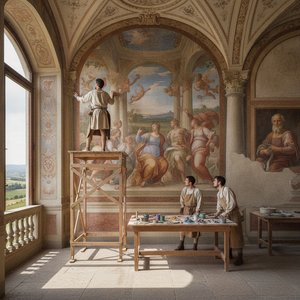
Explore the profound history and technical mastery of fresco painting. From ancient Roman murals to Michelangelo's Sistine Chapel, discover the enduring chemistry and artistry behind this timeless wall painting technique used by the world's greatest masters.


En son sanat haberlerinden, özel tekliflerden ve dekorasyon fikirlerinden haberdar olun.
Projenizden bize bahsedin; sanat uzmanlarımız size özel 3 sanat eseri önerisi sunsun.
Size Özel 3 Seçeneği Ücretsiz Olarak Hazırlayalım!


 Önizleme yap
 Paylaş
 Paylaş
 Detayları Gör

 İndir
İndir
 Benzerlerini gör
 X-Işını
 Slayt Gösterisi


 Tümünü Gör







 Cam seçeneği yalnızca 110 cm altındaki boyutlar için mevcuttur.


![Stanze Vaticane - The Parnassus (detail) [07] — Raffaello, High Renaissance](/media/artworks/images-thumb/3c/a1/3ca1620e84d3f2fe4e94d9bb954e0eca.jpg)


