x
Hızlı üretim ve esnek bitiş seçenekleriyle müze kalitesinde giclée veya kanvas baskı. ( El yapımı tablo satın al Görsel satın al)





























Eserin orijinal oranlarıyla uyumlu, önceden belirlenmiş boyutlarımız arasından seçim yapın.

Belirli bir çerçeveye veya alana uyması için kendi ölçülerinizi girebilirsiniz. Seçtiğiniz boyut orijinal görüntünün oranlarıyla eşleşmiyorsa, sanat eserini kırpacağız veya görüntüyü aynalanmış ya da düz dolgulu bir kenarlıkla genişleteceğiz. Üretim başlamadan önce onayınız için bir dijital taslak gönderilecektir.
Lütfen ekrandaki önizlemenin gerçek kırpma veya genişletmeyi yansıtmadığını unutmayın. Nihai kompozisyonu yalnızca taslak doğru bir şekilde gösterecektir.
Özel boyutlar mevcut olsa da, orijinal oranları korumak için önceden tanımlanmış listeden bir boyut seçmenizi öneririz.
Dünya Çapında Teslimat (); standart 4/5 hafta yerine 2 haftada. (16 Ağustos)


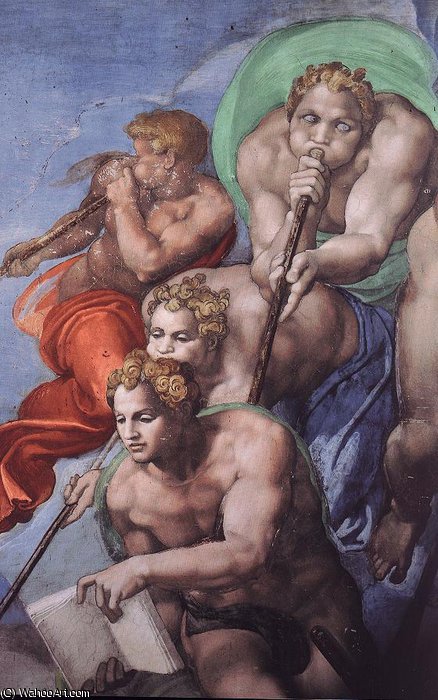
Last Judgment d7
Reproduksiyon Boyutu
The image before us—often referred to as "Last Judgment d7"—is not merely a painting; it's an experience, a visceral plunge into the heart of humanity’s confrontation with mortality and divine justice. Created by the titan of the High Renaissance, Michelangelo Buonarroti, this monumental work, though shrouded in some mystery regarding its precise commission and location (likely intended for the altar wall of the Old St. Peter’s Basilica), pulsates with a raw energy that transcends time. Michelangelo, born in 1475 in Caprese Michelangelo, Italy, was already a master sculptor by his early twenties, but it was his ambition to tackle painting on this scale – a fresco covering an immense wall – that truly cemented his legacy as a polymath of unparalleled genius.
The scene unfolds with breathtaking dynamism. At its core is the figure holding the trumpet, a potent symbol of both the herald of doom and the call to judgment. His posture, rigid yet conveying a sense of urgent command, immediately draws the eye, anchoring the viewer within this chaotic tableau. Around him swirl figures in varying states of torment and ecstasy – souls being dragged downwards into hell by grotesque demons, while others ascend towards God’s radiant light. The sheer scale of the composition—a testament to Michelangelo's ambition—forces a confrontation with the overwhelming nature of divine judgment.
Michelangelo’s mastery is immediately evident in the anatomical precision of each figure, a hallmark inherited from his sculpting training. He doesn’t shy away from depicting the grotesque – the writhing limbs, contorted faces, and expressions of agony are brutally honest. Yet, within this depiction of suffering, there's an undeniable beauty; Michelangelo imbues even the damned with a tragic grandeur. The *terribilità*, a term often applied to his work, speaks to this potent combination of horror and sublime power.
Technically, “Last Judgment” is executed in fresco—a method requiring rapid application of wet paint onto freshly plastered walls. This necessitated a meticulous planning process, evident in the preparatory drawings that Michelangelo created, revealing the complex network of figures and their interconnected narratives. The vibrant colors, though faded over centuries, retain a remarkable intensity, particularly in the reds and golds used to depict the heavenly realm and the fiery depths of hell. Notice how he uses *chiaroscuro* – the dramatic contrast between light and dark – to heighten the emotional impact, guiding the viewer’s eye through the scene.
The “Last Judgment” is deeply rooted in Christian theology, drawing heavily from biblical accounts of Judgement Day. The trumpet signifies the arrival of Christ, signaling the end of time and the final reckoning. The figures themselves represent a diverse range of humanity – saints, sinners, and ordinary people—all subject to the same inescapable fate. The placement of the two birds, one near the top left corner and another towards the bottom right, is particularly intriguing; they are often interpreted as symbols of hope (the bird ascending) and despair (the bird descending), reflecting the dual nature of salvation and damnation.
Beyond its immediate religious context, the painting speaks to universal themes of mortality, guilt, redemption, and the human condition. Michelangelo’s depiction is not a comforting one; it's a stark reminder of our vulnerability in the face of an unknowable God. The raw emotion conveyed—the anguish, the fear, the desperate plea for mercy—resonates powerfully even today, making “Last Judgment” a timeless masterpiece.
Most-Famous-Paintings offers meticulously crafted hand-painted reproductions of this extraordinary work. We utilize traditional fresco techniques and archival quality pigments to faithfully recreate the intensity and drama of Michelangelo's original. Each reproduction is a testament to our commitment to preserving artistic heritage, allowing you to experience the profound emotional impact of “Last Judgment” in your own space.
Explore our collection today and bring the drama and spirituality of Michelangelo's “Last Judgment” into your home or office.


1475 - 1564 , İtalya
Explore the profound history and technical mastery of fresco painting. From ancient Roman murals to Michelangelo's Sistine Chapel, discover the enduring chemistry and artistry behind this timeless wall painting technique used by the world's greatest masters.


En son sanat haberlerinden, özel tekliflerden ve dekorasyon fikirlerinden haberdar olun.
Projenizden bize bahsedin; sanat uzmanlarımız size özel 3 sanat eseri önerisi sunsun.
Size Özel 3 Seçeneği Ücretsiz Olarak Hazırlayalım!


 Önizleme yap
 Paylaş
 Paylaş
 Detayları Gör

 İndir
İndir
 Benzerlerini gör
 X-Işını
 Slayt Gösterisi
 Tümünü Gör







 Cam seçeneği yalnızca 110 cm altındaki boyutlar için mevcuttur.