x

Hızlı üretim ve esnek bitiş seçenekleriyle müze kalitesinde giclée veya kanvas baskı. ( El yapımı tablo satın al Görsel satın al)





























Eserin orijinal oranlarıyla uyumlu, önceden belirlenmiş boyutlarımız arasından seçim yapın.

Belirli bir çerçeveye veya alana uyması için kendi ölçülerinizi girebilirsiniz. Seçtiğiniz boyut orijinal görüntünün oranlarıyla eşleşmiyorsa, sanat eserini kırpacağız veya görüntüyü aynalanmış ya da düz dolgulu bir kenarlıkla genişleteceğiz. Üretim başlamadan önce onayınız için bir dijital taslak gönderilecektir.
Lütfen ekrandaki önizlemenin gerçek kırpma veya genişletmeyi yansıtmadığını unutmayın. Nihai kompozisyonu yalnızca taslak doğru bir şekilde gösterecektir.
Özel boyutlar mevcut olsa da, orijinal oranları korumak için önceden tanımlanmış listeden bir boyut seçmenizi öneririz.
Dünya Çapında Teslimat (); standart 4/5 hafta yerine 2 haftada. (20 Ağustos)


Bufón y acróbata joven
Reproduksiyon Boyutu
The painting Bufón y acróbata joven (Harlequin and Young Acrobat) is a remarkable work by Pablo Picasso, created in 1905. This masterpiece marks an important transition between two significant periods in Picasso's artistic career: his Blue Period and Rose Period. It showcases a shift towards warmer tones and a more optimistic subject matter while retaining the poignant emotional depth characteristic of his earlier works.
Picasso, born in Málaga, Spain, in 1881, is widely regarded as one of the most influential artists of the 20th century. His prolific output includes over 20,000 paintings, prints, drawings, sculptures, ceramics, theater sets, and costumes that convey myriad intellectual, political, social, and amorous messages. Bufón y acróbata joven was created during a pivotal moment in his artistic development, as he moved away from the somber blues and grays of his earlier Blue Period towards the more vibrant hues of his Rose Period. This transition reflects a change in Picasso's personal life and a broadening of his thematic concerns.
The composition of Bufón y acróbata joven is divided into three distinct sections: the background, the central figure (the young harlequin), and the foreground (the acrobat). The use of color in this work is particularly noteworthy. While the blue tones dominate the background and the harlequin's costume, warmer hues such as red and orange are used to highlight the acrobat's face and hands. This contrast creates a visual dynamism and draws attention to the figures’ expressions. Picasso employs a flattened perspective and simplified forms, characteristic of his evolving style. The lines are fluid and expressive, conveying a sense of movement and melancholy. The painting is executed in oil on canvas, allowing for rich layering of color and texture.
The figures themselves – the harlequin and the young acrobat – carry symbolic weight. Harlequins, often associated with theatrical performance and disguise, can represent vulnerability and hidden emotions. The young acrobat, poised and seemingly fragile, embodies youth, skill, and perhaps a sense of precariousness. Their intimate pose suggests a relationship built on shared experience and mutual support within the challenging world of the circus. The overall emotional impact is one of quiet contemplation and understated sadness, tinged with a glimmer of hope. Despite the shift towards warmer colors, a lingering melancholy from the Blue Period remains, creating a complex and deeply moving work.
Bufón y acróbata joven is an important example of Picasso's early work and demonstrates his evolving style during a critical period in his artistic development. This painting, along with other works from this time, laid the groundwork for Picasso's later innovations, including Cubism. It exemplifies his ability to synthesize diverse influences and create a uniquely personal visual language that would profoundly impact the course of 20th-century art.


1881 - 1973 , İspanya

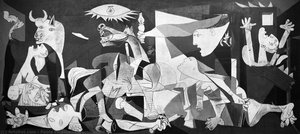
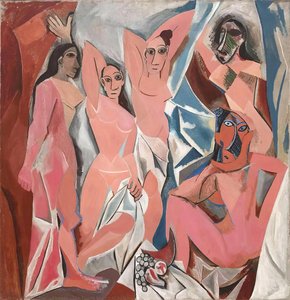
Explore the revolutionary world of Cubism. Discover how masters Pablo Picasso and Georges Braque dismantled reality through geometric abstraction to redefine modern art history.

Explore the revolutionary world of Cubism. Discover how Pablo Picasso and Georges Braque dismantled perspective to redefine modern art through geometric innovation and analytical mastery. An essential guide for art students, collectors, and history enthusiasts.


En son sanat haberlerinden, özel tekliflerden ve dekorasyon fikirlerinden haberdar olun.
Projenizden bize bahsedin; sanat uzmanlarımız size özel 3 sanat eseri önerisi sunsun.
Size Özel 3 Seçeneği Ücretsiz Olarak Hazırlayalım!


 Önizleme yap
 Paylaş
 Paylaş
 Detayları Gör

 İndir
İndir
 Benzerlerini gör
 X-Işını
 Slayt Gösterisi

 Tümünü Gör







 Cam seçeneği yalnızca 110 cm altındaki boyutlar için mevcuttur.