x

Hızlı üretim ve esnek bitiş seçenekleriyle müze kalitesinde giclée veya kanvas baskı. ( El yapımı tablo satın al Görsel satın al)





























Eserin orijinal oranlarıyla uyumlu, önceden belirlenmiş boyutlarımız arasından seçim yapın.

Belirli bir çerçeveye veya alana uyması için kendi ölçülerinizi girebilirsiniz. Seçtiğiniz boyut orijinal görüntünün oranlarıyla eşleşmiyorsa, sanat eserini kırpacağız veya görüntüyü aynalanmış ya da düz dolgulu bir kenarlıkla genişleteceğiz. Üretim başlamadan önce onayınız için bir dijital taslak gönderilecektir.
Lütfen ekrandaki önizlemenin gerçek kırpma veya genişletmeyi yansıtmadığını unutmayın. Nihai kompozisyonu yalnızca taslak doğru bir şekilde gösterecektir.
Özel boyutlar mevcut olsa da, orijinal oranları korumak için önceden tanımlanmış listeden bir boyut seçmenizi öneririz.
Dünya Çapında Teslimat (); standart 4/5 hafta yerine 2 haftada. (19 Ağustos)


Vatican Rooms - The Parnassus
Reproduksiyon Boyutu
Raphael’s “Parnassus,” housed within the breathtaking Stanze di Raffaello in the Vatican, isn't merely a fresco; it’s an immersive experience, a vibrant testament to the High Renaissance’s fascination with classical ideals and its belief in the harmonious union of art, poetry, and philosophy. Painted between 1511 and 1512, this monumental work captures a pivotal moment – a gathering of legendary figures on Mount Parnassus, the mythical home of Apollo and the Muses, symbolizing the enduring power of ancient knowledge and creative inspiration. The scene unfolds within a richly detailed architectural setting, a carefully constructed illusion that draws the viewer into a world brimming with intellectual and artistic significance.
At the heart of the composition stands Apollo, rendered in exquisite detail, playing his lira da braccio – an instrument far more refined than its classical counterpart. His pose is both serene and commanding, radiating authority and embodying the god’s role as patron of music and poetry. Surrounding him are nine Muses, each a distinct embodiment of the arts and sciences: Calliope (epic poetry), Thalia (comedy), Melpomene (tragedy), Clio (history), Erato (lyric poetry), Terpsichore (dance), Urania (astronomy), Euterpe (music), and Polyhymnia (sacred song). These goddesses, depicted with graceful elegance and individual personalities, represent the diverse facets of human creativity. Beyond them gather nine poets from antiquity – Homer, Sappho, Bacchus, Orpheus, Linus,Æacus, Hesiod, Democritus, and Iophon – alongside nine contemporary poets, a deliberate juxtaposition highlighting the continuity between classical wisdom and modern artistic expression.
The genius of Raphael’s composition lies not only in its subject matter but also in his masterful use of perspective and spatial illusion. The architectural setting, with its grand archway leading to an unseen space, creates a sense of depth and invites the viewer to step into the scene. Notably, Raphael cleverly integrated elements from classical sculpture, most prominently the figure of Homer, who is posed in a manner strikingly reminiscent of Laocoön and His Sons – a sculpture that had recently captivated the artistic world. This subtle reference adds layers of meaning to the painting, suggesting a dialogue between antiquity and modernity, tradition and innovation. The use of color is equally sophisticated, with a careful balance of warm earth tones contrasted by vibrant blues and reds, creating a visually dynamic and engaging composition.
Each figure within “The Parnassus” carries significant symbolic weight, contributing to the painting’s rich tapestry of meaning. Apollo himself represents divine inspiration and artistic patronage, while the Muses embody the various disciplines that fuel human creativity. Homer, blind and draped in dark blue, symbolizes the power of oral tradition and the enduring legacy of classical literature. Sappho, the only female poet depicted, stands as a testament to the importance of female voices within the literary canon – a deliberate inclusion reflecting Raphael’s humanist sensibilities. The presence of contemporary poets underscores the notion that artistic inspiration transcends time, continuing to flourish in each generation.
The painting is not simply a celebration of poetry and music; it's an affirmation of the pursuit of knowledge and wisdom. The figures are arranged in a carefully orchestrated manner, suggesting a harmonious balance between different fields of study – philosophy, religion, poetry, and law. This reflects the Renaissance humanist ideal of a well-rounded education, encompassing both intellectual and artistic pursuits. The inclusion of figures like Democritus, the Greek philosopher known for his atomic theory, further emphasizes this commitment to rational inquiry.
"The Parnassus" was created during a period of profound cultural transformation in Europe – the High Renaissance. Following the artistic and intellectual ferment of the Early Renaissance, Rome emerged as the center of artistic innovation, attracting artists from across Italy and beyond. Pope Julius II commissioned Raphael to decorate the Stanze di Raffaello as part of his ambitious plan to transform the Apostolic Palace into a magnificent palace worthy of the papacy. The Stanze became a focal point for artistic patronage and intellectual exchange, bringing together some of the most brilliant minds of the era.
Alongside Michelangelo’s Sistine Chapel ceiling, “The Parnassus” represents the pinnacle of artistic achievement during this period. Both works embody the Renaissance ideals of humanism, classical revival, and technical mastery. Raphael's ability to seamlessly blend classical mythology with contemporary figures demonstrates his exceptional skill as a painter and his deep understanding of both ancient and modern culture. The fresco’s creation coincided with a renewed interest in Greek philosophy and literature, fueled by the rediscovery of classical texts and the rise of humanistic scholarship.
Most-Famous-Paintings.com is proud to offer meticulously crafted, hand-painted oil painting reproductions of Raphael’s “Parnassus.” Our skilled artists painstakingly recreate every detail – from the intricate folds of the figures' drapery to the subtle nuances of color and light – ensuring that your reproduction captures the essence of this iconic masterpiece. These reproductions are not merely copies; they are works of art in their own right, imbued with the spirit and beauty of Raphael’s original fresco. Explore our selection today at /art/list/?Filter=5ZKEAA-Raphael-(Raffaello-Sanzio-Da-Urbino)-Vatican-Rooms-The-Parnassus and bring a touch of Renaissance brilliance to your home or office.
For deeper insights into Raphael’s life, works, and the context of “The Parnassus,” we recommend exploring these resources:

Rönesans’ın en parlak yıldızlarından biri olan Raffaello Sanzio da Urbino, dünyaya 1483 yılında İtalya'nın küçük ama zihinsel açıdan canlı bir şehir devleti olan Urbino'da gözlerini açtı. Babası Giovanni Santi, sadece bir ressam değil, aynı zamanda Duke Federico da Montefeltro’nun şairi ve sanat alanındaki yenilikleri arayan bir düşünürdü. Bu soylu çevrede büyümek, genç Raffaello’nun sanatsal ve entelektüel gelişimini derinden etkiledi. Babasının erken ölümü, ona sorumluluk yüklerken aynı zamanda ailesinin atölyesinde yeteneklerini geliştirmesi için de bir fırsat yarattı. İlk dönem eserlerinde bile ortaya çıkan zarif duruşu ve detaylara gösterdiği özen, olgunlaşmış tarzının habercisiydi.
Raffaello'nun sanatsal yolculuğu, sürekli bir evrim sürecinden geçti. Perugia'da Pietro Perugino yönetimindeki eğitimiyle Umbriya tarzının temellerini attı – yumuşak modellemeler, uyumlu kompozisyonlar ve sakin dini sahnelerle karakterize edilen bir stil. Ancak Raffaello’nun doyumsuz merakı onu yeni zorluklara yöneltti. 1504 yılında Floransa'ya yaptığı yolculuk, Leonardo da Vinci ve Michelangelo gibi sınırları zorlayan sanatçılarla tanışmasına vesile oldu. Leonardo’nun sfumato tekniğini, yani ışık ve gölge geçişlerindeki inceliği; Michelangelo’nun ise güçlü anatomik detaylarını ve dramatik kompozisyonlarını büyük bir dikkatle inceledi. Bu Floransa dönemi, Raffaello için gerçek bir eriyiş noktası oldu; onu yeni sanatsal olanaklarla yüzleştirdi ve bunları kendi özgün vizyonuyla sentezlemeye zorladı. Özellikle bu dönemde Madonna serilerindeki artan dinamizm ve psikolojik derinlik, bu etkilerin somut kanıtı olarak görülebilir.
1508 yılında Raffaello'nun kariyerini değiştirecek bir daveti aldı – Papa II. Julius tarafından Roma'ya çağrıldı. Bu, onun en verimli ve kutlu döneminin başlangıcı oldu. Roma, ona eşsiz fırsatlar sundu; Vatikan’daki papal saraylarını nefes kesici fresklerle süsleme imkanı buldu. Athena Okulu (La Scuola di Atene), belki de en ünlü eseri olarak, kompozisyon, perspektif ve felsefi alegori konusundaki ustalığını gözler önüne seriyor. Bu görkemli mekanda Raffaello, Antik Yunan’dan figürleri – Plato, Aristoteles, Pisagor, Öklid gibi – bir araya getirerek insan aklının ve bilgi peşinde koşmanın kutlaması niteliğinde canlı bir tablo yarattı. Daha sonra Leo X ve diğer papalar için de çalışarak Stanze della Segnatura ve Stanza d'Eliodoro gibi devasa projelerde yer aldı. Bu odalardaki freskleri sadece dekoratif değil, aynı zamanda papal gücüne, dini inançlara ve Rönesans ideallerine dair derin açıklamalar niteliğindedir.
Raffaello’nun sanatsal tarzı genellikle zarafet, açıklık ve idealize edilmiş güzelliğin uyumlu bir karışımı olarak tanımlanır. Farklı etkileri – Umbriya geleneği, Floransa yenilikleri, Antik Yunan – kendi eşsiz estetiğine sentezleme konusunda olağanüstü bir yeteneğe sahipti. Kompozisyonları titizlikle planlanmıştır; Rönesans ilkelerinin derinlemesine anlaşılmasını yansıtan bir düzen ve orantı duygusu sergiler. Figürleri sakin bir onur ve duygusal ifade yayar, insan mükemmelliği idealini somutlaştırır. Aynı zamanda usta bir renkleyiciydi; hem görsel olarak büyüleyici hem de zihinsel olarak uyarıcı eserler yaratmak için zengin, aydınlık tonlar kullandı. Michelangelo’nun sıklıkla dramatik ve çalkantılı tarzının aksine Raffaello'nun çalışması sakinlik ve uyum duygusu yayar – bu nitelik yüzyıllardır izleyicileri büyülemiştir.
Raffaello’nun 1520 yılında otuz yedi yaşında erken ölümü, potansiyeliyle dolu bir kariyeri kesintiye uğrattı. Ancak mirası, Batı sanat tarihinin en önemli figürlerinden biri olarak yaşamaya devam ediyor. Çalışmaları, Yüksek Rönesans estetiğinin temel taşı haline geldi ve nesiller boyunca sanatçılara örnek oldu. Michelangelo’nun etkisi daha sonra sanatsal söylemi domine etse de, Raffaello'nun açıklık, uyum ve idealize edilmiş güzelliğe verdiği önem Neoklasik dönemde Johann Joachim Winckelmann gibi eleştirmenler tarafından yeniden canlandırıldı. Bugün, resimleri hala hayranlık ve takdir uyandırıyor; teknik parlaklıkları, duygusal derinlikleri ve kalıcı çekicilikleriyle izleyicileri büyülemeye devam ediyor. Onun etkisi sayısız takip eden eserde görülebilir, bu da onu Rönesans’ın gerçek bir ustası olarak pekiştirir – sadece konularının fiziksel görünümünü değil, aynı zamanda insan zarafetinin ve onurun özünü de yakalayan bir ressam.

1483 - 1520 , İtalya
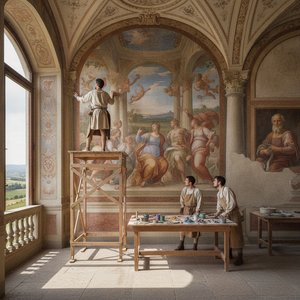
Explore the profound history and technical mastery of fresco painting. From ancient Roman murals to Michelangelo's Sistine Chapel, discover the enduring chemistry and artistry behind this timeless wall painting technique used by the world's greatest masters.


En son sanat haberlerinden, özel tekliflerden ve dekorasyon fikirlerinden haberdar olun.
Projenizden bize bahsedin; sanat uzmanlarımız size özel 3 sanat eseri önerisi sunsun.
Size Özel 3 Seçeneği Ücretsiz Olarak Hazırlayalım!


 Önizleme yap
 Paylaş
 Paylaş
 Detayları Gör

 İndir
İndir
 Benzerlerini gör
 X-Işını
 Slayt Gösterisi

 Tümünü Gör







 Cam seçeneği yalnızca 110 cm altındaki boyutlar için mevcuttur.


![Stanze Vaticane - The Parnassus (detail) [01] — Raffaello, High Renaissance](/media/artworks/images/thumbnails/bf/8a/bf8a9262ddc7490a8b0a3d3a3fb12eaf.jpg)

![Stanze Vaticane - The Parnassus (detail) [04] — Raffaello, High Renaissance](/media/artworks/images/thumbnails/ce/19/ce199023a9ed4ed28707a601312ad23f.jpg)
![Stanze Vaticane - The Parnassus (detail) [06] — Raffaello, High Renaissance](/media/artworks/images/thumbnails/ed/c8/edc88f6ca7cf4f1b8f7f0fe1a2315568.jpg)