x

Hızlı üretim ve esnek bitiş seçenekleriyle müze kalitesinde giclée veya kanvas baskı. ( El yapımı tablo satın al Görsel satın al)





























Eserin orijinal oranlarıyla uyumlu, önceden belirlenmiş boyutlarımız arasından seçim yapın.

Belirli bir çerçeveye veya alana uyması için kendi ölçülerinizi girebilirsiniz. Seçtiğiniz boyut orijinal görüntünün oranlarıyla eşleşmiyorsa, sanat eserini kırpacağız veya görüntüyü aynalanmış ya da düz dolgulu bir kenarlıkla genişleteceğiz. Üretim başlamadan önce onayınız için bir dijital taslak gönderilecektir.
Lütfen ekrandaki önizlemenin gerçek kırpma veya genişletmeyi yansıtmadığını unutmayın. Nihai kompozisyonu yalnızca taslak doğru bir şekilde gösterecektir.
Özel boyutlar mevcut olsa da, orijinal oranları korumak için önceden tanımlanmış listeden bir boyut seçmenizi öneririz.
Dünya Çapında Teslimat (); standart 4/5 hafta yerine 2 haftada. (23 Ağustos)


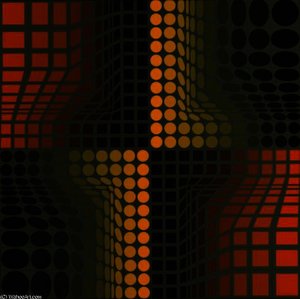
Opus 2604
Reproduksiyon Boyutu
Victor Vasarely's *Opus 2604* is not merely a painting; it’s an invitation to question the very nature of visual reality. This mesmerizing work, dominated by a vibrant blue spiral punctuated with meticulously arranged circles, embodies the core tenets of Op Art – Optical Art – a movement that emerged in the mid-20th century and continues to captivate viewers with its illusionistic power. Born Károly Vaszary in 1906 in Pécs, Croatia, Vasarely’s artistic trajectory began unexpectedly, initially driven by an interest in medicine before he was drawn to the expressive possibilities of color and form. His formative years within the Bauhaus-influenced workshop of Sándor Bortnyik instilled a profound understanding of geometric abstraction and functional design, principles that would become the bedrock of his groundbreaking style.
At its heart, *Opus 2604* is a testament to Vasarely’s mastery of optical illusion. The painting employs a complex system of concentric circles – varying in size and hue – arranged within a spiraling framework. This arrangement deliberately exploits the human visual system's tendency to perceive movement and depth. The eye, constantly attempting to resolve the conflicting cues presented by the overlapping circles, creates the sensation of three-dimensionality, even though the painting itself is strictly two-dimensional. Vasarely meticulously controlled these elements, understanding that subtle shifts in scale and color could dramatically alter the viewer’s perception. This technique, central to Op Art, aimed to stimulate the eye and challenge traditional notions of representation.
The predominantly blue palette of *Opus 2604*, accented with strategic green highlights, contributes significantly to its visual impact. Blue, often associated with tranquility and infinity, reinforces the sense of depth within the spiral. The use of varying shades and intensities within the circles further enhances this illusionistic effect. Created during a period of rapid technological advancement and shifting artistic sensibilities, *Opus 2604* reflects the broader cultural fascination with science, technology, and the exploration of perception. Vasarely’s work aligns with the post-war interest in abstract art and its potential to convey complex ideas through purely visual means – a reaction against representational painting's perceived limitations.
*Opus 2604* transcends mere optical trickery; it evokes a sense of dynamism, movement, and perhaps even the feeling of infinite space. The spiral itself is a powerful symbol – often associated with growth, evolution, and the cyclical nature of time. Vasarely’s deliberate arrangement of circles creates a visual rhythm that draws the viewer's eye across the canvas, generating a meditative experience. The painting’s enduring appeal lies in its ability to stimulate both intellectual curiosity and emotional response, prompting viewers to contemplate their own relationship with perception and reality.

1906 - 1997 , Hırvatistan

Explore the science of Op Art through the lens of masters like Victor Vasarely. Discover how geometric abstraction uses optical illusions to create movement and delve into the neuroaesthetics of perception with our expert art history guide.

Explore the profound impact of Minimalism and Geometric Abstraction. From Mondrian to Malevich, discover how stripping art to its essential forms revolutionized modern aesthetics through our expert-led historical guide.

Master the complexities of Geometric Abstraction. Our expert guide explores the evolution from Cubist deconstruction to Bauhaus precision, decoding the power of shape and form. Perfect for art students seeking deep historical context and academic insight into modern masterpieces.


En son sanat haberlerinden, özel tekliflerden ve dekorasyon fikirlerinden haberdar olun.
Projenizden bize bahsedin; sanat uzmanlarımız size özel 3 sanat eseri önerisi sunsun.
Size Özel 3 Seçeneği Ücretsiz Olarak Hazırlayalım!


 Önizleme yap
 Paylaş
 Paylaş
 Detayları Gör

 İndir
İndir
 Benzerlerini gör
 X-Işını
 Slayt Gösterisi

 Tümünü Gör







 Cam seçeneği yalnızca 110 cm altındaki boyutlar için mevcuttur.