


x

Музейна якість друку جيкле або на полотні з оперативним виготовленням та різноманітними варіантами фінішної обробки. ( Замовити репродукцію ручної роботи Купити цифрове зображення)





























Обирайте з наших стандартних розмірів, що відповідають оригінальним пропорціям твору мистецтва.

Ви можете вказати власні розміри, щоб репродукція ідеально підійшла до конкретної рами або інтер'єру. Якщо обраний вами розмір не відповідає пропорціям оригіналу, ми або обріжемо полотно, або розширимо зображення за допомогою дзеркального відображення чи суцільної заливки країв. Перед початком виробництва вам буде надіслано цифровий макет для затвердження.
Будь ласка, зверніть увагу, що попередній перегляд на екрані не відображає фактичне обрізання або розширення. Тільки макет точно покаже фінальну композицію.
Хоча можливість замовлення індивідуальних розмірів доступна, ми рекомендуємо обирати формат із попередньо визначеного списку, щоб зберегти оригінальні пропорції.
Доставка по всьому світу () за 2 тижні замість стандартних 4/5 тижнів. (21 Серпень)


Altarpiece
Розмір репродукції
The year is 1540, and Florence pulses with the ambition of the Medici court. Within the private chapel of Eleonora di Toledo, Duchess of Florence, a masterpiece emerges – Agnolo Bronzino's “Altarpiece,” a profoundly moving depiction of the Lamentation of Christ. More than just a religious scene, it’s a carefully constructed meditation on sorrow, loss, and the divine, rendered with the artist’s signature cool elegance and masterful control. The fresco, measuring an unknown scale but radiating an immense presence, immediately draws the viewer into a chaotic yet controlled vortex of grief – a testament to Bronzino's ability to distill intense emotion into meticulously observed form.
The composition is densely populated, a deliberate orchestration of figures arranged within an arched architectural framework. This isn’t a scene of raw, uncontrolled weeping; instead, Bronzino employs a Mannerist sensibility – elongated forms, dramatic poses, and heightened expressions – to convey the weight of sorrow with remarkable restraint. Perspective is subtly flattened, prioritizing emotional impact over strict realism, creating a sense of immediacy that pulls us directly into the heart of the mourning. The lighting, theatrical in its contrasts between light and shadow, emphasizes key figures—Christ’s anguished face, Mary's profound grief, and the outstretched hands of those gathered to lament – each gesture imbued with palpable sorrow.
Agnolo Bronzino stands as a pivotal figure in the transition from Renaissance High Art to the cooler, more stylized world of Mannerism. Born in Florence in 1503, he initially trained under Pontormo, absorbing his teacher’s innovative spirit but ultimately forging his own distinct voice. Unlike Pontormo's often emotionally charged works, Bronzino cultivated a style characterized by composure, refined detail, and an almost unnerving stillness. This is evident in “Altarpiece,” where figures are rendered with exquisite precision – the velvet of Mary’s robes, the folds of Christ’s linen shroud, the delicate texture of skin—yet retain a sense of detachment, as if observing grief from a carefully considered distance.
Bronzino's training also included studies under Andrea del Sarto, exposing him to the legacies of Michelangelo and Leonardo da Vinci. These influences subtly permeate his work, contributing to its technical mastery and sophisticated understanding of anatomy and composition. However, Bronzino’s approach is markedly different; he eschews the dynamism and expressive fervor of these predecessors in favor of a more controlled, almost sculpted quality. His portraits, particularly those commissioned by the Medici family, exemplify this reserved elegance – figures presented with an air of dignified composure that has captivated viewers for centuries.
Beyond its emotional power, “Altarpiece” is rich in symbolic detail. The central figure of Christ, depicted in death’s embrace, immediately evokes the core themes of sacrifice and redemption. Mary, his mother, embodies profound grief – her posture conveys a heartbreaking blend of sorrow and acceptance. The angels surrounding them represent divine mourning, offering solace to the earthly realm. Crucially, the presence of the cross—a potent symbol of Christ's suffering and resurrection—underscores the scene’s theological significance. The rich fabrics adorning the figures—velvet, silk, and linen—add a layer of opulence and drama, highlighting the sacredness of the event while simultaneously emphasizing the profound loss.
“Altarpiece” is executed in the traditional technique of fresco painting – pigments mixed with water and applied directly to wet plaster. This method demands meticulous planning and execution, as any errors are permanently ingrained into the artwork. The materials used were primarily natural pigments derived from minerals and plants, combined with lime plaster, creating a smooth, durable surface that has endured for centuries. The artist’s mastery of color is particularly evident in the deep blues, reds, and browns that dominate the palette, contributing to the scene's somber and melancholic atmosphere. The fresco technique itself lends a timeless quality to the work, ensuring its longevity and allowing it to resonate with viewers across generations.


1503 - 1572 , Італія
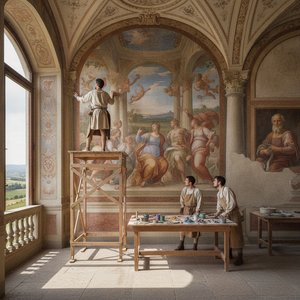
Explore the profound history and technical mastery of fresco painting. From ancient Roman murals to Michelangelo's Sistine Chapel, discover the enduring chemistry and artistry behind this timeless wall painting technique used by the world's greatest masters.

Discover the pinnacle of bespoke interior design with Most-Famous-Paintings.com's custom wall murals and frescoes. Our master artists create hand-painted, large-scale masterpieces tailored to your space, offering unparalleled luxury, historical authenticity, and professional installation.


Будьте в курсі останніх новин зі світу мистецтва, ексклюзивних пропозицій та ідей для декорування.
Розкажіть нам про свій проєкт, і наші експерти з мистецтва підготують для вас 3 персоналізовані пропозиції щодо творів мистецтва.
Дозвольте нам підібрати 3 варіанти спеціально для вас — безкоштовно!


 Переглянути в інтер'єрі
 Надіслати як листівку
 Поділитися
 Детальніше

 Завантажити
 Схожі експонати
 Рентгенівське дослідження
 Слайд-шоу


 Читати далі







 Скляний варіант доступний лише для розмірів до 110 см


