


x
Придбайте цифрову копію високої роздільної здатності з покращеною якістю, що значно перевершує онлайн-перегляд.
Кожен файл ретельно підготовлений нашими фахівцями за допомогою сучасних інструментів та професійної ручної ретуші. Ми гарантуємо виняткову чіткість, точну передачу кольору та високу деталізацію кожного зображення.
Фінальний файл надсилається електронною поштою протягом 72 годин і оптимізований для негайного використання у професійних виданнях та друкованих матеріалах. Таку якість обирають провідні дизайнерські студії, видавництва та галереї.
Завантажте файл високої роздільної здатності для особистого використання, друку та творчих проєктів. ( Замовити принт Замовити репродукцію ручної роботи)
Обираючи Most-Famous-Paintings.com, ви отримуєте не просто зображення — ви отримуєте професійно вдосконалений цифровий витвір мистецтва, створений з надзвичайною точністю та підкріплений гарантією задоволення. Ось усе, що автоматично додається до вашого замовлення:

Ваш цифровий файл із зображенням високої роздільної здатності буде надісланий вам електронною поштою протягом 72 годин після оформлення замовлення — він буде готовий до негайного використання.

Ваш витвір мистецтва професійно оптимізовано за допомогою передових інструментів штучного інтелекту та ручної корекції, що забезпечує максимальну деталізацію, чіткість і точність передачі кольорів.

Випадково видалили або втратили файл? Не хвилюйтеся — ми надішлемо його вам повторно в будь-який час безкоштовно.

Насолоджуйтесь вашим витвором мистецтва миттєво без жодних мит, зборів або плати за доставку — цифрові завантаження завжди не оподатковуються.

Ми гарантуємо максимально точне відтворення оригінальних кольорів на вашому цифровому зображенні завдяки використанню професійних інструментів та систем управління кольором.

Якщо ви не задоволені придбаним цифровим зображенням, ми відкоригуємо його або повернемо 100% вартості протягом 60 днів — без жодних запитань.

Не задоволені покупкою? Отримайте повне повернення коштів протягом 60 днів після отримання цифрового файлу — без жодних запитань.

Купуйте 3 зображення — заощаджуйте 10% — Купуйте 5 — заощаджуйте 15% — Купуйте 10+ — заощаджуйте 20%. Чудово підходить для творчих проєктів, галерей та агентств.

Born in Como, Italy, on April 30th, 1888, Antonio Sant’Elia was not merely an architect; he was a visionary, a prophet of a future irrevocably shaped by the tumultuous currents of early 20th-century Europe. His life, tragically cut short at the young age of twenty-eight during the brutal fighting on the Isonzo front in 1916, nonetheless left an indelible mark on architectural thought and artistic expression. Sant’Elia's legacy resides not in completed buildings—he rarely saw his radical designs realized—but in a breathtaking body of sketches, drawings, and theoretical writings that unveiled a profoundly original and unsettling vision of urban life.
Sant’Elia’s formative years were steeped in the industrial dynamism of Como, a region rapidly transforming through textile production and burgeoning tourism. This environment, coupled with his father's profession as a builder, instilled within him an acute awareness of both the potential and the limitations of construction. He pursued formal training at the Brera Academy in Milan, absorbing the principles of traditional architecture while simultaneously encountering the revolutionary ideas circulating amongst a group of avant-garde artists and intellectuals—a milieu that would profoundly shape his artistic trajectory.
It was through his association with Filippo Tommaso Marinetti and the burgeoning Futurist movement that Sant’Elia truly found his voice. The Futurists, vehemently rejecting the past and embracing speed, technology, and violence, sought to dismantle established artistic conventions and forge a new aesthetic language. Sant'Elia quickly became a key figure in their architectural explorations, contributing significantly to the *Manifesto of Futurist Architecture* (1914). This manifesto articulated a radical departure from traditional notions of building design, advocating for structures that were dynamic, multi-layered, and integrated with the surrounding environment—a concept he termed “Città Nuova,” or ‘New City.’
Unlike the static, monumental forms of classical architecture, Sant’Elia envisioned a city as a pulsating organism, a complex network of interconnected spaces designed to accommodate the relentless pace of modern life. He drew inspiration from diverse sources—the efficiency of industrial production, the dynamism of American urban landscapes (particularly New York City), and the geometric precision of early 20th-century architecture like that of Otto Wagner in Vienna. His sketches reveal a fascination with stepped housing arrangements, towering power stations, and intricate transportation systems – all elements designed to create a seamless and efficient urban experience.
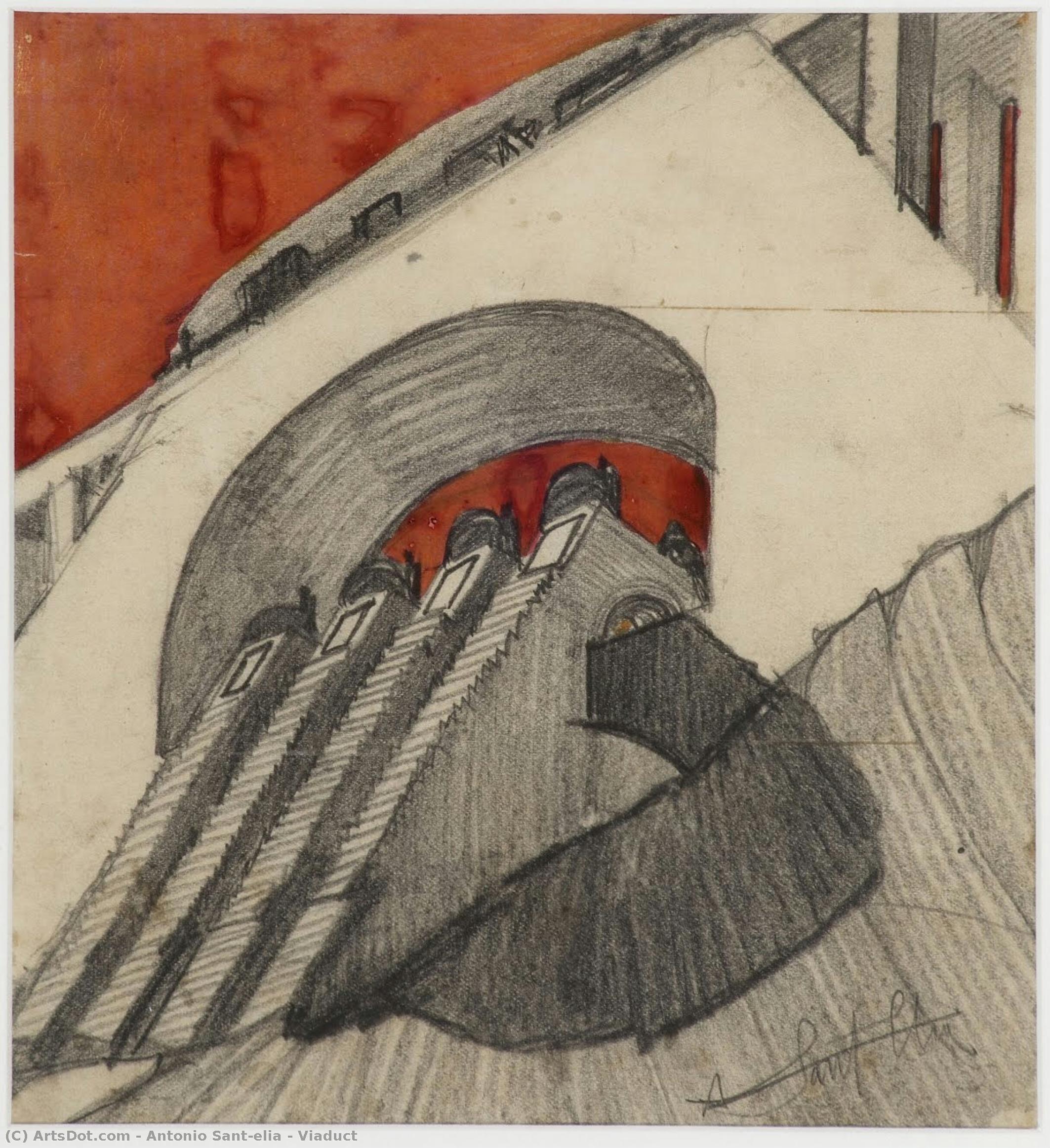
Sant’Elia's most enduring contribution lies in his extensive sketchbook collection. These drawings—rendered in meticulous detail with graphite and ink—offer an unparalleled glimpse into the workings of his imagination. They depict not just idealized cityscapes, but also unsettling visions of a mechanized future, where human life is subsumed by industrial processes. The *Città Nuova* sketches are particularly striking, showcasing a complex, tiered urban structure that seems to defy gravity and logic. He explored themes of verticality, interconnectedness, and the blurring of boundaries between nature and technology.
Beyond the grand scale of the *Città Nuova*, Sant’Elia produced numerous smaller studies—architectural details, industrial designs, and even fantastical renderings of machines and vehicles. These works demonstrate a remarkable versatility and an unwavering commitment to pushing the boundaries of architectural expression. His drawings are not merely technical exercises; they are imbued with a palpable sense of urgency and a profound awareness of the potential consequences of unchecked technological advancement.
Tragically, Sant’Elia's life was cut short during World War I. He enlisted in the Italian army and perished on the Isonzo front in 1916. Despite his untimely death, his ideas continued to resonate within the Futurist movement and beyond. His sketches were exhibited posthumously, cementing his reputation as a visionary architect and a key figure in the development of modernism.
While few of Sant’Elia's designs were ever realized during his lifetime, his influence can be seen in the work of subsequent architects—particularly those associated with the Bauhaus movement and the International Style. His emphasis on functional design, industrial materials, and innovative spatial arrangements laid the groundwork for a new generation of architects who sought to create buildings that were both aesthetically compelling and technologically advanced. Today, Antonio Sant'Elia is remembered not just as an architect, but as a prophet—a man who dared to imagine a radically different future and whose sketches continue to inspire awe and provoke reflection on the relationship between humanity and technology.

1888 - 1916


Будьте в курсі останніх новин зі світу мистецтва, ексклюзивних пропозицій та ідей для декорування.
Розкажіть нам про свій проєкт, і наші експерти з мистецтва підготують для вас 3 персоналізовані пропозиції щодо творів мистецтва.
Дозвольте нам підібрати 3 варіанти спеціально для вас — безкоштовно!


 Переглянути в інтер'єрі
 Надіслати як листівку
 Поділитися
 Детальніше

 Завантажити
 Схожі експонати
 Рентгенівське дослідження
 Слайд-шоу

 Читати далі


