x
 Олія на полотніНастінне мистецтвоBaroque Drama
 1607— Ранній модерн
 286.0 x 213.0 cm
 Музей Національний Каподимонте
Музейна якість друку جيкле або на полотні з оперативним виготовленням та різноманітними варіантами фінішної обробки. ( Замовити репродукцію ручної роботи Купити цифрове зображення)





























Обирайте з наших стандартних розмірів, що відповідають оригінальним пропорціям твору мистецтва.

Ви можете вказати власні розміри, щоб репродукція ідеально підійшла до конкретної рами або інтер'єру. Якщо обраний вами розмір не відповідає пропорціям оригіналу, ми або обріжемо полотно, або розширимо зображення за допомогою дзеркального відображення чи суцільної заливки країв. Перед початком виробництва вам буде надіслано цифровий макет для затвердження.
Будь ласка, зверніть увагу, що попередній перегляд на екрані не відображає фактичне обрізання або розширення. Тільки макет точно покаже фінальну композицію.
Хоча можливість замовлення індивідуальних розмірів доступна, ми рекомендуємо обирати формат із попередньо визначеного списку, щоб зберегти оригінальні пропорції.
Доставка по всьому світу () за 2 тижні замість стандартних 4/5 тижнів. (13 Серпень)


Flagellation
Розмір репродукції
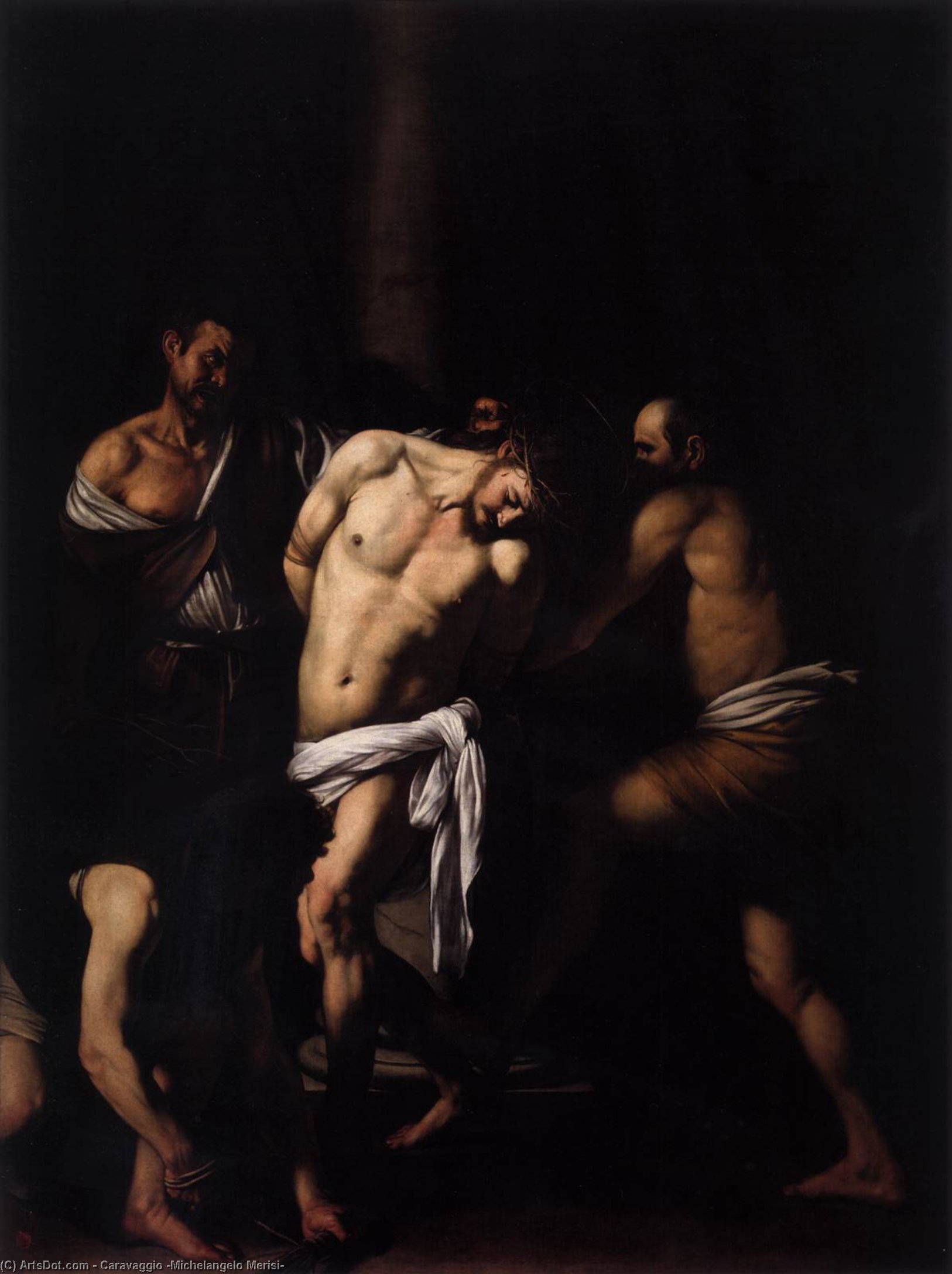
In the quiet, hallowed halls of the Museo Nazionale di Capodimonte, there exists a moment frozen in time, captured with such visceral intensity that it seems to pulse with life even centuries after its creation. Michelangelo Merisi da Caravaggio’s Flagellation is not merely a depiction of a biblical event; it is an immersive descent into the raw, unvarnified reality of human agony. Created in 1607, this masterpiece serves as a profound testament to the Baroque era's ability to bridge the gap between the divine and the earthly through the sheer power of dramatic realism.
The scene unfolds within a claustrophobic, dimly lit space that feels almost suffocating, heightening the tension felt by every observer. At the heart of this turmoil stands Christ, his body contorted in a silent scream of endurance, bound to a cold stone pillar. Caravaggio employs his signature chiaroscuro technique—a masterful interplay of extreme light and deep, impenetrable shadow—to sculpt the figures out of the darkness. This single, unseen light source does more than just illuminate; it carves the musculature of Christ’s suffering form and casts the faces of his tormentors into a mysterious, unsettling obscurity. The stark contrast creates a sense of immediacy, pulling the viewer into the very center of the violence.
To gaze upon this canvas is to experience a masterclass in texture and tonal subtlety. Caravaggio eschews a vibrant color palette in favor of a somber, almost monochromatic arrangement of earthy browns, muted greys, and bone-whites. This restraint directs the eye away from superficial beauty and toward the profound weight of the subject matter. One can almost feel the rough, abrasive surface of the stone pillar and the heavy, coarse weight of the fabrics draped around the figures. The artist’s technique, involving the meticulous layering of oil paints, allows for a skin texture that appears both taut and vulnerable, making the physical impact of the flagellation feel palpably real.
The composition is a dynamic web of lines and shapes that guide the emotional journey of the viewer. Diagonal lines formed by straining arms and ropes create an unsettling rhythm, while the organic, twisted forms of the human bodies contrast sharply with the rigid verticality of the pillar. This structural tension mirrors the spiritual struggle depicted within the frame—the clash between the physical brutality of man and the enduring purity of the divine spirit.
Beyond its historical significance, The Flagellation remains a profound psychological study. It explores themes of sacrifice, the struggle between good and evil, and the resilience of the human soul amidst cruelty. For the art lover, it offers a window into the revolutionary spirit of Caravaggio; for the interior designer, it provides a centerpiece of unparalleled dramatic gravity; and for the collector, it represents an opportunity to possess a fragment of art history’s most transformative era.
Whether displayed in a contemporary gallery or a classic study, a high-quality reproduction of this work brings with it an atmosphere of solemnity and intellectual depth. It is a piece that does not merely decorate a room but commands it, inviting endless contemplation of the light that persists even in the deepest shadows.

1571 - 1610 , Іспанія

Explore the profound elegance of Baroque Classicism. Discover how 17th-century masters synthesized dramatic emotion with classical order through the lens of the Counter-Reformation and the works of legends like Carlo Maratta and Andrea Sacchi.

Explore the dramatic evolution from Mannerist distortion to Baroque grandeur. Discover how light, shadow, and emotion redefined art history through a masterclass in technical mastery and religious fervor.

Explore the profound drama of 17th-century Baroque art. Discover how masters used chiaroscuro, movement, and emotional intensity to redefine history through the lens of the Counter-Reformation. An expert guide for art historians and collectors seeking deep cultural insight.

Explore the profound differences between Baroque drama and Rococo elegance. Our expert guide delves into art history, chiaroscuro, and the evolution of European masterpieces for collectors and enthusiasts seeking deep historical context.


Будьте в курсі останніх новин зі світу мистецтва, ексклюзивних пропозицій та ідей для декорування.
Розкажіть нам про свій проєкт, і наші експерти з мистецтва підготують для вас 3 персоналізовані пропозиції щодо творів мистецтва.
Дозвольте нам підібрати 3 варіанти спеціально для вас — безкоштовно!


 Переглянути в інтер'єрі
 Надіслати як листівку
 Поділитися
 Детальніше

 Завантажити
 Схожі експонати
 Рентгенівське дослідження
 Слайд-шоу
 Читати далі







 Скляний варіант доступний лише для розмірів до 110 см