Список бажань Кошик покупок Cart
x
Переглянути в інтер'єріПереглянути в інтер'єрі Перегляд в ARПерегляд в AR Замовити принт Замовити принтКупити цифрове зображення Купити цифрове зображення Надіслати як листівкуНадіслати як листівку
ДетальнішеДетальніше Додати до улюблених Додати до улюблених ЗавантажитиЗавантажити Схожі експонатиСхожі експонати Рентгенівське дослідженняРентгенівське дослідження Слайд-шоуСлайд-шоу

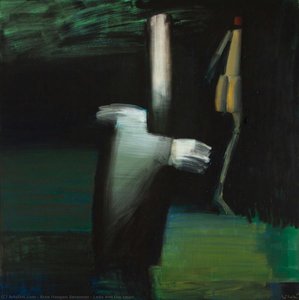
The Painter Francis Bacon

Discover Chronis Botsoglou's evocative Greek paintings & sculptures! Blending tradition & modernism, explore his bold colors & emotional depth. See works at Most-Famous-Paintings & Prado Museum.

Олійная репродукція ручної роботи

Написана вручну олією на полотні у вашому розмірі та рамі, виготовлена на замовлення нашими художниками. (Замовити принт Замовити принтКупити цифрове зображення Купити цифрове зображення)

Standard
custom
CM
INCH

Обирайте з наших стандартних розмірів, що відповідають оригінальним пропорціям твору мистецтва.

ширина
висота

Ви можете вказати власні розміри, щоб репродукція ідеально підійшла до конкретної рами або інтер'єру. Якщо вибраний вами розмір не відповідає пропорціям оригіналу, ми або обріжемо полотно, або доповнимо картину додатковими елементами, промальованими вручну. Цифровий макет буде надіслано вам на затвердження перед початком виробництва.
Зверніть увагу, що попередній перегляд на екрані не відображає фактичне обрізання або розширення зображення. Тільки макет точно покаже остаточну композицію.
Хоча ми можемо виготовити виріб у нестандартному розмірі, для збереження оригінальних пропорцій рекомендуємо обирати варіанти зі встановленого списку.

Приклади можливих змін: замінити обличчя на фото клієнта; додати домашню тварину (наприклад, замінити кота на собаку); додати приховане повідомлення на фоні; змінити ландшафт або елементи фону.
Після оформлення замовлення команда Most-Famous-Paintings.com зв'яжеться з клієнтом електронною поштою для отримання інструкцій та надасть попередній макет

Доставка по всьому світу () за 3–4 тижні замість стандартних 5 тижнів. (23 Серпень). Без жодних компромісів у якості.

why_choose_icon
Безкоштовна експрес-доставка по всьому світу
why_choose_icon
Високоякісне лляне полотно
why_choose_icon
Повне страхове покриття доставки
why_choose_icon
Гарантія відшкодування митних зборів
why_choose_icon
Гарантія точного відтворення кольорів
why_choose_icon
Політика повернення протягом 60 днів (лише у разі виявлення дефектів)
why_choose_icon
Гарантія повернення 100% коштів
why_choose_icon
Пропозиція на оптові замовлення

Загальна вартість

$ 272

reproduction

The Painter Francis Bacon

Матеріал репродукції

Розмір репродукції

-

Підсумкова вартість

$ 272


Біографія митця

Robert Delaunay: A Pioneer of Color and Rhythm

Robert Delaunay, born Robert-Victor-Felix Delaunay in Paris on April 12th, 1885, was a pivotal figure in the early development of modern art. His life, marked by both artistic innovation and personal transformation alongside his wife Sonia Delaunay, ultimately shaped the trajectory of Orphism and significantly influenced movements like Cubism and Abstract Art. From humble beginnings as an apprentice to a theatrical designer, Delaunay’s journey was one of relentless experimentation with color, light, and form—a pursuit that redefined the possibilities of painting itself. His career spanned several decades, culminating in a legacy of vibrant abstraction and a profound impact on generations of artists.

Early Influences and the Rise of Neo-Impressionism

Delaunay’s early artistic development was deeply rooted in the principles of Neo-Impressionism. Following his apprenticeship, he began to paint, initially exploring decorative arts before gravitating towards a more expressive style. Inspired by figures like Paul Signac and Georges Seurat, Delaunay embraced the Neo-Impressionist technique of dividing colors into small strokes of pure hues, believing that this method would create a shimmering effect when viewed from a distance. This approach, however, proved only a stepping stone for his later explorations. He moved beyond mere replication of natural appearances, seeking to capture the essence of light and color itself—a core tenet of his evolving artistic philosophy. His early works, such as “Saint-Séverin” (1906-7), demonstrate this shift, showcasing an increasing interest in capturing atmospheric effects through carefully orchestrated color combinations.

The Birth of Orphism: Color and Rhythm

A turning point arrived in 1912 when Delaunay, along with Sonia and other artists including František Kupka and Chaïm Soutine, began to develop what would become known as Orphism. This movement, named after the Greek word for “rainbow,” was characterized by an intense focus on color—not as a representation of reality, but as an independent entity capable of evoking emotion and creating visual rhythms. Delaunay’s paintings from this period, such as "Disc" (1912) and "Circular Forms" (1912), exemplify this radical departure. He abandoned traditional perspective and form, instead employing geometric shapes—circles, squares, and lines—arranged in dynamic compositions that pulsed with color and energy. Influenced by theories of light and color developed by scientists like Michel Eugène Chevreul, Delaunay believed that colors could be combined to create a sense of movement and vibration. This exploration was further fueled by his interest in the work of Paul Klee and other artists experimenting with abstraction.

Collaboration with Sonia Delaunay and the Expansion of Artistic Practice

The partnership with Sonia Delaunay proved crucial to Robert’s artistic development, and their collaboration extended beyond painting. Sonia, a talented textile designer, began creating vibrant fabrics incorporating geometric patterns inspired by her husband's paintings. This led to a fascinating exchange—Robert translating his visual rhythms onto fabric, while Sonia applied them to textiles, effectively expanding the reach of Orphism into new mediums. Furthermore, they established the “Atelier du Rectangle,” a collaborative studio where they produced furniture, wallpaper, and other decorative objects, solidifying their commitment to exploring the expressive potential of geometric abstraction. This period also saw Robert Delaunay experimenting with relief painting, culminating in his monumental panels for the Aeronautics pavilion at the 1937 Paris International Exhibition—large-scale works that showcased his mastery of color and composition.

Later Years and Abstract Legacy

Following World War I, Delaunay’s style evolved further, moving towards a more purely abstract approach. He continued to work with vibrant colors and geometric forms, but increasingly focused on creating dynamic compositions that emphasized rhythm and movement. Despite facing challenges during the Nazi occupation of France, he persevered in his artistic practice, producing significant works until his death in Montpellier on October 25th, 1941. Robert Delaunay’s legacy extends far beyond his own paintings. His pioneering work with color, his exploration of abstraction, and his influence on subsequent generations of artists—including Stanton Macdonald-Wright, Morgan Russell, and Paul Klee—cemented his place as a foundational figure in the development of modern art. His emphasis on color as an independent expressive force continues to resonate within abstract painting today, reminding us of the transformative power of visual experimentation.
chronis botsoglou

chronis botsoglou

1941 - 2022 , Greece

Короткі факти

  • Artistic Movement Or Style:
    • Divisionism
    • Cubism
    • Orphism
    • Abstract art
  • Artists Or Movements Influenced By This Artist:
    • Stanton-Wright
    • Morgan Russell
    • Klee
    • Marc
    • Apollinaire
  • Artists Who Influenced This Artist:
    • Neoimpressionism
    • Cézanne
  • Date Of Birth: April 12, 1885
  • Date Of Death: October 25, 1941
  • Full Name: Robert Delaunay
  • Nationality: French
  • Notable Artworks:
    • Endless Rhythm
    • Cubism
    • Orphic Cubism
    • Simultanism
  • Place Of Birth: Paris, France