x


 Preview
 Замовити репродукцію Купити цифрове зображення
 Надіслати
 Деталі витвору
 Додати до улюблених
 Завантажити
 Схожі вироби
 Рентгенівське дослідження
 Слайд-шоу
Музейна якість друку جيкле або на полотні з оперативним виготовленням та різноманітними варіантами фінішної обробки.





























Обирайте з наших стандартних розмірів, що відповідають оригінальним пропорціям твору мистецтва.

Ви можете вказати власні розміри, щоб репродукція ідеально підійшла до конкретної рами або інтер'єру. Якщо обраний вами розмір не відповідає пропорціям оригіналу, ми або обріжемо полотно, або розширимо зображення за допомогою дзеркального відображення чи суцільної заливки країв. Перед початком виробництва вам буде надіслано цифровий макет для затвердження.
Будь ласка, зверніть увагу, що попередній перегляд на екрані не відображає фактичне обрізання або розширення. Тільки макет точно покаже фінальну композицію.
Хоча можливість замовлення індивідуальних розмірів доступна, ми рекомендуємо обирати формат із попередньо визначеного списку, щоб зберегти оригінальні пропорції.
Доставка по всьому світу () за 2 тижні замість стандартних 4/5 тижнів. (25 Липень)


untitled (697)
Розмір репродукції
Egon Schiele's “untitled (697)” offers a poignant glimpse into the artist’s deeply personal and often melancholic world, though diverging from his more famous explorations of the human form. This landscape, depicting stark trees against a muted sky punctuated by a radiant sun, is not merely a representation of nature; it’s an emotional terrain mirroring Schiele's own internal struggles and profound sensitivity. Painted around 1918, in the waning years of his short life—he succumbed to influenza at just 28—the work carries with it a sense of premonition and quiet resignation. The bare branches reach upwards like skeletal fingers, stripped of their foliage, evoking themes of mortality and transience that were ever-present in Schiele’s oeuvre.
While Schiele is celebrated for his intensely psychological portraits and often unsettling depictions of the body, this landscape reveals a mastery of expressionism applied to natural forms. The painting isn't about meticulous detail or realistic representation; instead, it prioritizes emotional impact through bold simplification and expressive linework. Notice how the trees aren’t rendered with precise botanical accuracy but are defined by strong, angular lines that convey a sense of fragility and vulnerability. The sun, positioned centrally, is not a source of warmth in the conventional sense, but rather a stark presence—a beacon offering little comfort against the bleakness of the surrounding scene. Schiele's technique here relies on a restrained palette, favoring muted tones that amplify the painting’s somber mood. The brushstrokes are visible, adding to the raw and immediate quality of the work, characteristic of his expressive style.
To understand “untitled (697)” fully, it's crucial to consider the context of Schiele’s life. Born in 1890, he experienced considerable hardship from a young age—the death of his father, a controlling upbringing, and societal censure for his artistic explorations of sexuality and the human condition. His art was often met with scandal and rejection, and even imprisonment for perceived obscenity. This sense of alienation and struggle permeates much of his work. The barren trees can be interpreted as symbols of loss, isolation, and the inevitable decay of life. However, the presence of the sun suggests a glimmer of hope or perhaps acceptance—a recognition of beauty even in the face of darkness. The landscape itself could represent Schiele’s own emotional terrain: stark, unforgiving, yet possessing a haunting beauty.
A reproduction of “untitled (697)” offers more than just an aesthetic addition to a space; it invites contemplation and introspection. The painting’s subdued palette and evocative imagery make it particularly well-suited for interiors seeking a sense of quiet drama or understated elegance. It would complement minimalist décor, adding depth and emotional resonance without overwhelming the room. For collectors, this work represents a less common facet of Schiele's artistic output—a testament to his versatility and enduring power as an expressionist master. It’s a piece that speaks not just to the eye but to the soul, offering a timeless reflection on life, loss, and the search for meaning in a transient world.
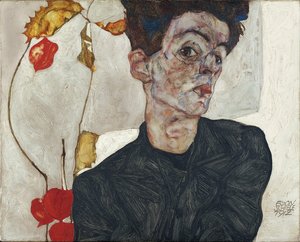
1890 - 1918 , Австрія
Explore the profound emotional world of Abstract Expressionism with Most-Famous-Paintings. Discover key artists like Pollock & Rothko, learn about collecting, and find museum-quality reproductions to inspire your space.

Discover the profound emotional depth & innovative techniques of Frank McClure, a key figure in Abstract Expressionism. Explore his woodcuts, influences, and lasting legacy – essential reading for serious art collectors.

Explore the rich history of trees in painting! Discover symbolism, Romantic masterpieces by Caspar David Friedrich & beyond. A curated journey for art enthusiasts.

Explore the profound world of Clyfford Still's Abstract Expressionism with Most-Famous-Paintings. Discover his unique style, existential themes & investment potential. Expert analysis for discerning collectors.

Відкрийте для себе 25 найкращих шедеврів П’єра-Огюста Ренуара! Імпресіонізм, балерини, портрети – історія мистецтва та натхнення для вашого дому. Репродукції картин високої якості на Most-Famous-Paintings.com.


Будьте в курсі останніх новин зі світу мистецтва, ексклюзивних пропозицій та ідей для декорування.
Розкажіть нам про свій проєкт, і наші експерти з мистецтва підготують для вас 3 персоналізовані пропозиції щодо творів мистецтва.
Дозвольте нам підібрати 3 варіанти спеціально для вас — безкоштовно!


 Поділитися


 Розгорнути текст







 Скляний варіант доступний лише для розмірів до 110 см