
Стати продавцем
Список бажань Кошик покупок Cart
x
Переглянути в інтер'єріПереглянути в інтер'єрі Перегляд в ARПерегляд в AR Замовити принт Замовити принтЗамовити репродукцію ручної роботи Замовити репродукцію ручної роботи Надіслати як листівкуНадіслати як листівку
ДетальнішеДетальніше Додати до улюблених Додати до улюблених ЗавантажитиЗавантажити Схожі експонатиСхожі експонати Рентгенівське дослідженняРентгенівське дослідження Слайд-шоуСлайд-шоу

untitled (9575)

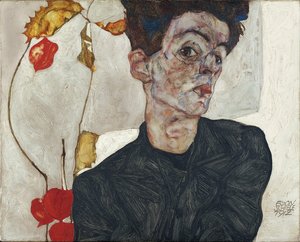
Experience the raw intensity of Egon Schiele's 'Untitled (9575)'. This Expressionist portrait captures a woman’s haunting gaze and explores themes of mortality & emotion with bold lines and unsettling beauty.

Еґон Шілельє – австрійський экспресіоністський живописець, відомий своїми емоційно насиченими полотнами та символічним зображенням будинку з сухим пранням. Дізнайтесь більше про мистецтво Шілеля!

Придбайте цифрову копію високої роздільної здатності з покращеною якістю, що значно перевершує онлайн-перегляд.

Кожен файл ретельно підготовлений нашими фахівцями за допомогою сучасних інструментів та професійної ручної ретуші. Ми гарантуємо виняткову чіткість, точну передачу кольору та високу деталізацію кожного зображення.

Фінальний файл надсилається електронною поштою протягом 72 годин і оптимізований для негайного використання у професійних виданнях та друкованих матеріалах. Таку якість обирають провідні дизайнерські студії, видавництва та галереї.

Цифрове зображення

Завантажте файл високої роздільної здатності для особистого використання, друку та творчих проєктів. (Замовити принт Замовити принтЗамовити репродукцію ручної роботи Замовити репродукцію ручної роботи)

Підсумкова вартість

$ 24,90

Переваги кожного замовлення цифрових зображень

Експертна цифрова доставка з гарантією якості

Обираючи Most-Famous-Paintings.com, ви отримуєте не просто зображення — ви отримуєте професійно вдосконалений цифровий витвір мистецтва, створений з надзвичайною точністю та підкріплений гарантією задоволення. Ось усе, що автоматично додається до вашого замовлення:

shipping_icon
Швидка доставка на email

Ваш цифровий файл із зображенням високої роздільної здатності буде надісланий вам електронною поштою протягом 72 годин після оформлення замовлення — він буде готовий до негайного використання.

canvas_icon
Цифровий файл із покращенням ШІ

Ваш витвір мистецтва професійно оптимізовано за допомогою передових інструментів штучного інтелекту та ручної корекції, що забезпечує максимальну деталізацію, чіткість і точність передачі кольорів.

insurance_icon
Безкоштовне повторне завантаження назавжди

Випадково видалили або втратили файл? Не хвилюйтеся — ми надішлемо його вам повторно в будь-який час безкоштовно.

tax_icon
Без митних зборів — ніколи

Насолоджуйтесь вашим витвором мистецтва миттєво без жодних мит, зборів або плати за доставку — цифрові завантаження завжди не оподатковуються.

color_icon
Гарантія точності кольорів

Ми гарантуємо максимально точне відтворення оригінальних кольорів на вашому цифровому зображенні завдяки використанню професійних інструментів та систем управління кольором.

return_icon
Гарантія задоволення протягом 60 днів

Якщо ви не задоволені придбаним цифровим зображенням, ми відкоригуємо його або повернемо 100% вартості протягом 60 днів — без жодних запитань.

guarantee_icon
Гарантія повернення 100% коштів

Не задоволені покупкою? Отримайте повне повернення коштів протягом 60 днів після отримання цифрового файлу — без жодних запитань.

discount_icon
Знижки на оптові замовлення

Купуйте 3 зображення — заощаджуйте 10% — Купуйте 5 — заощаджуйте 15% — Купуйте 10+ — заощаджуйте 20%. Чудово підходить для творчих проєктів, галерей та агентств.

Основна інформація

  • Subject or theme: Woman, emotion
  • Notable elements: Red lipstick, hair
  • Influences: Klimt
  • Artist: Egon Schiele
  • Movement: Expressionism

Квіз про мистецтво

У кожному запитанні лише одна правильна відповідь.

Запитання 1:
Egon Schiele is primarily associated with which artistic movement?
Запитання 2:
The woman in the painting ‘untitled (9575)’ is depicted with a striking feature. What is it?
Запитання 3:
Considering Schiele's biography, which event significantly influenced his artistic themes of mortality and fragility?
Запитання 4:
What stylistic element is most evident in Schiele’s work, as highlighted in the description?
Запитання 5:
The image’s dramatic appearance suggests which of the following interpretations?

Опис колекційного об'єкта

Egon Schiele’s Haunting Portrait – A Study in Intensity

Egon Schiele's "untitled (9575)" is not merely a painting; it’s an unflinching gaze into the depths of human emotion, a raw and intensely personal expression rendered with the signature boldness that defined this pivotal figure of Expressionism. Created during a period of profound upheaval – his life tragically cut short in 1918 amidst the horrors of World War I – the work embodies Schiele’s preoccupation with mortality, sexuality, and the psychological complexities of the human condition. The image depicts a woman, her features both vulnerable and defiant, presented against an undefined backdrop that amplifies the drama of her presence. Her long hair, seemingly caught in a moment of disarray, adds to the sense of immediacy and emotional turbulence.

Schiele’s distinctive style is immediately recognizable. He eschewed traditional academic techniques in favor of a highly individual approach characterized by elongated figures, distorted perspectives, and a deliberate use of line – thick, jagged strokes that seem to vibrate with energy. This particular piece showcases his mastery of capturing fleeting expressions; the subtle curve of her lips, painted with a vivid red lipstick, hints at an unspoken narrative, while her direct gaze compels the viewer into an uncomfortable yet captivating dialogue. The painting’s color palette is restrained – primarily muted tones punctuated by the striking red of her mouth – contributing to its overall sense of somber intensity.

The Shadow of Loss and the Embrace of Eros

Schiele's biography is inextricably linked to his art, and the pervasive influence of personal tragedy is palpable throughout his oeuvre. The early death of his father, a man consumed by syphilis, cast a long shadow over his childhood, shaping his artistic vision with an acute awareness of fragility and decay. Similarly, the loss of his sister Elvira at a young age fueled a deep-seated fear of mortality that he relentlessly explored through his art. This exploration isn’t simply morbid; it's intertwined with a fascination – even an embrace – of eroticism and the raw physicality of human experience. As noted in the Wikipedia article on Schiele, “The presence of death, but also the connection between death and eros in several of his works from this period, is associated with this event.”

Interestingly, the painting’s creation coincided with Schiele's military service during World War I. This tumultuous period undoubtedly informed the work’s emotional intensity, contributing to its exploration of themes like loss, vulnerability, and the unsettling juxtaposition of life and death. The influence of Gustav Klimt, a mentor figure in Schiele’s early career, is also evident – though Schiele quickly forged his own distinct path, rejecting Klimt's decorative style in favor of a more psychologically driven approach.

Symbolism and the Unspoken Narrative

While the subject matter appears straightforward—a woman looking directly at the viewer—"untitled (9575)" is rich with symbolic potential. The red lipstick, a bold statement against the muted background, can be interpreted as an assertion of self, a defiant act in the face of mortality. Her slightly disheveled hair suggests a state of emotional turmoil, perhaps reflecting the anxieties and uncertainties of her time. The lack of specific context invites interpretation; we are left to project our own emotions and experiences onto the figure, creating a deeply personal connection with the artwork.

Drawing parallels to Schiele’s “Death and the Maiden” (1915), another powerful work exploring the intersection of death and eroticism, reveals a recurring thematic concern. Both paintings utilize a Renaissance motif – the contrast between death and the maiden – but imbue it with Schiele's signature intensity and psychological depth. The film adaptation of Schiele’s life, “Death and the Maiden,” further solidifies this connection, demonstrating the enduring fascination with his work.

Bringing Schiele’s Vision Home

Most-Famous-Paintings offers meticulously crafted hand-painted reproductions of Egon Schiele's "untitled (9575)," allowing you to experience the raw emotion and captivating intensity of this iconic artwork in your own space. These reproductions faithfully capture the artist’s distinctive style, utilizing traditional oil painting techniques to recreate the texture, color palette, and dynamic energy of the original. Whether you are an art collector, a design enthusiast, or simply seeking a piece that speaks to the complexities of human experience, a Most-Famous-Paintings reproduction of Schiele's portrait is a powerful addition to any collection – a testament to the enduring legacy of one of Expressionism’s most compelling figures.

Біографія митця

A Life Forged in Expression

Egon Schiele’s life, a turbulent and intensely personal journey, unfolded from his birth in Tulln an der Donau in 1890, a small Austrian town nestled along the Danube. His early years were shadowed by profound loss – first the death of his father, Adolf Schiele, a railway station master consumed by syphilis when Egon was just fourteen, and later the untimely passing of his sister Elvira. This early exposure to mortality and grief became deeply ingrained within his artistic vision, fueling an enduring fascination with the fragility of existence and the inevitability of death. Raised initially by his mother and then under the somewhat controlling guardianship of his uncle Leopold Czihaczek, Schiele’s childhood lacked the stability often associated with conventional upbringing, yet it fostered a remarkable sense of independence and self-reliance—qualities that would profoundly shape his artistic approach. Even as a young boy, he exhibited an intense curiosity about trains – a motif that subtly reappeared throughout his career, symbolizing both movement and the passage of time. Simultaneously, he displayed a burgeoning talent for drawing, though this pursuit was initially met with disapproval from his father, who viewed it as a distraction from more “practical” endeavors. The early loss of his sister Elvira cast a long shadow over the young artist’s psyche, contributing to a pervasive sense of melancholy and vulnerability that permeated much of his work. These formative experiences—illness, loss, and a lack of stability—instilled within him an unparalleled sensitivity and emotional rawness, qualities that would become defining characteristics of his artistic expression, constantly grappling with the fundamental questions of life, death, and the human condition.

The Crucible of Vienna: Artistic Development

Schiele’s formal artistic training began at the Kunstgewerbeschule (School of Arts and Crafts) in Vienna, but he quickly found himself stifled by its conservative and rigidly academic approach. Seeking a more liberating environment, he transferred to the Akademie der bildenden Künste (Academy of Fine Arts), only to discover that even this institution failed to satisfy his artistic aspirations. The rigid traditions and emphasis on historical precedent clashed sharply with Schiele’s desire for innovation and personal expression. Dissatisfied with these constraints, he ultimately abandoned formal training altogether, choosing instead to forge his own path—a bold decision that underscored his unwavering commitment to his artistic vision. Crucially, during these formative years, Schiele was profoundly influenced by the work of Gustav Klimt, a leading figure in Viennese Secessionism. He admired Klimt’s distinctive decorative style and his exploration of symbolism, even receiving mentorship from the established artist. However, Schiele soon diverged significantly from Klimt's aesthetic, developing a uniquely personal style characterized by its stark honesty, psychological intensity, and unflinching portrayal of human vulnerability. This divergence was further fueled by his encounters with other progressive artists within Vienna’s avant-garde circles, leading to the formation of the Neues Wiener Kunstgruppe (New Viennese Art Group) in 1909—a collective dedicated to challenging conventional artistic norms and pushing the boundaries of modern art. The group included figures like Anton Faistauer, Rudolf Kalvach, and Hans Ehrlich, all seeking to redefine the role of art in a rapidly changing world.

Raw Emotion and Unflinching Truth

Egon Schiele’s art is immediately recognizable for its raw honesty and psychological depth. He fearlessly confronted themes often considered taboo – sexuality, death, anxiety, isolation – with an unflinching gaze. His distinctive style features elongated figures, contorted poses, and expressive lines that convey a sense of unease and emotional intensity. The human form, particularly the nude, became his primary subject, not as an object of idealized beauty but as a vehicle for exploring the complexities of human experience. Self-portraits constitute a significant portion of his oeuvre, offering intimate glimpses into his inner world—a world often marked by loneliness and self-doubt. He didn’t shy away from depicting himself in unflattering or vulnerable poses, revealing a profound level of self-awareness and introspection. Beyond self-portraiture, Schiele created numerous portraits of others, capturing their likenesses with an unsettling realism that seemed to penetrate beneath the surface. His landscapes, while less central to his work than his figurative paintings, demonstrate his mastery of form and color, often reflecting the same emotional intensity as his portraits. Recurring motifs like the *Physalis* plant – symbolizing death and transience with its delicate, papery husk – further underscore this preoccupation with mortality. The use of line is particularly striking in Schiele’s work; it's not merely a tool for defining shape but an expressive force that conveys emotion and psychological tension.

A Legacy Cut Short: Achievements & Significance

Despite facing censorship and legal challenges—including a brief imprisonment for allegedly corrupting minors with his art—Schiele gained recognition within Vienna’s avant-garde circles. His work challenged the conventions of the time, provoking both admiration and outrage. By the time of his untimely death during the Spanish flu pandemic in 1918 at the age of twenty-eight, he had established himself as a leading figure in Austrian Expressionism. Significant works such as *Self-Portrait with Physalis*, *Couple Embracing*, and *Field Landscape (Kreuzberg near Krumau)* stand as testaments to his artistic genius. His influence on subsequent generations of artists is undeniable, particularly those interested in exploring psychological themes and challenging conventional artistic norms. Schiele’s bold approach to form and subject matter continues to resonate with audiences today, making him one of the most important and influential figures in early 20th-century art. His paintings are now held in major museum collections worldwide, including the Leopold Museum in Vienna and the Egon Schiele Art Centrum in Český Krumlov, ensuring his artistic legacy endures. He left behind a body of work that is not merely aesthetically compelling but profoundly human—a testament to the power of art to confront the complexities of existence with honesty, courage, and unwavering vision.
  • Key Themes: Mortality, sexuality, isolation, psychological turmoil.
  • Influences: Gustav Klimt, Viennese Secession, personal trauma.
  • Style Characteristics: Elongated figures, contorted poses, expressive lines, raw emotion.
Еґон Шілельє

Еґон Шілельє

1890 - 1918 , Австрія

Основна інформація

  • Artistic Movement Or Style: Експресіонізм
  • Artists Or Movements Influenced By This Artist: ['Експресіонізм']
  • Artists Who Influenced This Artist: ['Густав Клімт']
  • Date Of Birth: 1890
  • Full Name: Еґон Шілельє
  • Nationality: Австрієць
  • Notable Artworks:
    • Автопортрет з фізалісом
    • Пара обіймається
    • Поле краєвид (Креуберг)
  • Place Of Birth: Тюльн, Австрія

