


x

 Mixed MaterialsSculptureSurrealism
 1952Modern
 63.0 x 35.0 cm
Написана вручну олією на полотні у вашому розмірі та рамі, виготовлена на замовлення нашими художниками. ( Замовити принт Купити цифрове зображення)
Обирайте з наших стандартних розмірів, що відповідають оригінальним пропорціям твору мистецтва.

Ви можете вказати власні розміри, щоб репродукція ідеально підійшла до конкретної рами або інтер'єру. Якщо вибраний вами розмір не відповідає пропорціям оригіналу, ми або обріжемо полотно, або доповнимо картину додатковими елементами, промальованими вручну. Цифровий макет буде надіслано вам на затвердження перед початком виробництва.
Зверніть увагу, що попередній перегляд на екрані не відображає фактичне обрізання або розширення зображення. Тільки макет точно покаже остаточну композицію.
Хоча ми можемо виготовити виріб у нестандартному розмірі, для збереження оригінальних пропорцій рекомендуємо обирати варіанти зі встановленого списку.
Доставка по всьому світу () за 3–4 тижні замість стандартних 5 тижнів. (21 Серпень). Без жодних компромісів у якості.


Branch
Розмір репродукції
In the mid-century landscape of 1952, Fernand Léger unveiled a work that would forever challenge the boundaries between the natural world and the burgeoning machine age. His sculpture, "Branch," famously known as "Rockefeller Branch," serves as a profound Surrealist echo of industrial progress. At first glance, the piece presents a striking juxtaposition; it is an arresting embodiment of the tension between the organic and the inorganic. Léger, a master who had already established himself through the rigorous geometric abstraction of his earlier compositions, embarked on this daring experiment to reconcile the soft, unpredictable rhythms of nature with the hard-edged, orthogonal precision of modern technology.
The sculpture is not merely a visual object but a deliberate provocation. It was presented during the inaugural exhibition at Rockefeller Center, a moment when New York City was asserting itself as a global cultural and industrial titan. Through this work, Léger captures the very essence of mid-century America—a period defined by an unyielding optimism toward technological advancement, yet shadowed by a Surrealist critique of how such progress might reshape the human experience. The piece invites viewers to contemplate a world where the mechanical and the biological are no longer separate entities but are instead woven into a single, complex tapestry.
Léger’s technical execution in "Branch" is nothing short of masterful, utilizing a calculated approach to texture and form. Eschewing the dreamlike, ethereal fantasies often associated with Surrealism, Léger instead employs a technique of calculated juxtaposition. The sculpture utilizes simplified, powerful forms—primarily angular blocks and stylized, skeletal branches—constructed from a sophisticated blend of polished bronze and textured wood.
This deliberate choice of materials creates a compelling sensory interplay. The cold, reflective surface of the bronze speaks to the rigidity and efficiency of industrial manufacturing, while the warmth and grain of the wood evoke the fluid, unpredictable growth of the natural world. This duality allows the sculpture to breathe, creating a visual tension that mirrors the friction between urban expansion and environmental preservation. For the discerning collector or interior designer, this interplay of textures offers a sophisticated focal point, capable of adding both structural strength and organic warmth to a contemporary space.
Beyond its physical presence, "Branch" carries a profound emotional weight. The central motif of the branch serves as a potent symbol of resilience and renewal. In an era where the rapid encroachment of machinery seemed to threaten the vestiges of the natural world, Léger positioned his stylized branches against a backdrop of geometric, man-made forms. This suggests a powerful message: even within the dominant influence of the machine, the spirit of organic life persists, adapting and enduring.
The emotional impact of the piece lies in this very dissonance. It evokes a sense of wonder at the possibility of coexistence, prompting a reflection on our own relationship with progress. To possess a reproduction of such a significant work is to bring into one's environment a piece of art history that celebrates the strength found in complexity. Whether placed in a minimalist gallery setting or an elegantly appointed study, "Branch" acts as a conversation starter, embodying the enduring struggle and ultimate harmony between the world we build and the world we inhabit.
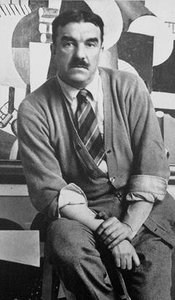
1881 - 1955 , Франція

Explore the profound depths of Surrealism. From Dalí’s dreamscapes to Magritte’s enigmas, master the history of the subconscious mind through our expert art guide and discover museum-quality oil reproductions of the world's most iconic surrealist masterpieces.


Будьте в курсі останніх новин зі світу мистецтва, ексклюзивних пропозицій та ідей для декорування.
Розкажіть нам про свій проєкт, і наші експерти з мистецтва підготують для вас 3 персоналізовані пропозиції щодо творів мистецтва.
Дозвольте нам підібрати 3 варіанти спеціально для вас — безкоштовно!


 Надіслати як листівку
 Поділитися
 Детальніше

 Завантажити
 Схожі експонати
 Слайд-шоу
 Читати далі




































 Скляний варіант доступний лише для розмірів до 110 см


