


x


 Preview
 Замовити друк Купити цифрове зображення
 Надіслати
 Деталі витвору
 Додати до улюблених
 Завантажити
 Схожі вироби
 Рентгенівське дослідження
 Слайд-шоу
Написана вручну олією на полотні у вашому розмірі та рамі, виготовлена на замовлення нашими художниками.





























Обирайте з наших стандартних розмірів, що відповідають оригінальним пропорціям твору мистецтва.

Ви можете вказати власні розміри, щоб репродукція підійшла до конкретної рами або інтер'єру. Якщо вибраний вами розмір не відповідає пропорціям оригіналу, ми або обріжемо полотно, або доповнимо картину додатковими елементами, промальованими вручну. Цифровий макет буде надіслано вам на затвердження перед початком виробництва.
Зверніть увагу, що попередній перегляд на екрані не відображає фактичне обрізання або розширення зображення. Тільки макет точно покаже остаточну композицію.
Хоча ми можемо виготовити виріб у нестандартному розмірі, для збереження оригінальних пропорцій рекомендуємо обирати варіанти зі встановленого списку.
Доставка по всьому світу () за 3–4 тижні замість стандартних 5 тижнів. (25 Липень). Без жодних компромісів у якості.


The green tree
Розмір репродукції
Fernand Léger’s “The Green Tree,” painted in 1932, stands as a cornerstone of Tubism—a radical departure from Cubism that solidified Léger's position as one of the foremost champions of machine age aesthetics. More than just a depiction of foliage, this artwork embodies Léger’s profound conviction that art could capture not merely what is seen but also what *feels* like – the pulsating energy and geometric precision inherent in industrial processes.
Léger initially honed his skills in architecture before gravitating towards painting around 1900, immersing himself in Parisian artistic circles. Unlike many of his contemporaries who sought refuge in abstraction as a reaction to representational art, Léger actively embraced it as a tool for conveying the dynamism and structural logic of the burgeoning industrial landscape. This fascination stemmed from his formative years spent laboring on farms in Normandy—a stark contrast that fueled his desire to translate the physicality of rural life into visual terms.
Tubism, developed alongside Picasso, represents Léger’s most distinctive contribution to Cubist innovation. Rejecting the fragmentation characteristic of traditional Cubism, Tubism prioritized simplified geometric forms – circles, squares, and triangles – arranged in overlapping planes that suggested movement and vibration. Léger famously declared that he wished to “paint like a machine,” aiming to distill the essence of industrial production into an aesthetically compelling visual language.
“The Green Tree” exemplifies this Tubist ethos with remarkable clarity. The dominant green hue isn’t merely descriptive; it pulsates with implied energy, mirroring the rhythmic repetition of leaf shapes and branches. The central yellow circle acts as a focal point, disrupting the geometric grid and injecting warmth into the composition—a subtle nod to the incandescent glow of factory lamps.
Beyond its formal brilliance, “The Green Tree” carries symbolic weight. Léger’s deliberate simplification of natural forms speaks to his belief that art could transcend mere imitation, capturing underlying principles of order and rhythm. The tree itself symbolizes resilience and growth—themes resonant with the optimistic spirit of the era, as humanity navigated the transformative challenges posed by industrial expansion.
The painting resides in the Kunstmuseum Den Haag’s collection (Object Number: 0335238), a testament to Léger's enduring influence on artistic thought. Its vibrant colors and striking geometric forms continue to inspire interior designers and collectors alike, securing its place as an iconic masterpiece of modern art.
Further research can be found at AKG Images and Gandalf’s Gallery.
Kunstmuseum Den Haag – Long Term Loan Private Collection offers detailed information about the artwork's provenance and artistic significance.

1881 - 1955 , Франція

Explore Orphism, the vibrant abstract art movement pioneered by Robert & Sonia Delaunay. Discover its unique color theory, lasting influence on modern art, and how to bring this 'symphony of color' into your home with Most-Famous-Paintings.
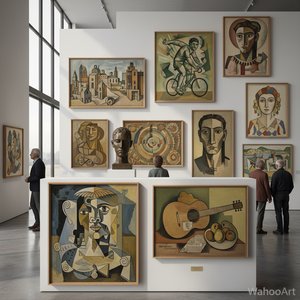
Відкрийте для себе 10 шедеврів кубізму від Пікассо, Брака та інших геніїв! Історія мистецтва, унікальні техніки та натхнення для вашого інтер'єру. Репродукції картин преміум-класу на Most-Famous-Paintings.com.

Посібник з інтеграції кубістського мистецтва в дизайн сучасних вілл. Естетичні інновації, правові аспекти та поради від експертів Most-Famous-Paintings. Створіть розкішний інтер'єр з унікальним характером!

Explore the evolution of geometric abstraction from Cubism to contemporary art. Discover key artists like Malevich & Mondrian, investment insights, and expert collecting advice at Most-Famous-Paintings.
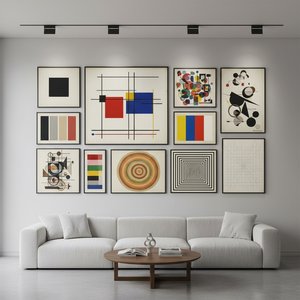
Відкрийте для себе 10 шедеврів геометричної абстракції від Кандинського, Малевича та Мондріана! Історія мистецтва, кольори та форми. Репродукції картин преміум-класу на Most-Famous-Paintings.com – ідеальний декор для вашого дому.


Будьте в курсі останніх новин зі світу мистецтва, ексклюзивних пропозицій та ідей для декорування.
Розкажіть нам про свій проєкт, і наші експерти з мистецтва підготують для вас 3 персоналізовані пропозиції щодо творів мистецтва.
Дозвольте нам підібрати 3 варіанти спеціально для вас — безкоштовно!


 Поділитися


 Розгорнути текст







 Скляний варіант доступний лише для розмірів до 110 см


