


x

Написана вручну олією на полотні у вашому розмірі та рамі, виготовлена на замовлення нашими художниками. ( Замовити принт Купити цифрове зображення)
Обирайте з наших стандартних розмірів, що відповідають оригінальним пропорціям твору мистецтва.

Ви можете вказати власні розміри, щоб репродукція ідеально підійшла до конкретної рами або інтер'єру. Якщо вибраний вами розмір не відповідає пропорціям оригіналу, ми або обріжемо полотно, або доповнимо картину додатковими елементами, промальованими вручну. Цифровий макет буде надіслано вам на затвердження перед початком виробництва.
Зверніть увагу, що попередній перегляд на екрані не відображає фактичне обрізання або розширення зображення. Тільки макет точно покаже остаточну композицію.
Хоча ми можемо виготовити виріб у нестандартному розмірі, для збереження оригінальних пропорцій рекомендуємо обирати варіанти зі встановленого списку.
Доставка по всьому світу () за 3–4 тижні замість стандартних 5 тижнів. (21 Серпень). Без жодних компромісів у якості.


The proof that the Man descent monkey
Розмір репродукції
Fernand Léger's 1916 painting, "The Proof That Man Descended From Monkeys," is far more than a whimsical depiction of a man perched atop a ladder. It’s a pivotal work in the evolution of early 20th-century art, a bold statement about modernity, and a surprisingly poignant reflection on humanity's place within the natural world. Created during the tumultuous years of World War I, this piece embodies Léger’s innovative “Tubism” style – a movement he pioneered alongside Pablo Picasso and Georges Braque – that sought to capture the dynamism of industrial life through simplified, geometric forms.
The scene itself is instantly arresting. A man, rendered in Léger's signature blocky style, sits precariously on a ladder, chains encircling his neck. He’s not a heroic figure; rather, he appears bewildered and slightly absurd, a symbol of the disorientation felt by many during this period of rapid social and technological change. Below him, a chaotic scene unfolds – soldiers, engineers, and laborers engage in various tasks, all depicted with a raw, almost brutal honesty. The composition is deliberately fragmented, mirroring the shattered sense of order that war had brought to Europe.
Léger’s Tubism was born out of a desire to translate the impact of machinery and urban life onto canvas. Rejecting traditional representational techniques, he employed simplified forms – cylinders, cones, and cubes – to capture the essence of industrial objects and processes. This wasn't simply an aesthetic choice; it was a philosophical one. Léger believed that these geometric shapes represented a new way of seeing the world, a world dominated by technology and industry.
The painting’s palette is deliberately restrained, utilizing bold primary colors – reds, yellows, blues – punctuated by black and white. This stark contrast emphasizes the forms and creates a sense of visual energy. Léger's brushwork is loose and expressive, adding to the dynamism of the composition. Notice how he uses overlapping planes and fragmented perspectives to create a feeling of movement and instability.
The title itself – “The Proof That Man Descended From Monkeys” – immediately introduces a layer of complex symbolism. It’s a direct reference to Darwin's theory of evolution, which was gaining traction at the time. Léger wasn't simply illustrating scientific theory; he was using it as a metaphor for humanity’s relationship with nature and technology. The man on the ladder can be interpreted as representing mankind’s struggle to adapt to this new world, a world increasingly shaped by forces beyond our control.
Furthermore, the painting's creation coincided with the horrors of World War I. Léger’s depiction of industrial labor reflects the widespread mobilization of men and resources for war production. The chaotic scene below the ladder can be seen as a commentary on the senselessness and brutality of conflict. It is important to note that this artwork was created during a time of immense social upheaval, reflecting anxieties about progress, identity, and humanity's future.
"The Proof That Man Descended From Monkeys" remains a significant work in the history of modern art. It’s a testament to Léger’s innovative approach to form and color, and his ability to capture the spirit of modernity with remarkable clarity. Reproductions of this artwork offer a unique opportunity to experience this pivotal moment in artistic expression – a bold exploration of symbolism, technology, and the human condition.
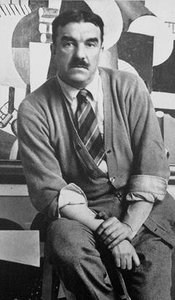
1881 - 1955 , Франція

Explore the revolutionary world of Cubism. Discover how masters Pablo Picasso and Georges Braque dismantled reality through geometric abstraction to redefine modern art history.


Будьте в курсі останніх новин зі світу мистецтва, ексклюзивних пропозицій та ідей для декорування.
Розкажіть нам про свій проєкт, і наші експерти з мистецтва підготують для вас 3 персоналізовані пропозиції щодо творів мистецтва.
Дозвольте нам підібрати 3 варіанти спеціально для вас — безкоштовно!


 Переглянути в інтер'єрі
 Надіслати як листівку
 Поділитися
 Детальніше

 Завантажити
 Схожі експонати
 Рентгенівське дослідження
 Слайд-шоу

 Читати далі




































 Скляний варіант доступний лише для розмірів до 110 см


