x

 Олія на полотніНастінне мистецтвоNeoclassicism
 1780
1780 122.0 x 170.0 cm
Музейна якість друку جيкле або на полотні з оперативним виготовленням та різноманітними варіантами фінішної обробки. ( Замовити репродукцію ручної роботи Купити цифрове зображення)





























Обирайте з наших стандартних розмірів, що відповідають оригінальним пропорціям твору мистецтва.

Ви можете вказати власні розміри, щоб репродукція ідеально підійшла до конкретної рами або інтер'єру. Якщо обраний вами розмір не відповідає пропорціям оригіналу, ми або обріжемо полотно, або розширимо зображення за допомогою дзеркального відображення чи суцільної заливки країв. Перед початком виробництва вам буде надіслано цифровий макет для затвердження.
Будь ласка, зверніть увагу, що попередній перегляд на екрані не відображає фактичне обрізання або розширення. Тільки макет точно покаже фінальну композицію.
Хоча можливість замовлення індивідуальних розмірів доступна, ми рекомендуємо обирати формат із попередньо визначеного списку, щоб зберегти оригінальні пропорції.
Доставка по всьому світу () за 2 тижні замість стандартних 4/5 тижнів. (14 Серпень)


Patroclus
Розмір репродукції
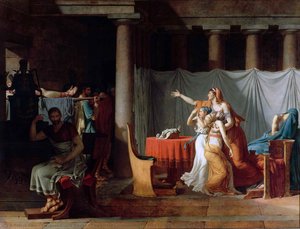
Jacques-Louis David’s 1780 painting, *Patroclus*, is more than a mere depiction of a Greek warrior; it's a meticulously crafted doorway to the ideals and moral complexities of Neoclassicism. Housed within the Musée Thomas Henry in Cherbourg, France, this oil on canvas invites us into a carefully constructed tableau that speaks volumes about honor, duty, and the poignant beauty of mortal existence. The image presents a man, powerfully built yet rendered with an almost serene detachment, turned away from direct view. This strategic pose immediately draws our attention to his physique – sculpted muscles hinting at strength and resilience – while simultaneously fostering a sense of contemplative distance.
David’s genius lies not just in anatomical accuracy but in the masterful orchestration of elements within the composition. The rough-hewn rock beneath him, coupled with the simple wooden bench, provides an earthy grounding to the scene, anchoring it firmly in the physical world. Yet, these humble materials are juxtaposed against the implied grandeur of the figure himself. And then there’s the book resting near his foot – a subtle yet potent symbol of knowledge and wisdom, suggesting that even amidst the trials of war and mortality, contemplation and learning hold enduring value. The lighting, carefully considered to create dramatic shadows and highlights, further emphasizes the musculature and adds depth to the scene, guiding our eye across the canvas.
Created during a pivotal moment in French history – the waning years of the Ancien Régime and the burgeoning influence of revolutionary ideals – *Patroclus* embodies the core tenets of Neoclassicism. David, deeply influenced by the rediscovery of classical art and literature, sought to revive the aesthetic principles of ancient Greece and Rome. This wasn’t simply a stylistic choice; it was a deliberate attempt to connect with perceived moral virtues and civic responsibility. The painting's emphasis on idealized form, balanced composition, and restrained emotion reflects this commitment to classical ideals.
Unlike the opulent frivolity of the Rococo style that preceded it, Neoclassicism prioritized clarity, order, and a sense of timelessness. David’s meticulous attention to detail – from the texture of the fabric to the subtle nuances of light and shadow – demonstrates his dedication to replicating the precision and gravitas he admired in ancient sculpture and painting. The subject matter itself—a warrior figure embodying strength and stoicism—resonates with classical notions of heroism and self-sacrifice, themes frequently explored by Greek artists like Phidias and Polyclitus.
Beyond its formal qualities, *Patroclus* is rich in symbolic meaning. The figure’s averted gaze suggests a quiet contemplation, perhaps reflecting on the burdens of his role or the inevitability of mortality. His posture conveys a sense of dignified restraint – a warrior accepting his fate with unwavering resolve. The book, often interpreted as representing wisdom and philosophical reflection, hints at the importance of intellect alongside physical prowess. The painting isn’t about glorifying violence; it's about portraying a man who embodies virtue through strength, discipline, and an acceptance of duty.
David masterfully evokes a feeling of melancholy beauty. There is a profound sense of stillness within the scene, inviting the viewer to pause and consider the complexities of human existence. The painting’s enduring appeal lies in its ability to transcend its historical context and speak to universal themes of courage, honor, and the search for meaning – qualities that continue to resonate with audiences today. It's a testament to David's skill as an artist and his profound understanding of the power of visual storytelling.


1748 - 1800 , Франція

Explore the life & art of Jacques-Louis David, leading Neoclassical painter of the French Revolution. Discover iconic works like 'The Death of Marat' and his lasting impact on art history. Expert analysis & high-quality reproductions at Most-Famous-Paintings.

Explore the captivating world of Neoclassical portraiture! Discover the power & ideals behind masterpieces by David, Girodet & more. Expert analysis, custom reproductions & art appraisal at Most-Famous-Paintings.

Explore the captivating history of mythological narratives in Western art! From ancient Greece to modern masterpieces, discover iconic artworks & symbolism. Expert analysis and high-quality reproductions at Most-Famous-Paintings.

Explore the revival of classical art with our deep dive into Neoclassicism! Discover key artists like Jacques-Louis David, Enlightenment influences & lasting impact on art history. Learn more now.

Explore the revival of classical art with our deep dive into Neoclassicism! Discover key artists like Jacques-Louis David, Enlightenment influences & lasting impact on art history. High-quality reproductions at Most-Famous-Paintings.


Будьте в курсі останніх новин зі світу мистецтва, ексклюзивних пропозицій та ідей для декорування.
Розкажіть нам про свій проєкт, і наші експерти з мистецтва підготують для вас 3 персоналізовані пропозиції щодо творів мистецтва.
Дозвольте нам підібрати 3 варіанти спеціально для вас — безкоштовно!


 Переглянути в інтер'єрі
 Надіслати як листівку
 Поділитися
 Детальніше

 Завантажити
 Схожі експонати
 Рентгенівське дослідження
 Слайд-шоу
 Читати далі







 Скляний варіант доступний лише для розмірів до 110 см