x


Написана вручну олією на полотні у вашому розмірі та рамі, виготовлена на замовлення нашими художниками. ( Перейти до друку Перейти до зображення)





























Обирайте з наших стандартних розмірів, що відповідають оригінальним пропорціям твору мистецтва.

Ви можете вказати власні розміри, щоб репродукція підійшла до конкретної рами або інтер'єру. Якщо вибраний вами розмір не відповідає пропорціям оригіналу, ми або обріжемо полотно, або доповнимо картину додатковими елементами, промальованими вручну. Цифровий макет буде надіслано вам на затвердження перед початком виробництва.
Зверніть увагу, що попередній перегляд на екрані не відображає фактичне обрізання або розширення зображення. Тільки макет точно покаже остаточну композицію.
Хоча ми можемо виготовити виріб у нестандартному розмірі, для збереження оригінальних пропорцій рекомендуємо обирати варіанти зі встановленого списку.
Доставка по всьому світу () за 3–4 тижні замість стандартних 5 тижнів. (30 Липень). Без жодних компромісів у якості.


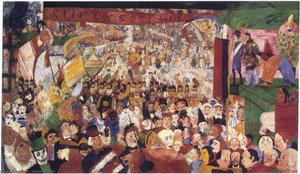
Carnaval sur la plage 1
Розмір репродукції
James Ensor’s “Carnaval sur la Plage” (Carnival on the Beach), painted around 1887, isn't merely a depiction of a seaside gathering; it’s an immersive plunge into the artist’s uniquely unsettling and profoundly evocative world. Born in Ostend, Belgium, a town renowned for its exuberant Carnival celebrations, Ensor was inextricably linked to this spectacle from his childhood. His parents operated a souvenir shop overflowing with masks, curiosities, and the paraphernalia of a festive gathering – a veritable treasure trove that fueled his imagination and became the cornerstone of his artistic vocabulary. This early exposure to the theatricality of disguise and the unsettling beauty of the bizarre profoundly shaped his approach to painting, leading him away from conventional academic styles and toward a deeply personal and often disconcerting vision.
Ensor’s work is characterized by a deliberate rejection of naturalism in favor of psychological intensity. He wasn't interested in faithfully rendering reality; instead, he sought to capture the *feeling* of an event – the sense of unease, mystery, and perhaps even madness that can permeate such gatherings. This approach aligns him with the burgeoning Symbolist movement, though his style is distinctly singular, marked by a bold palette, distorted figures, and a pervasive atmosphere of theatricality.
Central to “Carnaval sur la Plage” are the masks themselves. Ensor’s subjects aren't simply individuals enjoying a day at the beach; they are enveloped in layers of disguise, their identities obscured and transformed. These aren’t charming or celebratory masks—they possess an unsettling quality, hinting at hidden desires, anxieties, and perhaps even sinister intentions. The repetition of mask motifs throughout his oeuvre suggests a preoccupation with the duality of self – the visible persona versus the concealed inner world. The figures are rendered in a flattened perspective, almost like stage characters, further emphasizing the theatrical nature of the scene.
Beyond the masks, the composition itself is laden with symbolic weight. The blurred background, dominated by the sea and distant boats, creates a sense of disorientation and isolation. The foreground figures, though numerous, seem strangely detached from one another, lost in their own private dramas. The use of vibrant, almost jarring colors – reds, yellows, blues – contributes to the painting’s overall unsettling effect, amplifying the feeling that something is fundamentally *wrong* with this seemingly idyllic scene.
Ensor's technique in “Carnaval sur la Plage” is both meticulous and deliberately rough. He employs a layered approach, building up the image through multiple glazes of paint, creating a rich surface texture that seems to shimmer with an inner light. The brushstrokes are visible, adding to the sense of immediacy and spontaneity. Notably, Ensor’s treatment of space departs from traditional perspective; he utilizes atmospheric effects—particularly in the depiction of the sea—to create a dreamlike quality, blurring the boundaries between reality and illusion.
The painting's emotional impact is profound. It evokes a sense of both fascination and unease, inviting the viewer to contemplate the hidden depths beneath the surface of social interaction. “Carnaval sur la Plage” isn’t simply a record of a seaside event; it’s a powerful meditation on identity, performance, and the unsettling beauty of the human condition – a testament to James Ensor's unique vision and enduring legacy as one of art history's most original and challenging figures.


1860 - 1949 , Бельгія

Відкрийте 25 найкращих картин Альфреда Джеймса Міннінгса! Дослідіть шедеври англійського імпресіонізму, мистецтво коней та пейзажі Англії. Купуйте репродукції високої якості для вашого дому на Most-Famous-Paintings.com.
Відкрийте 25 шедеврів Джеймса Вістлера – імпресіонізм, портрети та нічні сцени. Історія мистецтва, техніки живопису та натхнення для декору вашого дому від Most-Famous-Paintings. Дослідіть колекцію онлайн!

Explore the rich history & enduring techniques of oil painting with Most-Famous-Paintings. Discover masterpieces, learn about art collecting, and find authentic handmade reproductions crafted by skilled artists.

Explore the rich history & techniques of oil painting – from Renaissance masters to Impressionism. Discover pigments, layering methods, and why this timeless medium endures. Expert insights for artists & art enthusiasts.
Відкрийте для себе 10 легендарних творів олією на дошці від Van Gogh, Monet та інших геніїв! Історія мистецтва, техніки живопису та емоційний вплив шедеврів. Репродукції картин преміум-класу для вашого інтер'єру – Most-Famous-Paintings.


Будьте в курсі останніх новин зі світу мистецтва, ексклюзивних пропозицій та ідей для декорування.
Розкажіть нам про свій проєкт, і наші експерти з мистецтва підготують для вас 3 персоналізовані пропозиції щодо творів мистецтва.
Дозвольте нам підібрати 3 варіанти спеціально для вас — безкоштовно!


 Переглянути в інтер'єрі
 Надіслати
 Поділитися
 Деталі витвору

 Завантажити
 Схожі вироби
 Рентгенівське дослідження
 Слайд-шоу

 Розгорнути текст







 Скляний варіант доступний лише для розмірів до 110 см