Стати продавцем
Список бажань Кошик покупок Cart
x
Переглянути в інтер'єріПереглянути в інтер'єрі Перегляд в ARПерегляд в AR Замовити репродукцію ручної роботи Замовити репродукцію ручної роботиКупити цифрове зображення Купити цифрове зображення Надіслати як листівкуНадіслати як листівку
ДетальнішеДетальніше Додати до улюблених Додати до улюблених ЗавантажитиЗавантажити Схожі експонатиСхожі експонати Рентгенівське дослідженняРентгенівське дослідження Слайд-шоуСлайд-шоу

Ropemakers

Joaquin Sorolla’s luminous Ropemakers captures the vibrant spirit of Spain in 1893 with masterful light and color—a breathtaking depiction of rural labor and collaborative artistry that invites you to explore this iconic masterpiece.

Жоакін Соролла – видатний іспанський художник, що майстерно вловив світло та енергію Середземного моря у своїх яскравих пейзажах та портретах. Відкрийте для себе його спадок!

Гікле / Художній принт

Музейна якість друку جيкле або на полотні з оперативним виготовленням та різноманітними варіантами фінішної обробки. (Замовити репродукцію ручної роботи Замовити репродукцію ручної роботиКупити цифрове зображення Купити цифрове зображення)

P118B $10
P118H $10
P118W $10
P438Z $10
P508JH $12
P508YH $12
P805H $10
P805Z $10
P919BZ $10
P919G $10
P919XJ $10
P959ZH $10
P968JZ $12
W106C $8
W218G $10
W218JH $8
W218Y $10
W307PJ $10
W316G $10
W316PJ $8
W316Y $10
W398PJ $8
W4111J $10
W500HY $15
W500JH $15
W692G $12
W849H $8
W940BG $15
W953PJ $8

Standard
custom
CM
INCH

Обирайте з наших стандартних розмірів, що відповідають оригінальним пропорціям твору мистецтва.

ширина
висота

Ви можете вказати власні розміри, щоб репродукція ідеально підійшла до конкретної рами або інтер'єру. Якщо обраний вами розмір не відповідає пропорціям оригіналу, ми або обріжемо полотно, або розширимо зображення за допомогою дзеркального відображення чи суцільної заливки країв. Перед початком виробництва вам буде надіслано цифровий макет для затвердження.
Будь ласка, зверніть увагу, що попередній перегляд на екрані не відображає фактичне обрізання або розширення. Тільки макет точно покаже фінальну композицію.
Хоча можливість замовлення індивідуальних розмірів доступна, ми рекомендуємо обирати формат із попередньо визначеного списку, щоб зберегти оригінальні пропорції.

Доставка по всьому світу () за 2 тижні замість стандартних 4/5 тижнів. (20 Серпень)

why_choose_icon
Безкоштовна експрес-доставка по всьому світу
why_choose_icon
Високоякісне лляне полотно
why_choose_icon
Повне страхове покриття доставки
why_choose_icon
Гарантія відшкодування митних зборів
why_choose_icon
Гарантія точного відтворення кольорів
why_choose_icon
Політика повернення протягом 60 днів (лише у разі виявлення дефектів)
why_choose_icon
Гарантія повернення 100% коштів
why_choose_icon
Пропозиція на оптові замовлення

Загальна вартість

$ 68

reproduction

Ropemakers

Гікле / Художній принт

Розмір репродукції

-

Підсумкова вартість

$ 68

Основна інформація

  • Year: 1893
  • Subject or theme: Rural life; Labor
  • Dimensions: 52 x 70 cm
  • Movement: Impressionism
  • Artist: Joaquín Sorolla y Bastida
  • Title: Ropemakers
  • Medium: Oil on canvas

Опис експоната

A Symphony of Light and Labor: Exploring Joaquín Sorolla’s Ropemakers

Joaquín Sorolla y Bastida's *Ropemakers* transcends mere depiction; it embodies the spirit of Valencia in 1893 – a moment captured with breathtaking precision and infused with an undeniable sense of optimism. This monumental oil on canvas, measuring 52 x 70 cm, isn’t simply a record of a craft tradition but a masterful meditation on human connection and the transformative power of natural light. Sorolla, deeply rooted in his Valencian heritage, sought to portray not just what he saw but how it felt – the warmth of the sun filtering through the foliage, the camaraderie amongst the rope makers as they diligently pursue their trade.

The Artist’s Vision: Impressionistic Brilliance

Sorolla's artistic style firmly establishes itself within the Impressionist movement, albeit with a distinctly Spanish flair. Rejecting academic conventions that prioritized meticulous detail, he embraced loose brushstrokes and vibrant color palettes—techniques honed during his formative years in Rome where he absorbed the influence of Cézanne and Monet. Unlike many Impressionists who focused on capturing fleeting atmospheric effects, Sorolla deliberately employed light as an active element within his composition. Observe how the golden hues illuminate the faces of the workers and bathe the field in a radiant glow—this isn’t merely illumination; it's Sorolla actively sculpting the scene with color to convey emotion and dynamism.

Technique and Texture: Capturing Movement

Sorolla’s meticulous approach to technique is evident in every layer of paint. He utilized *alla prima*, applying pigment directly onto the canvas without extensive underpainting, allowing for unparalleled spontaneity and immediacy. The resulting texture—a subtle interplay of impasto and smooth glaze—mirrors the physicality of the labor depicted. One can almost feel the rough surface of the earth beneath their feet and the rhythmic movements of the rope makers as they operate the machinery. Sorolla’s masterful blending of colors creates an illusion of depth, pulling the viewer into the heart of the Valencian countryside.

Historical Context: Valencia at the Dawn of Modernity

Valencia in 1893 was undergoing a period of significant transformation—the burgeoning industrial revolution was beginning to reshape its economy and society. Sorolla’s *Ropemakers* serves as a poignant reminder of this era, portraying a scene of rural life alongside technological advancement. The presence of the horses underscores the importance of animal power in agriculture, while the rope-making machine symbolizes the march toward modernization. Yet, amidst these changes, Sorolla champions the enduring values of community and tradition—values that continue to resonate powerfully today.

Symbolism Beyond Representation: Light as Inspiration

More than just a depiction of a craft profession, *Ropemakers* is laden with symbolic significance. Light itself becomes a central motif, representing not only illumination but also vitality, optimism, and spiritual transcendence. Sorolla’s unwavering devotion to capturing the beauty of natural light—a hallmark of his oeuvre—reflects his belief in its ability to inspire creativity and uplift the human spirit. As viewers contemplate this masterpiece, they are invited to consider the enduring power of simple pleasures and the importance of preserving traditions amidst the currents of change.

Біографія митця

A Life Bathed in Light: The World of Joaquín Sorolla

Joaquín Sorolla y Bastida, a name synonymous with the radiant light and vibrant energy of Spain, was more than just a painter; he was a chronicler of his nation’s soul. Born in Valencia in 1863, Sorolla's early life was marked by tragedy. Orphaned at the tender age of two following a cholera epidemic that claimed both parents, young Joaquín and his sister were raised by their maternal aunt and uncle. This early experience with loss perhaps instilled within him a profound appreciation for the fleeting beauty of life – a sentiment that would permeate his art. Though hardship shadowed his beginnings, it did not dim the spark of artistic talent that quickly became apparent. He received initial instruction in Valencia, demonstrating an aptitude that led to studies under established artists like Cayetano Capuz and José Benlliure, eventually culminating in a four-year grant to study in Rome. It was there, amidst the classical grandeur of Italy, that Sorolla began to forge his unique artistic path, absorbing influences while simultaneously developing a style distinctly his own.

From Historical Narratives to Sun-Drenched Realism

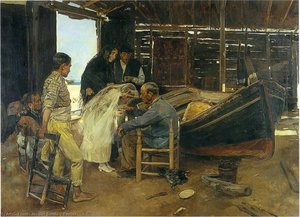
Sorolla’s early work reflected the prevailing academic trends of the time – large-scale historical and mythological scenes. He was initially tasked with creating grand canvases depicting heroic battles and regal figures, adhering to the conventions of the day. However, a pivotal shift occurred as he returned to Spain and began to truly observe the world around him. He found himself captivated by the everyday lives of his countrymen, particularly those along the Valencian coast. The intense Mediterranean sunlight, the shimmering sea, and the vibrant energy of the people became his primary subjects. This transition wasn’t immediate; Sorolla continued to explore social realism with works like Sad Inheritance (1899), a powerful depiction of children afflicted by polio bathing in the sea – a painting that garnered significant acclaim but also revealed a darker, more compassionate side to his artistic vision. *Sad Inheritance*, exhibited at the Universal Exhibition in Paris, brought him widespread recognition and cemented his position as a leading figure in Spanish art. Yet, it was his increasingly focused exploration of light and color, inspired by Impressionism though never fully embracing its tenets, that would define his legacy. He wasn’t merely *depicting* light; he was attempting to *capture* its very essence, the way it danced on water, illuminated skin, and transformed ordinary moments into scenes of extraordinary beauty.

Master of Luminism: A Unique Artistic Voice

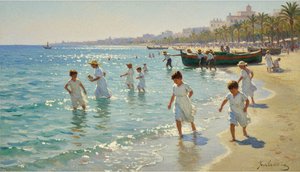
Sorolla's technique became instantly recognizable – a bravura display of brushwork, characterized by loose, energetic strokes that conveyed movement and atmosphere. He worked *en plein air* whenever possible, directly confronting the challenges of capturing fleeting light conditions. This dedication to painting outdoors resulted in canvases brimming with life and immediacy. His beach scenes, perhaps his most iconic works, are not simply picturesque representations of leisure; they are studies in luminosity, reflections, and the joyful interaction between people and their environment. Paintings like Children on the Seashore and Sewing the Sail exemplify this mastery – figures bathed in golden light, rendered with a remarkable sense of spontaneity and vitality. He wasn’t interested in meticulous detail; rather, he sought to convey the *impression* of reality, prioritizing atmosphere and emotion over precise representation. This approach earned him comparisons to Impressionists like Monet and Renoir, but Sorolla's work possessed a unique Spanish character – a warmth, intensity, and emotional depth that set it apart.

Influences and Artistic Development

Sorolla’s artistic journey was shaped by a diverse range of influences. His early training in Valencia exposed him to the traditional academic style, while his time in Rome provided exposure to classical sculpture and architecture. However, it was his encounters with Parisian Impressionists – particularly Jules Bastien-Lepage and Adolph von Menzel – that truly ignited his creative spirit. He admired their ability to capture fleeting moments of light and color, and he adopted many of their techniques, such as broken brushstrokes and a focus on atmospheric effects. Furthermore, the Spanish masters of the Golden Age, like Velázquez and Goya, undoubtedly informed his approach to composition and characterization. Sorolla’s work can be seen as a synthesis of these diverse influences – a vibrant blend of realism, Impressionism, and Spanish tradition.

Key Achievements & Recognition

  • 1892: Gold medal at the National Exhibition in Madrid for Another Marguerite.
  • 1894: Acclaimed for The Return from Fishing: Hauling the Boat, acquired by the Musée du Luxembourg.
  • 1899: Grand Prix and medal of honor at the Universal Exhibition in Paris for Sad Inheritance.
  • 1900-1923: Extensive exhibitions throughout Europe and the United States, establishing international recognition.
  • 1912-1928: Commissioned to create Vision of Spain for the Hispanic Society of America (completed posthumously).
  • Present Day: Works held in major museums worldwide, including the Museo Sorolla in Madrid.

Legacy and Enduring Influence

Sorolla’s legacy extends far beyond his technical brilliance. He captured a specific moment in Spanish history and culture – the vibrant spirit of the Mediterranean coast and the everyday lives of its people. His paintings are not merely beautiful images; they are windows into a bygone era, imbued with warmth, joy, and an undeniable sense of optimism. His work inspired generations of artists, not only in Spain but around the world. Today, his paintings continue to resonate with audiences, reminding us of the power of art to illuminate our world and capture the fleeting beauty of life. The Museo Sorolla in Madrid stands as a testament to his enduring legacy – a place where visitors can immerse themselves in his world and experience the magic of his light.
Хоакін Соролла

Хоакін Соролла

1863 - 1923 , Іспанія

Короткі факти

  • Artistic Movement Or Style: Лумінізм, Імпресіонізм
  • Artists Or Movements Influenced By This Artist: ['Імпресіонізм']
  • Artists Who Influenced This Artist:
    • Франсіско Праділла
    • Жуль Бастіен-Лепаж
    • Адольф фон Мenzel
  • Date Of Birth: 27 лютого 1863
  • Date Of Death: 10 серпня 1923
  • Full Name: Joaquín Sorolla y Bastida
  • Nationality: Іспанець
  • Notable Artworks:
    • Інша Маргарита
    • Купання в морі
    • Біла раба
    • Типові сорійці
    • Діти на березі
  • Place Of Birth: Валенсія, Іспанія
Досліджуйте твори мистецтва, впорядковані за темами, стилями та характеристиками.