x

 Олія на полотніНастінне мистецтвоCubist Style
 1913Раннє Середньовіччя
 188.0 x 158.0 cm
Придбайте цифрову копію високої роздільної здатності з покращеною якістю, що значно перевершує онлайн-перегляд.
Кожен файл ретельно підготовлений нашими фахівцями за допомогою сучасних інструментів та професійної ручної ретуші. Ми гарантуємо виняткову чіткість, точну передачу кольору та високу деталізацію кожного зображення.
Фінальний файл надсилається електронною поштою протягом 72 годин і оптимізований для негайного використання у професійних виданнях та друкованих матеріалах. Таку якість обирають провідні дизайнерські студії, видавництва та галереї.
Завантажте файл високої роздільної здатності для особистого використання, друку та творчих проєктів. ( Замовити принт Замовити репродукцію ручної роботи)
Обираючи Most-Famous-Paintings.com, ви отримуєте не просто зображення — ви отримуєте професійно вдосконалений цифровий витвір мистецтва, створений з надзвичайною точністю та підкріплений гарантією задоволення. Ось усе, що автоматично додається до вашого замовлення:

Ваш цифровий файл із зображенням високої роздільної здатності буде надісланий вам електронною поштою протягом 72 годин після оформлення замовлення — він буде готовий до негайного використання.

Ваш витвір мистецтва професійно оптимізовано за допомогою передових інструментів штучного інтелекту та ручної корекції, що забезпечує максимальну деталізацію, чіткість і точність передачі кольорів.

Випадково видалили або втратили файл? Не хвилюйтеся — ми надішлемо його вам повторно в будь-який час безкоштовно.

Насолоджуйтесь вашим витвором мистецтва миттєво без жодних мит, зборів або плати за доставку — цифрові завантаження завжди не оподатковуються.

Ми гарантуємо максимально точне відтворення оригінальних кольорів на вашому цифровому зображенні завдяки використанню професійних інструментів та систем управління кольором.

Якщо ви не задоволені придбаним цифровим зображенням, ми відкоригуємо його або повернемо 100% вартості протягом 60 днів — без жодних запитань.

Не задоволені покупкою? Отримайте повне повернення коштів протягом 60 днів після отримання цифрового файлу — без жодних запитань.

Купуйте 3 зображення — заощаджуйте 10% — Купуйте 5 — заощаджуйте 15% — Купуйте 10+ — заощаджуйте 20%. Чудово підходить для творчих проєктів, галерей та агентств.
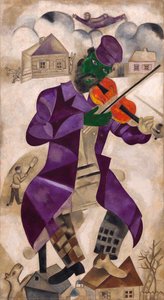
Marc Chagall's "The Fiddler," painted in 1913, isn’t merely a depiction of a man playing his instrument; it’s an immersion into a world brimming with personal mythology and the vibrant spirit of Eastern European Jewish life. This oil on canvas, measuring 188 x 158 cm, stands as a cornerstone of Chagall's early Cubist explorations, seamlessly blending fantastical elements with poignant realism. The painting immediately captivates with its explosion of color – deep blues, fiery oranges, and earthy greens—a palette that evokes both the twilight skies of Vitebsk and the warmth of family gatherings. It’s a scene plucked from memory, rendered not as a literal representation but as a potent distillation of feeling and experience.
At first glance, the composition appears deceptively simple: a man, identified by his distinctive white coat and flowing beard, stands perched atop a table, lost in the melody of his violin. Yet, this seemingly straightforward arrangement is layered with symbolic weight. The inclusion of an umbrella, tilted at a whimsical angle, hints at the unpredictable nature of life – a subtle acknowledgment of both joy and hardship. The other figures surrounding him—a woman gazing intently, a child reaching out, and a group engaged in various activities—suggest a community bound together by shared heritage and traditions. This isn’t just a portrait; it's a snapshot of a world, a testament to the enduring power of collective memory.
“The Fiddler” firmly establishes Chagall within the burgeoning movement of Cubism, though he quickly developed his own distinctive style. While influenced by Picasso and Braque’s exploration of fragmented forms and multiple perspectives, Chagall injects a deeply personal element into the technique. The figures are not rendered with photographic accuracy; instead, they are stylized and abstracted, their bodies flattened and rearranged to emphasize emotional impact over strict spatial representation. The use of bold, intersecting planes creates a dynamic sense of movement, as if the scene is perpetually shifting between moments in time. This deliberate distortion isn’t an exercise in deconstruction but rather a means of conveying the subjective experience of memory—a process where details blur and perspectives shift.
Chagall's masterful use of color further enhances this effect. He employs vibrant hues not to mimic reality, but to amplify the emotional resonance of each element. The deep blues evoke a sense of melancholy and nostalgia, while the fiery oranges represent passion and vitality. The interplay between these colors creates a dreamlike atmosphere, transporting the viewer into Chagall’s inner world.
Delving deeper reveals a rich tapestry of symbolism deeply rooted in Chagall's Hasidic Jewish upbringing. The fiddle itself is a potent symbol—a vehicle for spiritual expression and communal celebration within Jewish tradition. The setting, reminiscent of Vitebsk, the artist’s birthplace, immediately anchors the painting in a specific cultural context. The inclusion of elements like the table, a common gathering place, reinforces this sense of community and shared experience. Even the posture of the fiddler—his head tilted back as if lost in contemplation—suggests a connection to something beyond the earthly realm.
Furthermore, the painting’s overall composition echoes themes prevalent in Jewish folklore – stories of wandering, exile, and the enduring spirit of faith. The floating figures, a recurring motif in Chagall's work, represent a yearning for transcendence and a belief in the power of imagination. “The Fiddler” is therefore not simply a portrait; it’s an allegory—a visual poem exploring universal themes through the lens of personal memory and cultural heritage.
“The Fiddler” stands as one of Chagall's most beloved works, a testament to his unique artistic vision. Its influence extends far beyond the confines of Cubism, inspiring generations of artists with its dreamlike atmosphere and evocative symbolism. Works like “The Betrothed” and “Eiffel Tower,” also available through Most-Famous-Paintings.com, demonstrate the breadth of Chagall’s creative exploration. The painting's enduring appeal lies in its ability to transport viewers to a world where reality and fantasy intertwine, inviting us to contemplate the complexities of memory, faith, and the human spirit. Reproductions offer a remarkable opportunity to bring this captivating masterpiece into your home or studio, allowing you to experience the magic of Chagall’s vision firsthand.

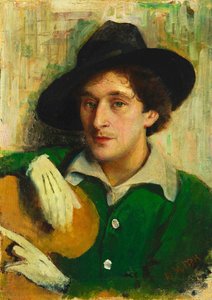
1887 - 1985 , Білорусь


Будьте в курсі останніх новин зі світу мистецтва, ексклюзивних пропозицій та ідей для декорування.
Розкажіть нам про свій проєкт, і наші експерти з мистецтва підготують для вас 3 персоналізовані пропозиції щодо творів мистецтва.
Дозвольте нам підібрати 3 варіанти спеціально для вас — безкоштовно!


 Переглянути в інтер'єрі
 Надіслати як листівку
 Поділитися
 Детальніше

 Завантажити
 Схожі експонати
 Рентгенівське дослідження
 Слайд-шоу
 Читати далі