x

Музейна якість друку جيкле або на полотні з оперативним виготовленням та різноманітними варіантами фінішної обробки. ( Замовити репродукцію ручної роботи Купити цифрове зображення)





























Обирайте з наших стандартних розмірів, що відповідають оригінальним пропорціям твору мистецтва.

Ви можете вказати власні розміри, щоб репродукція ідеально підійшла до конкретної рами або інтер'єру. Якщо обраний вами розмір не відповідає пропорціям оригіналу, ми або обріжемо полотно, або розширимо зображення за допомогою дзеркального відображення чи суцільної заливки країв. Перед початком виробництва вам буде надіслано цифровий макет для затвердження.
Будь ласка, зверніть увагу, що попередній перегляд на екрані не відображає фактичне обрізання або розширення. Тільки макет точно покаже фінальну композицію.
Хоча можливість замовлення індивідуальних розмірів доступна, ми рекомендуємо обирати формат із попередньо визначеного списку, щоб зберегти оригінальні пропорції.
Доставка по всьому світу () за 2 тижні замість стандартних 4/5 тижнів. (15 Серпень)


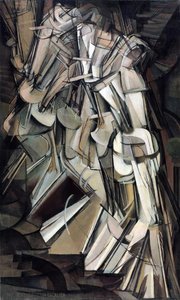
Rotoreliefs (Optical Discs) 2
Розмір репродукції
Marcel Duchamp, a name synonymous with artistic rebellion and intellectual provocation, stands as one of the most influential figures of the 20th century. While celebrated for his “readymades” – ordinary manufactured objects elevated to the status of art – his earlier explorations into kinetic art, embodied in the Rotoreliefs, reveal a fascinating precursor to his conceptual concerns and a profound engagement with the nature of perception itself. These weren’t static paintings meant for passive observation; they were designed to be *experienced*, set in motion to challenge our understanding of form, space, and even reality.
Created primarily in 1935, though conceived earlier, the Rotoreliefs (Optical Discs) are a series of optical illusion discs. Duchamp wasn’t interested in traditional painting techniques; instead, he employed lithography to create these circular compositions featuring abstract designs – often concentric circles and spiraling patterns rendered in stark black and white or bold color contrasts. The genius lies not just in the imagery itself, but in its intended function. These discs were designed to be mounted on a turntable (originally a modified phonograph) and spun at approximately 33 revolutions per minute. As they rotated, the designs would morph and distort, creating a mesmerizing optical effect – a sense of depth, movement, and even instability. The experience wasn’t about *seeing* a picture; it was about witnessing an illusion unfold before your eyes.
To understand the Rotoreliefs, one must grasp Duchamp’s evolving artistic philosophy. He increasingly rejected what he termed “retinal” art – works that merely pleased the eye without engaging the intellect. He sought to move beyond aesthetics, aiming instead for a cerebral and conceptual approach. The spinning discs were an attempt to bypass purely visual appreciation and tap into the mechanics of perception itself. Duchamp was fascinated by optics and how our brains interpret what we see. He deliberately created ambiguity and instability, forcing the viewer to actively participate in constructing meaning from the shifting forms. This active engagement foreshadowed his later readymades, where the artist’s choice – rather than skillful execution – became the primary artistic gesture.
The Rotoreliefs weren't simply a fleeting experiment; they represent a pivotal moment in art history. They anticipated Op Art (Optical Art) by decades, influencing artists like Bridget Riley and Victor Vasarely who similarly explored the perceptual effects of geometric abstraction. More broadly, Duchamp’s work paved the way for Conceptual Art, where the idea behind the artwork takes precedence over its physical manifestation. The Rotoreliefs, with their emphasis on process, illusion, and intellectual engagement, embody this shift in artistic priorities. Owning a reproduction of one of these works isn't just acquiring an aesthetically pleasing image; it’s possessing a piece of art history – a testament to Duchamp’s revolutionary spirit and his enduring impact on the way we think about art and perception.


1887 - 1968 , Франція

Explore the profound impact of Minimalism and Geometric Abstraction. From Mondrian to Malevich, discover how stripping art to its essential forms revolutionized modern aesthetics through our expert-led historical guide.


Будьте в курсі останніх новин зі світу мистецтва, ексклюзивних пропозицій та ідей для декорування.
Розкажіть нам про свій проєкт, і наші експерти з мистецтва підготують для вас 3 персоналізовані пропозиції щодо творів мистецтва.
Дозвольте нам підібрати 3 варіанти спеціально для вас — безкоштовно!


 Переглянути в інтер'єрі
 Надіслати як листівку
 Поділитися
 Детальніше

 Завантажити
 Схожі експонати
 Рентгенівське дослідження
 Слайд-шоу

 Читати далі







 Скляний варіант доступний лише для розмірів до 110 см