Стати продавцем
Список бажань Кошик покупок Cart
x
Переглянути в інтер'єріПереглянути в інтер'єрі Перегляд в ARПерегляд в AR Замовити репродукцію ручної роботи Замовити репродукцію ручної роботиКупити цифрове зображення Купити цифрове зображення Надіслати як листівкуНадіслати як листівку
ДетальнішеДетальніше Додати до улюблених Додати до улюблених ЗавантажитиЗавантажити Схожі експонатиСхожі експонати Рентгенівське дослідженняРентгенівське дослідження Слайд-шоуСлайд-шоу

Landscape with Polyphemus

The painting depicts a serene mountainous landscape populated by figures engaged in contemplative activities. Poussin's masterful technique captures the grandeur of classical art, emphasizing harmony and balance between humanity and nature.

Нікола Пуссін | Національний музей мистецтва України

Гікле / Художній принт

Музейна якість друку جيкле або на полотні з оперативним виготовленням та різноманітними варіантами фінішної обробки. (Замовити репродукцію ручної роботи Замовити репродукцію ручної роботиКупити цифрове зображення Купити цифрове зображення)

P118B $10
P118H $10
P118W $10
P438Z $10
P508JH $12
P508YH $12
P805H $10
P805Z $10
P919BZ $10
P919G $10
P919XJ $10
P959ZH $10
P968JZ $12
W106C $8
W218G $10
W218JH $8
W218Y $10
W307PJ $10
W316G $10
W316PJ $8
W316Y $10
W398PJ $8
W4111J $10
W500HY $15
W500JH $15
W692G $12
W849H $8
W940BG $15
W953PJ $8

Standard
custom
CM
INCH

Обирайте з наших стандартних розмірів, що відповідають оригінальним пропорціям твору мистецтва.

ширина
висота

Ви можете вказати власні розміри, щоб репродукція ідеально підійшла до конкретної рами або інтер'єру. Якщо обраний вами розмір не відповідає пропорціям оригіналу, ми або обріжемо полотно, або розширимо зображення за допомогою дзеркального відображення чи суцільної заливки країв. Перед початком виробництва вам буде надіслано цифровий макет для затвердження.
Будь ласка, зверніть увагу, що попередній перегляд на екрані не відображає фактичне обрізання або розширення. Тільки макет точно покаже фінальну композицію.
Хоча можливість замовлення індивідуальних розмірів доступна, ми рекомендуємо обирати формат із попередньо визначеного списку, щоб зберегти оригінальні пропорції.

Доставка по всьому світу () за 2 тижні замість стандартних 4/5 тижнів. (17 Серпень)

why_choose_icon
Безкоштовна експрес-доставка по всьому світу
why_choose_icon
Високоякісне лляне полотно
why_choose_icon
Повне страхове покриття доставки
why_choose_icon
Гарантія відшкодування митних зборів
why_choose_icon
Гарантія точного відтворення кольорів
why_choose_icon
Політика повернення протягом 60 днів (лише у разі виявлення дефектів)
why_choose_icon
Гарантія повернення 100% коштів
why_choose_icon
Пропозиція на оптові замовлення

Загальна вартість

$ 68

reproduction

Landscape with Polyphemus

Гікле / Художній принт

Розмір репродукції

-

Підсумкова вартість

$ 68

Основна інформація

  • Year: 1630
  • Medium: Oil on canvas
  • Movement: Baroque
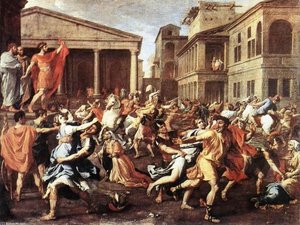
  • Title: The Rape of Hippolyta
  • Dimensions: 285 × 374 cm
  • Notable elements or techniques: Atmospheric perspective; Classical composition
  • Subject or theme: Mythology; Pastoral

Квіз про мистецтво

У кожному запитанні лише одна правильна відповідь.

Запитання 1:
What artistic movement is Nicolas Poussin primarily associated with?
Запитання 2:
Where did Nicolas Poussin spend most of his formative years as an artist?
Запитання 3:
What is a prominent characteristic of Poussin's painting style?
Запитання 4:
The image description mentions elements like horses and cows. What does this suggest about the scene depicted in Landscape with Polyphemus?
Запитання 5:
Nicolas Poussin’s work is known for its meticulous attention to detail and idealized representations. What is the primary purpose of this stylistic approach?

Опис експоната

A Vision of Antiquity Transformed

In the quiet majesty of Nicolas Poussin’s Landscape with Polyphemus, the viewer is invited into a world where the boundaries between myth and reality dissolve into a luminous, atmospheric haze. The canvas presents an arresting stillness, a landscape bathed in an ethereal light that seems to emanic from within the mountains themselves. Towering peaks and rugged rock formations dominate the vista, yet this primordial strength is softened by the delicate presence of trees and the gentle movement of figures nestled among the slopes. It is a scene that captures the quintessential spirit of Poussin’s oeuvre—a masterful synthesis of classical ideals and a subtle, breathing Baroque dynamism that feels both eternal and momentary.

The composition breathes with a profound sense of harmony, where human activity and the wildness of nature exist in a delicate, choreographed balance. In the foreground, a group of figures occupies the rocky terrain; some stand in quiet contemplation while others rest, their postures echoing the sculptural grace Poussin admired in the ruins of Rome. The presence of horses, cows, and even a solitary bird in flight adds layers of life to the scene, transforming a static landscape into a living tableau. For the discerning collector or interior designer, this painting offers more than mere decoration; it provides a window into a structured, intellectual beauty that anchors a room with its serene and commanding presence.

The Mastery of Light and Form

Poussin’s technical prowess is on full display through his meticulous approach to sfumato, the subtle blending of colors that creates an illusion of infinite depth. Eschewing the flamboyant, aggressive brushstrokes of many of his contemporaries, Poussin opted for a disciplined layering of paint. This technique allows him to capture the precise essence of twilight, where outlines blur and contours soften, lending the landscape a dreamlike, atmospheric quality. His work is deeply informed by his study of Italian Mannerism and the sculptural forms of antiquity, resulting in figures that possess a weight and dignity reminiscent of classical marble.

Every element of the painting, from the textured bark of the trees to the distant, hazy mountains, is rendered with an unwavering devotion to detail. This precision does not sacrifice the emotional impact of the work; rather, it enhances the sense of a world governed by order and logic. The interplay of light and shadow creates a rhythmic movement across the canvas, guiding the eye through the rugged terrain and inviting the viewer to linger on the subtle transitions of color that define the shifting light of the afternoon.

Echoes of Myth and Intellectual Depth

To gaze upon Landscape with Polyphemus is to engage with the profound intellectual currents of the mid-17th century. Painted during a period of intense artistic innovation in France, the work draws heavily from the epic narratives of Homer’s Odyssey and Virgil’s Aeneid. The figure of Polyphemus—the formidable Cyclops—serves as a powerful symbol of primal, unbridled force. Yet, within Poussin's composition, this raw power is juxtaposed against the refined intellect and restraint of the human figures, reflecting the artist's conviction that art should elevate the soul through the contemplation of classical virtue.

This layering of mythological symbolism provides a rich subtext for those who appreciate art with narrative depth. The painting is not merely a depiction of nature, but a philosophical meditation on the relationship between the wildness of the natural world and the structured civilization of man. For anyone seeking to adorn a space with a piece that inspires thought and evokes a sense of historical grandeur, this reproduction of Poussin’s masterpiece offers an unparalleled opportunity to possess a fragment of the classical dream.


Біографія митця

Nicolas Poussin: A Life Steeped in Classical Reverie

Nicolas Poussin, a name synonymous with the grandeur of French Baroque painting, was nonetheless a soul deeply rooted in Italian soil for much of his artistic life. Born in Le Havre, Normandy, in June 1594, his early years remain somewhat veiled in mystery, yet they undoubtedly laid the foundation for a career that would become pivotal in shaping the classical tradition within French art. Though he briefly studied in Paris during the early 1610s, absorbing influences from lesser-known artists of the time, it was his journey to Rome in 1624 that truly ignited his artistic destiny. This wasn’t merely a geographical relocation; it was an immersion into the heart of antiquity, a pilgrimage to the very source of inspiration that would define his aesthetic vision. Poussin's initial forays into painting were marked by a sensuous quality reminiscent of Venetian masters like Titian, yet even in these early works, a nascent sense of order and intellectual rigor began to emerge—a foreshadowing of the style he would so masterfully refine.

Early Artistic Development & Parisian Influences

Nicolas Poussin’s formative years were spent honing his craft in Le Havre, where he studied with Quentin Varin, a respected artist who instilled in him an appreciation for meticulous observation and skillful execution. His early paintings demonstrated a fascination with Venetian color palettes and techniques—a stylistic echo of the artistic fervor that characterized Venice at the time. However, even amidst this initial exuberance, Poussin’s burgeoning intellect recognized the limitations of purely decorative pursuits. He sought to elevate his art beyond mere visual spectacle, striving for a deeper engagement with philosophical concepts and historical narratives. His Parisian studies provided exposure to emerging trends in artistic thought, fostering connections with fellow artists who championed humanist ideals—a crucial step toward shaping his distinctive worldview.

The Roman Years: Forging a Classical Ideal

Rome proved to be more than just a studio for Poussin; it became his intellectual crucible. He found himself amidst a vibrant circle of scholars, archaeologists, and fellow artists, notably Cassiano dal Pozzo, whose profound understanding of classical antiquity profoundly influenced the artist’s approach. Dal Pozzo's dedication to meticulously documenting ancient remains instilled in Poussin a deep respect for historical accuracy and a desire to imbue his paintings with a sense of timelessness. This period saw Poussin move away from the flamboyant exuberance of some of his contemporaries, instead embracing a style characterized by clarity, balance, and a deliberate emphasis on linear composition. He meticulously studied Raphael’s works, absorbing their harmonious arrangements and graceful forms—a formative experience that would shape his artistic sensibilities for decades to come. Simultaneously, he drew inspiration from ancient sculptures and literary sources like Ovid's *Metamorphoses*, recognizing the power of myth and allegory to convey profound truths about human existence.

A Style Defined by Order & Harmony

Poussin’s distinctive style—a hallmark of French Classicism—was characterized by a remarkable restraint and precision. He eschewed dramatic gestures and emotional displays, favoring instead carefully constructed landscapes populated with idealized figures rendered in luminous colors. His compositions were governed by strict geometric principles—often employing pyramidal structures to convey stability and grandeur—reflecting the influence of Renaissance humanist thought. Unlike many Baroque painters who prioritized spectacle, Poussin sought to capture not merely what he saw but what he believed—a testament to his unwavering commitment to intellectual rigor and artistic integrity. His meticulous attention to detail—particularly in depicting drapery folds and architectural elements—demonstrated an unparalleled mastery of technique.

Legacy & Influence: Shaping French Art

Despite spending the majority of his career abroad, Nicolas Poussin’s impact on French art was undeniable. He briefly returned to Paris in 1640 at the behest of Cardinal Richelieu, appointed as First Painter to the King—a position that afforded him considerable prestige and patronage but also imposed constraints upon his creative freedom. However, he soon retreated to Rome, where he continued to paint until his death in 1665—a final pilgrimage to the birthplace of Western art. His dedication to classical ideals served as a beacon for subsequent generations of French artists—influencing figures like Jacques-Louis David and Paul Cézanne who championed a similar aesthetic vision. Artists recognized Poussin’s profound understanding of humanist philosophy and his unwavering commitment to artistic excellence, securing his place as one of the most revered masters of French Baroque painting and establishing him as an enduring symbol of classical beauty and intellectual contemplation.
Нікола Пуссен

Нікола Пуссен

1594 - 1665 , Франція

Короткі факти

  • Artistic Movement Or Style: Бароко, Класицизм
  • Artists Or Movements Influenced By This Artist:
    • Жак-Луї Давид
    • П’єр Сезан
  • Artists Who Influenced This Artist:
    • Рафаель
    • Тіціан
  • Date Of Birth: 1594
  • Date Of Death: 1665
  • Full Name: Nicolas Poussin
  • Nationality: Француз
  • Notable Artworks:
    • Зруйновання Єрусалимського Храму
    • Веніс подає зброю Енейсу
    • Хрещення Ісуса Христа
  • Place Of Birth: Ле Havre, Франція
Досліджуйте твори мистецтва, впорядковані за темами, стилями та характеристиками.