x

 Олія на полотніНастінне мистецтвоPost-Impressionism
 1873— XIX століття
 44.0 x 34.0 cm
Музейна якість друку جيкле або на полотні з оперативним виготовленням та різноманітними варіантами фінішної обробки. ( Замовити репродукцію ручної роботи Купити цифрове зображення)





























Обирайте з наших стандартних розмірів, що відповідають оригінальним пропорціям твору мистецтва.

Ви можете вказати власні розміри, щоб репродукція ідеально підійшла до конкретної рами або інтер'єру. Якщо обраний вами розмір не відповідає пропорціям оригіналу, ми або обріжемо полотно, або розширимо зображення за допомогою дзеркального відображення чи суцільної заливки країв. Перед початком виробництва вам буде надіслано цифровий макет для затвердження.
Будь ласка, зверніть увагу, що попередній перегляд на екрані не відображає фактичне обрізання або розширення. Тільки макет точно покаже фінальну композицію.
Хоча можливість замовлення індивідуальних розмірів доступна, ми рекомендуємо обирати формат із попередньо визначеного списку, щоб зберегти оригінальні пропорції.
Доставка по всьому світу () за 2 тижні замість стандартних 4/5 тижнів. (20 Серпень)


View of Auvers
Розмір репродукції
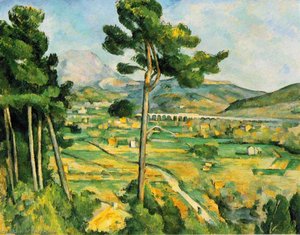
Paul Cézanne's "View of Auvers," painted in 1879-80, isn’t merely a depiction of a rural French landscape; it’s a profound exploration of perception and the very nature of seeing. This captivating work, housed today at the Ashmolean Museum in Oxford, represents a pivotal moment in Cézanne's artistic journey – a bridge between his early influences and the groundbreaking innovations that would define his legacy as a Post-Impressionist master. The scene unfolds within the small village of Auvers-sur-Oise, nestled just northwest of Paris, a location that held particular significance for the artist during his brief but intensely productive residency there. More than simply capturing a picturesque vista, Cézanne sought to distill the essence of the place – its light, its atmosphere, and the way it resonated with his own internal vision.

The painting itself is a study in controlled chaos, a deliberate departure from the fleeting impressions of Impressionism. Instead of striving for photographic accuracy, Cézanne employs a technique he termed “separating planes,” meticulously constructing the scene through distinct layers of color and form. The houses, rendered with simplified shapes and muted tones, are not painted as individual objects but rather as volumes that exist within a larger spatial framework. The rolling hills and distant trees are treated similarly, their outlines subtly defined to create an illusion of depth and solidity. Notice how the artist uses short, broken brushstrokes – almost like dabs or smears – to build up the surfaces, capturing the play of light and shadow with remarkable sensitivity. The sky itself is a symphony of blues and whites, not blended smoothly but rather applied in distinct patches, suggesting movement and atmosphere.
Cézanne's "View of Auvers" stands as a crucial stepping stone towards the development of Cubism. His emphasis on geometric forms, his fragmentation of space, and his exploration of multiple viewpoints – all hallmarks of this painting – foreshadowed the radical innovations of Picasso and Braque. However, Cézanne wasn’t simply dismantling traditional representation; he was fundamentally altering how we *perceive* art itself. He believed that a painting should not merely imitate nature but rather capture its underlying structure—the way objects exist in space and relate to one another. This conviction led him to experiment with perspective, often depicting multiple viewpoints simultaneously within a single frame, challenging the viewer’s sense of depth and orientation.
The influence of Japanese prints is undeniable here. Cézanne was deeply fascinated by the flattened perspectives and bold compositions found in Ukiyo-e woodblock prints. He adopted these techniques to create a sense of immediacy and dynamism, injecting a vibrant energy into his landscapes. Furthermore, Cézanne’s exploration of color—his use of complementary hues and his avoidance of traditional blending—echoes the principles of Japanese aesthetics, where color is often employed to evoke mood and atmosphere rather than simply describing reality.
To understand “View of Auvers,” it’s essential to consider the context in which Cézanne was working. The late 1870s were a period of intense artistic ferment, as Impressionism challenged established conventions and paved the way for new directions. Cézanne, initially influenced by Impressionist techniques, gradually moved beyond them, seeking a more enduring and expressive language. His time in Auvers-sur-Oise was particularly formative, providing him with a sense of tranquility and inspiration that fueled his artistic experimentation.
Interestingly, this painting shares thematic connections with Vincent van Gogh’s “Vineyards with a View of Auvers,” created just a few years later. While Van Gogh employed a more emotionally charged palette and expressive brushwork, both artists were captivated by the same landscape—a testament to its enduring beauty and Cézanne's profound ability to capture its essence. The two paintings offer a fascinating dialogue between artistic approaches, highlighting the evolving trajectory of Post-Impressionism.
Most-Famous-Paintings offers meticulously crafted hand-painted oil painting reproductions of “View of Auvers,” allowing you to experience this iconic masterpiece in stunning detail. Our skilled artists faithfully recreate Cézanne’s unique style, capturing the subtle nuances of color, texture, and form. Whether for your home or office, a Most-Famous-Paintings reproduction will serve as a timeless reminder of Cézanne's revolutionary vision and his enduring legacy as one of art history’s most influential figures.
Explore our collection today: View of Auvers and discover the perfect Cézanne reproduction to complement your space.


1839 - 1906 , Франція

Explore the profound evolution of Post-Impressionist landscapes. From Van Gogh's emotional brushwork to Cézanne's structural mastery, discover how these visionaries redefined art history through color and form in this expert guide for fine art enthusiasts.


Будьте в курсі останніх новин зі світу мистецтва, ексклюзивних пропозицій та ідей для декорування.
Розкажіть нам про свій проєкт, і наші експерти з мистецтва підготують для вас 3 персоналізовані пропозиції щодо творів мистецтва.
Дозвольте нам підібрати 3 варіанти спеціально для вас — безкоштовно!


 Переглянути в інтер'єрі
 Надіслати як листівку
 Поділитися
 Детальніше

 Завантажити
 Схожі експонати
 Рентгенівське дослідження
 Слайд-шоу
 Читати далі







 Скляний варіант доступний лише для розмірів до 110 см