


x

 Олія на полотніНастінне мистецтвоSynthetist Painting
 1894— XIX століття
 110.0 x 101.0 cm
 Далласский музей искусств
Написана вручну олією на полотні у вашому розмірі та рамі, виготовлена на замовлення нашими художниками. ( Замовити принт Купити цифрове зображення)





























Обирайте з наших стандартних розмірів, що відповідають оригінальним пропорціям твору мистецтва.

Ви можете вказати власні розміри, щоб репродукція ідеально підійшла до конкретної рами або інтер'єру. Якщо вибраний вами розмір не відповідає пропорціям оригіналу, ми або обріжемо полотно, або доповнимо картину додатковими елементами, промальованими вручну. Цифровий макет буде надіслано вам на затвердження перед початком виробництва.
Зверніть увагу, що попередній перегляд на екрані не відображає фактичне обрізання або розширення зображення. Тільки макет точно покаже остаточну композицію.
Хоча ми можемо виготовити виріб у нестандартному розмірі, для збереження оригінальних пропорцій рекомендуємо обирати варіанти зі встановленого списку.
Доставка по всьому світу () за 3–4 тижні замість стандартних 5 тижнів. (14 Серпень). Без жодних компромісів у якості.


Celtic Tale
Розмір репродукції
Paul Sérusier's "Celtic Tale," painted in 1894, isn’t merely a depiction of a forest scene; it’s a profound exploration of light, color, and the nascent principles of abstract art. This oil on canvas, now residing within the Dallas Museum of Art, offers a captivating glimpse into the artist's innovative approach to capturing the essence of nature – a style he would later define as Synthetism. Born in Paris in 1864, Sérusier’s artistic journey was marked by a restless pursuit of new forms of expression, culminating in his groundbreaking work with the Nabis movement and his pioneering experiments with Cloisonnism.
The painting immediately draws the eye with its vibrant palette. Bold swathes of emerald green, sapphire blue, and ochre yellow dominate the composition, creating a sense of luminous intensity. These colors aren’t applied realistically; instead, Sérusier employs them in a flattened, almost geometric manner – a hallmark of Synthetism. He deliberately rejects traditional perspective, opting for simplified forms and strong contours that delineate shapes rather than mimicking their three-dimensional appearance. This technique, reminiscent of the decorative art of cloisonné enamelwork (hence “Cloisonnism”), creates an arresting visual effect, pulling the viewer into the heart of the scene.
Sérusier’s artistic evolution was profoundly shaped by his summer sojourn in 1888 to Pont-Aven, a small village in Brittany. There, he encountered Paul Gauguin, who became a mentor and introduced him to the principles of Synthetism. Gauguin encouraged Sérusier to abandon academic realism and instead focus on capturing the *feeling* of a subject – its essence rather than its literal representation. This shift is powerfully evident in "Celtic Tale," where the forest itself becomes a symbolic entity, imbued with an almost mystical quality.
The painting’s composition echoes the work of Seurat and Signac, key figures in Pointillism and Neo-Impressionism, both movements that influenced Sérusier's development. However, unlike their meticulous application of tiny dots of color, Sérusier utilizes broader brushstrokes and bolder blocks of pigment to achieve a similar effect – creating an impression of light and atmosphere through the manipulation of color itself. The figures within the scene are deliberately simplified, almost dissolving into the surrounding landscape, further emphasizing the painting’s abstract qualities.
Beyond its formal innovations, “Celtic Tale” is rich in symbolic meaning. The gathering of individuals amidst the forest evokes a sense of community and shared experience – a celebration of life and connection with nature. The two dogs present add to this feeling of warmth and conviviality. However, there’s also an underlying current of mystery and perhaps even melancholy. The cloaked figures, their faces obscured, suggest a ritualistic gathering, hinting at ancient Celtic traditions and the enduring power of myth.
The dappled sunlight filtering through the trees creates a sense of ethereal beauty, while the dark, rocky outcrop in the background provides a stark contrast, representing both obstacles and hidden depths. The painting’s overall mood is one of serene contemplation – an invitation to lose oneself in the beauty of the natural world and reflect on its timeless mysteries. It's a testament to Sérusier's ability to translate complex emotions and ideas into a visually arresting and deeply resonant work of art.
Paul Sérusier’s “Celtic Tale” stands as a pivotal work in the history of modern art. It represents a crucial step towards abstraction, demonstrating the power of color and form to convey emotion and meaning independently of representational accuracy. His pioneering use of Synthetism paved the way for subsequent movements such as Fauvism and Cubism, solidifying his place as one of the most important figures in the development of 20th-century art. Reproductions of this captivating painting continue to inspire artists and collectors alike, offering a window into the visionary world of Paul Sérusier.


1864 - 1927 , Франція
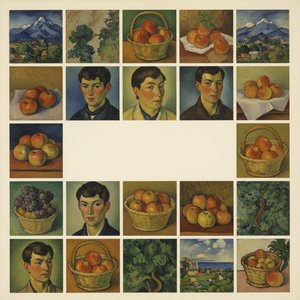
Відкрийте 25 найвідоміших картин Поля Сезанна! Дослідіть імпресіонізм, натюрморти та пейзажі художника. Купіть високоякісні репродукції та знайдіть ідеальний декор для вашого дому на Most-Famous-Paintings.com.

Відкрийте для себе 25 шедеврів Пауля Клее – від ранніх робіт до пізнього модернізму. Пориньте у світ абстракції, експресіонізму та унікального стилю художника. Репродукції картин високої якості на Most-Famous-Paintings.com! Дослідіть повну колекцію онлайн.

Discover Paul Sérusier's pivotal role in the Nabis movement & the birth of Synthetism. Explore 'The Talisman,' his influence on modern art, and a deeper understanding of this symbolic revolution. Expert analysis & insights.

Пориньте у світ імпресіонізму! Відкрийте 10 культових картин Моне, Ренуара та Дега. Історія мистецтва, кольори та техніка – все для натхнення вашого дому. Репродукції музейної якості на Most-Famous-Paintings.com.

Explore the profound emotional depth & innovative techniques of Post-Impressionism with Most-Famous-Paintings. Discover Cézanne, Van Gogh, Gauguin & more – and their lasting impact on modern art.


Будьте в курсі останніх новин зі світу мистецтва, ексклюзивних пропозицій та ідей для декорування.
Розкажіть нам про свій проєкт, і наші експерти з мистецтва підготують для вас 3 персоналізовані пропозиції щодо творів мистецтва.
Дозвольте нам підібрати 3 варіанти спеціально для вас — безкоштовно!


 Переглянути в інтер'єрі
 Надіслати як листівку
 Поділитися
 Детальніше

 Завантажити
 Схожі експонати
 Рентгенівське дослідження
 Слайд-шоу
 Читати далі







 Скляний варіант доступний лише для розмірів до 110 см


