


x

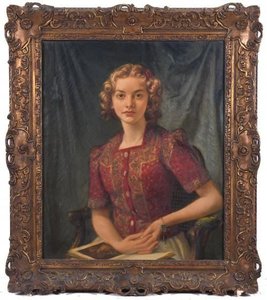
 50.0 x 43.0 cm
 Doncaster Museum And Art Gallery
Написана вручну олією на полотні у вашому розмірі та рамі, виготовлена на замовлення нашими художниками. ( Замовити принт Купити цифрове зображення)
Обирайте з наших стандартних розмірів, що відповідають оригінальним пропорціям твору мистецтва.

Ви можете вказати власні розміри, щоб репродукція ідеально підійшла до конкретної рами або інтер'єру. Якщо вибраний вами розмір не відповідає пропорціям оригіналу, ми або обріжемо полотно, або доповнимо картину додатковими елементами, промальованими вручну. Цифровий макет буде надіслано вам на затвердження перед початком виробництва.
Зверніть увагу, що попередній перегляд на екрані не відображає фактичне обрізання або розширення зображення. Тільки макет точно покаже остаточну композицію.
Хоча ми можемо виготовити виріб у нестандартному розмірі, для збереження оригінальних пропорцій рекомендуємо обирати варіанти зі встановленого списку.
Доставка по всьому світу () за 3–4 тижні замість стандартних 5 тижнів. (18 Серпень). Без жодних компромісів у якості.


Romance
Розмір репродукції

Born in Allegheny City, Pennsylvania – now part of Pittsburgh – in 1844, Mary Stevenson Cassatt was a remarkably independent and influential figure in the late 19th-century art world. Her life story is one of transatlantic journeys, artistic mentorships, and a profound dedication to capturing the intimate realities of women’s lives, particularly within the context of family and domesticity. Unlike many female artists of her era, Cassatt wasn't initially groomed for a career in painting; her father, Robert Simpson Cassat, a successful stockbroker, envisioned a more conventional path for his daughter. However, fueled by an innate artistic sensibility and supported by her equally financially secure mother, Katherine Kelso Johnston, she pursued her passion, ultimately forging her own distinctive voice within the burgeoning Impressionist movement.
Cassatt’s early training was initially rooted in academic traditions. She studied at the Pennsylvania Academy of the Fine Arts, a common starting point for aspiring American artists. However, it was her relocation to Paris in 1865 that proved transformative. There, she immersed herself in the vibrant artistic community, taking private lessons from established masters like Jean-Léon Gérôme and diligently copying works by Old Masters such as Correggio and Parmigianino. This period of intensive study laid the groundwork for her later stylistic developments, particularly her meticulous attention to detail and her ability to render fabrics with remarkable realism.
Unlike many of her male contemporaries who frequently depicted historical or mythological scenes, Cassatt’s work centered almost exclusively on the lives of women – mothers, children, nurses, and domestic servants. She wasn't interested in grand narratives; instead, she meticulously observed and portrayed the quiet moments of everyday existence within the confines of the home. Her paintings are imbued with a sense of intimacy and empathy, offering poignant glimpses into the emotional landscape of her subjects.
Her most celebrated series, “Little Girls,” captures the tender bond between mothers and children. These works, rendered in soft pastels and delicate brushstrokes, are characterized by their psychological depth and subtle expressions of affection. Similarly, her depictions of nurses attending to sick children reveal a compassionate understanding of human vulnerability. Cassatt’s choice of subject matter was not merely aesthetic; it reflected her belief that women's experiences were worthy of artistic representation and that the domestic sphere held profound significance.
Notably, she often depicted these scenes from a slightly elevated perspective, subtly shifting the viewer’s position to one of observation – mirroring the role of the artist as a witness to private moments.Cassatt's artistic style evolved significantly throughout her career. Initially influenced by academic traditions, she gradually embraced the Impressionist principles of *plein air* painting, broken brushstrokes, and an emphasis on capturing fleeting effects of light. She experimented with various media, including oil paint, pastels, and prints, each offering unique possibilities for expression.
Mary Stevenson Cassatt's contribution to the art world is multifaceted. As one of the few American artists associated with the Impressionist movement, she challenged conventional notions of artistic representation and paved the way for future generations of female painters. Her focus on domestic life and female subjects offered a fresh perspective on human experience, moving beyond traditional heroic narratives.
Her work continues to resonate today, admired for its emotional depth, technical skill, and insightful portrayal of women’s lives. She remains an important figure in the history of art, demonstrating the power of observation, empathy, and artistic innovation.
The Metropolitan Museum of Art in New York City holds a significant collection of Cassatt’s works, providing invaluable insights into her artistic development and creative vision. Their extensive holdings include paintings, pastels, prints, and drawings that showcase the breadth and depth of her oeuvre. The museum's essays on Cassatt offer a comprehensive overview of her life and career, solidifying her place as a pivotal figure in 19th-century art.
1926 - 2011 , Austria


Будьте в курсі останніх новин зі світу мистецтва, ексклюзивних пропозицій та ідей для декорування.
Розкажіть нам про свій проєкт, і наші експерти з мистецтва підготують для вас 3 персоналізовані пропозиції щодо творів мистецтва.
Дозвольте нам підібрати 3 варіанти спеціально для вас — безкоштовно!


 Переглянути в інтер'єрі
 Надіслати як листівку
 Поділитися
 Детальніше

 Завантажити
 Схожі експонати
 Рентгенівське дослідження
 Слайд-шоу
 Читати далі




































 Скляний варіант доступний лише для розмірів до 110 см


