


x

Написана вручну олією на полотні у вашому розмірі та рамі, виготовлена на замовлення нашими художниками. ( Замовити принт Купити цифрове зображення)





























Обирайте з наших стандартних розмірів, що відповідають оригінальним пропорціям твору мистецтва.

Ви можете вказати власні розміри, щоб репродукція ідеально підійшла до конкретної рами або інтер'єру. Якщо вибраний вами розмір не відповідає пропорціям оригіналу, ми або обріжемо полотно, або доповнимо картину додатковими елементами, промальованими вручну. Цифровий макет буде надіслано вам на затвердження перед початком виробництва.
Зверніть увагу, що попередній перегляд на екрані не відображає фактичне обрізання або розширення зображення. Тільки макет точно покаже остаточну композицію.
Хоча ми можемо виготовити виріб у нестандартному розмірі, для збереження оригінальних пропорцій рекомендуємо обирати варіанти зі встановленого списку.
Доставка по всьому світу () за 3–4 тижні замість стандартних 5 тижнів. (21 Серпень). Без жодних компромісів у якості.


The clearing
Розмір репродукції
René Magritte's "The Clearing," painted in 1944, isn’t merely a depiction of a field; it’s an invitation to question the very nature of reality. This iconic work, rendered in oil on canvas, exemplifies the artist’s signature surrealist style – a deliberate disruption of familiar landscapes and objects to provoke contemplation about how we perceive the world around us. The painting immediately draws the eye with its seemingly simple composition: a verdant field stretches across the lower half, populated by scattered carrots and a solitary cup, while a single bird soars gracefully from the upper left corner. Yet, beneath this surface tranquility lies a potent sense of unease and mystery, characteristic of Magritte’s enduring legacy.
The historical context surrounding “The Clearing” is crucial to understanding its deeper meaning. Created during World War II, a period marked by uncertainty and profound psychological shifts, the painting reflects a broader cultural anxiety about truth and illusion. Magritte, deeply influenced by philosophers like René Descartes and the principles of logical positivism, was fascinated with the gap between appearance and reality – a concept he relentlessly explored in his art. The work can be seen as an extension of this philosophical inquiry, suggesting that our understanding of the world is often constructed through subjective experience rather than objective observation.
The seemingly mundane elements within “The Clearing” are imbued with symbolic weight. The field itself represents the vastness and unpredictability of life, while the scattered carrots – a common sight in Belgian agriculture – subtly hint at fertility, abundance, and perhaps even mortality. Their placement near the center of the image suggests a grounding force amidst the unsettling atmosphere. The solitary cup, positioned on the ground to the right, is particularly intriguing. It’s an object devoid of immediate purpose, yet it draws the viewer's attention and invites speculation about its significance – could it be a symbol of thirst, loneliness, or simply a reminder of our basic needs?
The bird, positioned high in the left corner, is perhaps the most prominent symbolic element. Its flight upward suggests aspiration, freedom, or even escape from the constraints of the earthly realm. However, its detached position also hints at isolation and detachment – mirroring the viewer’s own experience of observing this surreal scene. The color palette—primarily greens, yellows, and blues—contributes to the painting's dreamlike quality, evoking a sense of both tranquility and disorientation.
Magritte’s technique in “The Clearing” is deceptively simple yet remarkably effective. He employs a meticulous realism – rendering each carrot, leaf, and bird with painstaking detail – to heighten the unsettling effect of the scene. This juxtaposition of precise representation and illogical arrangement creates a powerful tension that forces the viewer to actively engage with the artwork. The use of muted colors and soft brushstrokes further enhances the painting’s atmospheric quality, contributing to its overall sense of mystery.
It's important to note that Magritte wasn’t interested in creating literal representations; he sought to challenge our assumptions about how we perceive reality. As he himself stated, “I do not create what I see, but what I dream.” "The Clearing" embodies this philosophy perfectly – it’s a visual poem designed to provoke thought and invite endless interpretation. It remains a testament to Magritte's genius and his enduring ability to capture the complexities of the human experience through the lens of surrealism.

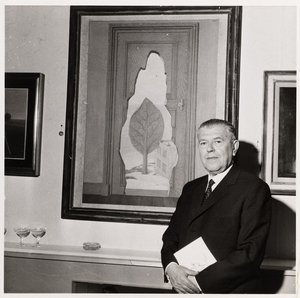
1898 - 1967 , Бельгія

Explore the profound mystery of René Magritte’s 'The Treachery of Images.' Dive into an expert analysis of his Surrealist philosophy, the paradox of representation, and how he challenged reality through the interplay of language and visual perception.

Explore the profound depths of Surrealism. From Dalí’s dreamscapes to Magritte’s enigmas, master the history of the subconscious mind through our expert art guide and discover museum-quality oil reproductions of the world's most iconic surrealist masterpieces.

Explore the profound depths of Surrealism with our expert guide. From Dalí's dreamscapes to Breton's manifesto, uncover the history, symbolism, and technical mastery of this revolutionary movement. Perfect for students and collectors seeking deep art-historical insight.


Будьте в курсі останніх новин зі світу мистецтва, ексклюзивних пропозицій та ідей для декорування.
Розкажіть нам про свій проєкт, і наші експерти з мистецтва підготують для вас 3 персоналізовані пропозиції щодо творів мистецтва.
Дозвольте нам підібрати 3 варіанти спеціально для вас — безкоштовно!


 Переглянути в інтер'єрі
 Надіслати як листівку
 Поділитися
 Детальніше

 Завантажити
 Схожі експонати
 Рентгенівське дослідження
 Слайд-шоу

 Читати далі







 Скляний варіант доступний лише для розмірів до 110 см


