


x

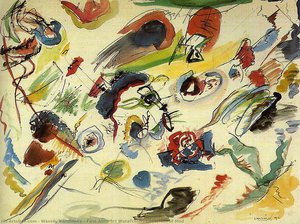
 Abstract Expressionism
 1958
1958 38.0 x 50.0 cm
Придбайте цифрову копію високої роздільної здатності з покращеною якістю, що значно перевершує онлайн-перегляд.
Кожен файл ретельно підготовлений нашими фахівцями за допомогою сучасних інструментів та професійної ручної ретуші. Ми гарантуємо виняткову чіткість, точну передачу кольору та високу деталізацію кожного зображення.
Фінальний файл надсилається електронною поштою протягом 72 годин і оптимізований для негайного використання у професійних виданнях та друкованих матеріалах. Таку якість обирають провідні дизайнерські студії, видавництва та галереї.
Завантажте файл високої роздільної здатності для особистого перегляду, друку та творчих проєктів. ( Купити принт Купити картину ручної роботи)
Обираючи Most-Famous-Paintings.com, ви отримуєте не просто зображення — ви отримуєте професійно вдосконалений цифровий витвір мистецтва, створений з надзвичайною точністю та підкріплений гарантією задоволення. Ось усе, що автоматично додається до вашого замовлення:

Ваш цифровий файл із зображенням високої роздільної здатності буде надісланий вам електронною поштою протягом 72 годин після оформлення замовлення — він буде готовий до негайного використання.

Ваш витвір мистецтва професійно оптимізовано за допомогою передових інструментів штучного інтелекту та ручної корекції, що забезпечує максимальну деталізацію, чіткість і точність передачі кольорів.

Випадково видалили або втратили файл? Не хвилюйтеся — ми надішлемо його вам повторно в будь-який час безкоштовно.

Насолоджуйтесь вашим витвором мистецтва миттєво без жодних мит, зборів або плати за доставку — цифрові завантаження завжди не оподатковуються.

Ми гарантуємо максимально точне відтворення оригінальних кольорів на вашому цифровому зображенні завдяки використанню професійних інструментів та систем управління кольором.

Якщо ви не задоволені придбаним цифровим зображенням, ми відкоригуємо його або повернемо 100% вартості протягом 60 днів — без жодних запитань.

Не задоволені покупкою? Отримайте повне повернення коштів протягом 60 днів після отримання цифрового файлу — без жодних запитань.

Купуйте 3 зображення — заощаджуйте 10% — Купуйте 5 — заощаджуйте 15% — Купуйте 10+ — заощаджуйте 20%. Чудово підходить для творчих проєктів, галерей та агентств.

Within the vibrant, often turbulent constellation of the New York School, few artists captured the ethereal boundary between the conscious mind and the primordial subconscious as poignantly as William Baziotes. Born in 1912 to Greek immigrants in Pittsburgh, Pennsylvania, Baziotes carried within him a profound connection to ancient heritage—a fascination with classical sculpture and mythic resonance that would later breathe life into his abstract forms. His formal journey began at the National Academy of Design, where he emerged in 1936 as a painter deeply attuned to the technical rigors of his craft, yet possessed by an irrepressible urge to explore the unseen realms of the psyche.
The trajectory of Baziotes’ career was irrevocably shaped by the socio-economic landscape of the Great Depression. Through his involvement with the Works Progress Administration (WPA), particularly the easel project between 1938 and 1940, he found the freedom to experiment with large-scale canvases that demanded a more visceral, gestural approach. It was during this era that he began to weave together the disparate threads of European Surrealism and the burgeoning American Abstract Expressionism. While his contemporaries often leaned toward pure abstraction or intellectualized concepts, Baziotes remained a poet of the image, utilizing automatism not merely as a technique, but as a gateway to a more evocative, biomorphic language.
Baziotes’ visual vocabulary is perhaps most famously defined by its use of biomorphic forms—organic, rounded shapes that suggest biological life, cellular structures, or the fluid movement of deep-sea organisms. His work often feels like a window into a prehistoric or extraterrestrial landscape, where the distinction between flesh and flora becomes beautifully blurred. In masterpieces such as Jungle Form (1952), one encounters a mesmerizing metamorphosis; a verdant figure emerges from a tangled thicket, her very essence seemingly woven from emerald and mossy textures. This ability to marry the psychological intensity of Surrealism with the raw, energetic brushwork of Abstract Expressionism allowed him to create works that are simultaneously haunting and deeply rhythmic.
His inspirations were as diverse as they were profound. Beyond the visual influence of primitive art, Baziotes drew immense spiritual and linguistic nourishment from the poetry of Charles Baudelaire and the timeless elegance of ancient Greek art. This literary and historical depth infused his paintings with a sense of tragic beauty and ritualistic movement. Whether through the melancholic color palettes found in works like The Falcon or the stark, haunting compositions of The Flesh Eaters, Baziotes sought to capture a moment of transcendence—a reaching toward the heavens or an exploration of the shadows lurking within the human spirit.
The mid-1940s marked the zenith of Baziotes’ professional recognition. His 1944 debut solo exhibition at Peggy Guggenheim’s legendary Art of This Century gallery served as a definitive arrival, placing him at the epicenter of the modern art world. He was not merely a participant in this movement but a foundational architect of its community. Alongside luminaries such as Mark Rothko, Robert Motherwell, and David Hare, Baziotes co-founded the Subjects of the Artist School in 1948. This institution became a vital crucible for artistic dialogue, hosting lectures by icons like John Cage and Jean Arp, and fostering a collaborative environment that would define the postwar American aesthetic.
In his later years, Baziotes transitioned into a period of significant pedagogical influence, teaching at prestigious institutions including the Museum of Modern Art and New York University. Though his life was tragically cut short by lung cancer in 1963, just days before his fifty-first birthday, his contribution to the evolution of modern art remains indelible. He leaves behind a legacy characterized by:
Today, the works of William Baziotes continue to captivate collectors and historians alike, offering a profound meditation on the interconnectedness of the human soul and the untamed natural world.

1912 - 1963 , United States of America


Будьте в курсі останніх новин зі світу мистецтва, ексклюзивних пропозицій та ідей для декорування.
Розкажіть нам про свій проєкт, і наші експерти з мистецтва підготують для вас 3 персоналізовані пропозиції щодо творів мистецтва.
Дозвольте нам підібрати 3 варіанти спеціально для вас — безкоштовно!


 Переглянути в інтер'єрі
 Надіслати
 Поділитися
 Деталі

 Завантажити
 Схожі експонати
 Рентгенівське дослідження
 Слайд-шоу
 Читати далі


![Abstract Composition [triptych] — Vaclav Vytlacil, Abstract Expressionism](/media/artworks/images/thumbnails/e5/3d/e53db42ea02644b9a8e722f9d4dd3742.jpg)


