


x





























从与原作比例一致的预设尺寸中进行选择。

您可以输入自定义尺寸,以适配特定的画框或空间。如果所选尺寸与原图比例不符,我们将通过裁剪作品或添加手绘元素来扩展画面。数字样稿将在制作开始前发送给您确认。
请注意,屏幕预览无法准确反映实际的裁剪或扩展效果,只有样稿才能真实呈现最终的构图。
虽然我们提供定制尺寸服务,但为了保留原作比例,建议您从预设列表中选择尺寸。

Three Girls
复制品尺寸
Egon Schiele's "Three Girls," painted in 1911, is not merely a depiction of three young women; it’s a profoundly unsettling exploration of intimacy, vulnerability, and the precariousness of existence – hallmarks of the artist’s intensely personal and emotionally charged style. The painting immediately confronts the viewer with its raw honesty, eschewing idealized beauty for a stark realism that borders on the disturbing. Schiele, working in Vienna during a period of immense social and artistic upheaval, was deeply influenced by the burgeoning Expressionist movement, which sought to convey subjective emotions rather than objective reality. This work exemplifies his signature approach: elongated figures, distorted perspectives, and an almost palpable sense of unease permeate every brushstroke.
The composition itself is deliberately unsettling. The women are clustered closely together, their limbs intertwined in a way that suggests both connection and potential conflict. Their gazes, averted or directed inward, hint at unspoken anxieties and hidden desires. Schiele’s masterful use of line – particularly the sharp, angular contours defining their bodies – creates a sense of dynamism and instability. The figures aren't posed formally; they seem caught in a moment of intense feeling, frozen in a private drama that unfolds entirely within the confines of the room. Notice how he uses shading to create an almost sculptural effect, emphasizing the physicality of each woman while simultaneously hinting at their fragility.
To fully appreciate “Three Girls,” it’s crucial to understand Schiele's personal life during this period. He was grappling with profound grief – his father had succumbed to syphilis just a few years prior, leaving him emotionally scarred and acutely aware of the fragility of human life. The early death of his sister Elvira further deepened this sense of loss and fueled an obsession with mortality that would become a recurring theme in his work. This painting can be interpreted as a meditation on these themes, a visual representation of the anxieties surrounding death, sexuality, and the search for connection in the face of inevitable decay.
The room itself – a sparsely furnished bedroom with a bed in the background – contributes to the overall atmosphere of claustrophobia and unease. It’s not a welcoming space; rather, it feels like a refuge, or perhaps a prison. The muted color palette—dominated by browns, greys, and ochres—reinforces this sense of melancholy and isolation. Schiele's use of light is equally deliberate, casting long shadows that obscure the figures and heighten their vulnerability.
Beyond its immediate emotional impact, “Three Girls” is rich in symbolic meaning. The intertwined limbs can be seen as a representation of both physical intimacy and psychological dependence. The averted gazes suggest a reluctance to confront one another, perhaps reflecting a deeper sense of insecurity or unresolved conflict. Some art historians have linked the painting to Schiele’s fascination with the human body, particularly its capacity for both pleasure and pain. The figures' elongated forms and distorted features are characteristic of Expressionist aesthetics, designed to convey intense emotions rather than realistic appearances.
Furthermore, the presence of the standing figure in the background adds another layer of complexity to the scene. This enigmatic presence could represent a silent observer, a potential threat, or perhaps even a reflection of the women’s own internal struggles. It's a detail that invites speculation and encourages viewers to engage with the painting on a deeper level.
Most-Famous-Paintings offers meticulously crafted hand-painted reproductions of Egon Schiele’s “Three Girls,” capturing the artist’s unique style and emotional intensity. Our skilled artisans use archival-quality materials and techniques to faithfully recreate every nuance of this powerful work, ensuring that it will be a treasured addition to any art collection or interior space. Whether you're an admirer of Expressionism, a collector of Schiele’s oeuvre, or simply seeking a piece of art that evokes profound emotion, our reproduction provides an authentic and captivating representation of this iconic painting. Explore the full artwork details and order your high-quality reproduction today at Most-Famous-Paintings.

埃贡·席勒(Egon Schiele,1890-1918)是奥地利表现主义绘画的杰出代表,他的作品以其深刻的心理洞察力、大胆的笔触和对人性的直白探索而闻名。他短暂却辉煌的一生,如同流星般划过20世纪初的维也纳艺术天空,留下了令人难以忘怀的印记。席勒并非仅仅是一位画家,更是一位深刻的思想者和情感的表达者,他的作品是对当时社会道德观念的挑战,也是对人类存在本质的探寻。
1890年6月12日,席勒出生于下奥地利图尔恩的一个小镇。父亲是一位铁路局长,家庭环境相对稳定,但命运却并未眷顾这位年轻的艺术家。幼年的席勒经历了许多不幸:父亲因梅毒去世,姐姐也早逝,这些悲剧性的事件在他心中留下了深刻的阴影,并深深影响了他的艺术创作。尽管如此,席勒从小就表现出对绘画的浓厚兴趣,他用稚嫩的笔触描绘着火车、车站和周围的景物,这些早期的作品中已经蕴含着他对线条和构图的敏锐感知。在克雷姆斯中学期间,一位名叫路德维希·卡尔·施特劳赫的艺术老师发现了席勒的天赋,并给予了他鼓励和指导,这对于他未来的艺术道路至关重要。
1906年,席勒前往维也纳求学,进入美术学院学习。然而,学院的保守教学方法很快让他感到窒息。他渴望自由、创新和更深刻的表达方式。在维也纳,席勒结识了古斯塔夫·克林姆(Gustav Klimt),这位前辈艺术家对席勒产生了深远的影响。克林姆的装饰风格和象征主义探索为席勒提供了灵感,但席勒并未完全跟随克林姆的脚步,而是逐渐形成了自己独特的艺术语言。他与几位志同道合的艺术家共同创立了“新艺术团体”,挑战着当时的主流审美观念。席勒的作品开始呈现出一种强烈的个人风格:扭曲的人体、尖锐的线条和充满焦虑的情绪,这些都成为了他作品的标志性特征。
席勒最引人注目的特点在于他对人性的深刻剖析。他的作品常常描绘裸体人物,但并非以传统的美学标准来衡量,而是着重表现人物内心的挣扎、孤独和焦虑。他毫不掩饰地展现了人体的缺陷和脆弱,这在当时的社会环境中是极具争议的。席勒的自画像系列更是对自我探索的一次深刻尝试,他用画笔记录下自己不同心境下的形象,坦诚地面对自己的内心世界。他的作品并非简单的肖像画,而是对人物心理状态的细致刻画,展现了一种独特的“心理现实主义”。席勒还经常使用象征性的元素来表达更深层次的主题,例如他笔下反复出现的黄瓜植物,常常被解读为死亡和短暂生命的象征。
尽管席勒的艺术才华得到了认可,但他的一生却充满了挑战。他的作品经常受到批评家的质疑,甚至遭到法律的制裁。然而,他从未放弃自己的艺术追求,始终坚持用画笔表达内心的真实感受。1918年,正值西班牙流感大流行时期,席勒不幸感染了流感,于同年10月31日去世,享年仅28岁。他的离世是艺术界的一大损失,但他也留下了宝贵的艺术遗产。如今,席勒的作品在世界各地的博物馆和画廊中展出,吸引着无数观众的目光。他被誉为奥地利表现主义的先驱,对后世的艺术家产生了深远的影响。席勒的作品不仅仅是视觉上的享受,更是一种深刻的精神体验,它引导我们去思考人生的意义、死亡的必然性和人类存在的脆弱性。
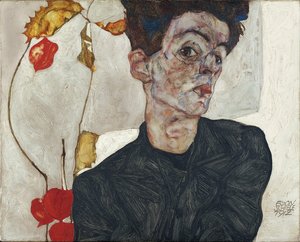
1890 - 1918 , 奥地利

Explore the profound history of Expressionism. From Edvard Munch to Jackson Pollock, discover how artists used distortion and color to convey raw emotion. A definitive guide for art lovers seeking deep historical context and mastery in fine art reproductions.

Explore the profound emotional depth of Expressionist portraiture. From Edvard Munch to Francis Bacon, discover how masters used distortion and color to reveal inner truths. Learn about this pivotal movement and find museum-quality oil reproductions for your collection.


第一时间获取最新的艺术新闻、独家优惠及装饰灵感。
向我们介绍您的项目需求,我们的艺术专家将为您提供 3 个个性化的艺术品推荐。
由我们的专家为您精选 3 款心仪之作 —— 完全免费!


 效果预览
效果预览
 购买印刷品
购买印刷品 分享
分享 分享
分享
 详情
详情

 下载
下载
 相似作品
相似作品 X射线
X射线 幻灯片播放
幻灯片播放

 展开详情
展开详情









 玻璃选项仅适用于110厘米以下的尺寸。


