x

Giclée nebo plátěný tisk muzeální kvality s rychlou výrobou a flexibilními možnostmi povrchové úpravy. ( Koupit ručně malovaný obraz Koupit obrázek)





























Vyberte si z našich přednastavených velikostí, které odpovídají původním proporcím díla.

Můžete zadat vlastní rozměry tak, aby výtvor odpovídal konkrétnímu rámu nebo prostoru. Pokud zvolená velikost nebude odpovídat poměru stran původního obrazu, dílo buď ořížeme, nebo obraz rozšíříme pomocí zrcadlového efektu či jednobarevného okraje. Před zahájením výroby vám bude zaslán digitální náhled k schválení.
Mějte prosím na paměti, že náhled na obrazovce neodráží skutečné oříznutí nebo rozšíření. Pouze digitální náhled přesně zobrazí finální kompozici.
Ačkoliv jsou k dispozici i vlastní rozměry, pro zachování původních proporcí doporučujeme vybrat si rozměr z předdefinovaného seznamu.
Celosvětové doručení () do 2 týdnů namísto standardních 4/5 týdnů. (14 srpen)


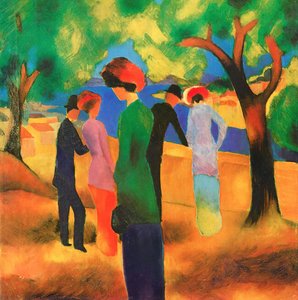
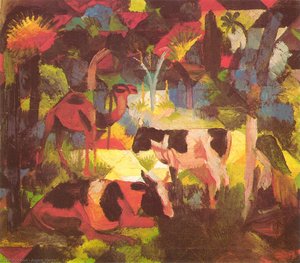
Colored Composition of Forms, 1914
Rozměry reprodukce
August Macke's Colored Composition of Forms, painted in the tumultuous year of 1914, is a captivating testament to the burgeoning energy of German Expressionism. This vibrant work, dominated by a central tennis racket – a seemingly mundane object elevated to symbolic importance – embodies Macke’s exploration of modern life and his desire to capture fleeting moments of intense feeling. The painting isn't simply a depiction; it’s an emotional resonance rendered in bold color and fractured forms. Created just months before the artist’s untimely death at the age of 27, the work carries with it the weight of a generation poised on the brink of war, reflecting both optimism and a profound sense of unease.
Macke’s use of color is utterly crucial to understanding this work. He rejects naturalistic representation in favor of an intensely chromatic approach. The palette – a riot of blues, greens, yellows, and reds – isn’t intended to mimic reality but rather to convey emotion directly. The vibrant hues evoke a sense of energy, excitement, and perhaps even anxiety. Notice how the cooler tones of blue and green are juxtaposed with the warmer shades of yellow and red, creating visual tension and amplifying the painting's emotional impact. This deliberate manipulation of color aligns perfectly with the Expressionist desire to express inner feelings rather than simply depict external appearances.
The inclusion of seemingly random objects – a bowl, a cup, and other scattered items – adds layers of symbolic meaning. These fragments could represent the brokenness of modern life, the anxieties surrounding rapid industrialization, or perhaps even the artist’s own fragmented state of mind. Painted in 1914, a year marked by political instability and impending war, the work resonates with the broader historical context of the time. Macke was deeply concerned with portraying the experiences of ordinary people – particularly children – and his art reflects this social consciousness.
Colored Composition of Forms is more than just a visually striking painting; it’s an emotionally charged experience. The dynamic composition, bold colors, and fragmented forms combine to create a powerful sense of movement and energy. Macke's work foreshadowed the key tenets of Expressionism – a focus on subjective emotion, distortion of form, and the use of color as a primary means of expression. It stands as a poignant reminder of a brilliant artist’s tragically short career and his significant contribution to the development of modern art.


1887 - 1914 , Německo

Explore the visceral power of German Expressionism. From Ernst Ludwig Kirchner to Die Brücke, discover how bold colors and distorted forms unmask raw human emotion in this expert art history guide for collectors and enthusiasts.

Explore the raw realism of Neue Sachlichkeit. Discover how German New Objectivity artists like Otto Dix and George Grosz captured the turbulent Weimar Republic through unflinching social critique and precise detail. A definitive guide for art historians and collectors.


Buďte na tahu s nejnovějšími novinkami ze světa umění, exkluzivními nabídkami a inspirativními nápady na dekoraci.
Sdělte nám více o svém projektu a naši odborníci na umění vám připraví 3 personalizované návrhy uměleckých děl.
Nechť pro vás vybereme 3 možnosti – zdarma!


 Náhled
 Sdílet
 Sdílet
 Podrobnosti o díle

 Stáhnout
 Podobné položky
 Rentgenové snímky
 Slideshow


 Zobrazit více







 Skleněná varianta je dostupná pouze u rozměrů menších než 110 cm