Prodávejte své umění
Seznam přání Nákupní košík Cart
Koupit tisk Koupit tiskKoupit ručně malovaný obraz Koupit ručně malovaný obraz SdíletSdílet
Podrobnosti o dílePodrobnosti o díle Přidat do oblíbených Přidat do oblíbených StáhnoutStáhnout Podobné položkyPodobné položky SlideshowSlideshow

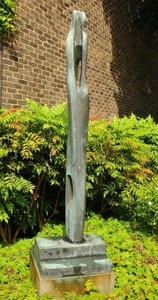
Curved Forms (Pavan)

Curved Forms (Pavan) by Barbara Hepworth is a 1956 sculpture created using metallized plaster on aluminum armature. Inspired by the Pavan dance, it reflects Hepworth's dedication to capturing 'the spiritual inner life' of art through its flowing forms and balanced composition.

Barbara Hepworthová (1903–1975) byla průkopnicí moderního britského sochařství. Její díla – včetně 'Oval Form' & 'Two Forms' – kombinují surrealismus a abstrakci. Objevte její dědictví na Muzeu Hepworth Wakefield.

Koupě vysoce rozlišeného, vylepšeného digitálního obrazu, který je mnohem kvalitnější než online náhled.

Každý soubor je pečlivě připraven našimi odborníky pomocí pokročilých nástrojů a expertní manuální retuše. Zajišťujeme, aby každý obraz disponoval výjimečnou ostrostí, přesnou barevnou věrností a jemnými detaily.

Finální soubor vám bude do 72 hodin zaslán e-mailem, optimalizovaný pro okamžité použití v profesionálním, redakčním i tiskovém prostředí. Nabízíme stejnou kvalitu, které důvěřují špičková designová studia, nakladatelství i galerie.

Digitální obrazy

Stáhněte si soubor ve vysokém rozlišení pro osobní prohlížení, tisk a kreativní projekty. (Koupit tisk Koupit tiskKoupit ručně malovaný obraz Koupit ručně malovaný obraz)

Celková cena

$ 24,90

Součást každé objednávky digitálního obrazu

Profesionální digitální doručení, zaručeno.

Když si vyberete Most-Famous-Paintings.com, nezískáváte pouze obrázek – získáváte digitální umělecké dílo s profesionálně vylepšenými detaily, zpracované s precizností a podpořené zárukou za spokojenost. Zde je vše, co vaše objednávka automaticky obsahuje:

shipping_icon
Rychlé doručení e-mailem

Váš digitální obraz ve vysokém rozlišení vám bude zaslán e-mailem do 72 hodin od objednávky – připraven k okamžitému použití.

canvas_icon
Digitální soubor s využitím AI

Vaše umělecké dílo je profesionálně optimalizováno pomocí pokročilých nástrojů umělé inteligence a manuální úpravy, což zajišťuje maximální úroveň detailu, ostrosti a přesnosti barev.

insurance_icon
Bezplatné doživotní znovuodeslání

Soubor jste omylem smazali nebo ztratili? Žádný problém – kdykoliv vám ho znovu zašleme zcela zdarma.

tax_icon
Bez poplatků za dovoz – navždy

Užijte si své umělecké dílo okamžitě bez celních poplatků, daní nebo nákladů na dopravu – digitální stažení je vždy bez daňových povinností.

color_icon
Záruka přesnosti barev

Pomocí profesionálních nástrojů a správy barev zajišťujeme, aby váš digitální obraz odrážel původní barvy co nejvěrněji.

return_icon
60denní záruka spokojenosti

Pokud nebudete s digitální fotografií spokojeni, provedeme její revizi nebo vám vrátíme 100% během 60 dnů – bez jakýchkoliv dotazů.

guarantee_icon
100% záruka vrácení peněz

Nespokojeni? Získejte plnou částku zpět do 60 dní od přijetí vašeho digitálního souboru – bez jakýchkoliv dotazů.

discount_icon
Slevy při hromadných objednávkách

Koupěte si 3 obrazy, ušetřete 10% - Koupěte si 5, ušetřete 15% - Koupěte si 10+, ušetřete 20%. Ideální pro kreativní projekty, galerie a agentury.

Základní informace

  • Artistic style: Abstraction
  • Title: Curved Forms (Pavan)
  • Location: The Hepworth Wakefield
  • Year: 1956
  • Medium: Metallized plaster & metal armature
  • Notable elements or techniques: Carving of hardened plaster surface
  • Subject or theme: Organic forms

Kvíz o umění

U každé otázky je pouze jedna správná odpověď.

Otázka 1:
What is the sculpture Curved Forms (Pavan) primarily known for?
Otázka 2:
Barbara Hepworth is recognized as a pioneer in which artistic movement?
Otázka 3:
What material was used to create Curved Forms (Pavan)?
Otázka 4:
According to the description, Hepworth described her sculptural method as...
Otázka 5:
Where can Curved Forms (Pavan) be viewed?

Popis sběratelského kusu

Barbara Hepworth: Exploring Flowing Forms and Spiritual Resonance

Barbara Hepworth (1903–1975) stands as one of the most influential figures in British sculpture of the mid-20th century, a pioneer who championed abstraction and sought to capture the essence of organic forms—particularly those found in nature. Her oeuvre is characterized by monumental sculptures crafted from materials like bronze, stone, and alabaster, yet “Curved Forms (Pavan),” created in 1956, exemplifies her distinctive approach: metallized plaster cast on aluminum armature.

Inspired by the graceful Pavan dance—a stately court dance of Elizabethan England—Hepworth’s sculpture transcends mere imitation. Instead, it embodies her profound fascination with movement and transformation. As Hepworth herself eloquently described, she aimed to “capture ‘the spiritual inner life’ of art,” striving not just for visual representation but for conveying a sense of dynamism and interconnectedness.

Technique and Material Innovation

Hepworth's method was revolutionary for its time. Rejecting the traditional modeling techniques favored by many sculptors, she opted for a process that prioritized resistance—the interaction between sculptor and material. She constructed an aluminum armature – a skeletal framework – providing structural support while allowing her to manipulate the plaster surface with precision.

  • Metallized Plaster: Hepworth coated the armature in metallized plaster, a technique she developed herself. This involved applying a thin layer of metal pigment onto the plaster before casting it, resulting in a pale gray hue that subtly reflects light.
  • Aluminum Armature: The aluminum armature was chosen for its rigidity and ability to maintain shape during the casting process.
  • Carving Technique: Hepworth meticulously carved into the hardened plaster surface using chisels and hammers, painstakingly shaping the ovoid forms until they achieved their final sculptural form.

Symbolism and Aesthetic Vision

"Curved Forms (Pavan)" isn't merely a beautiful object; it’s laden with symbolic significance. The three interconnected ovoids represent Hepworth’s belief in the fundamental unity of existence—the idea that all things are interdependent and constantly evolving. Their flowing curves mirror the movement of water or wind, symbolizing fluidity and adaptability.

Hepworth's aesthetic vision was rooted in a deep appreciation for natural forms and a desire to express their underlying principles. She sought to distill the essence of organic shapes into simplified geometric forms, creating sculptures that evoke contemplation and invite viewers to consider the relationship between form and space.

Legacy and Recognition

"Curved Forms (Pavan)" resides in The Hepworth Wakefield’s collection, a testament to Hepworth's enduring influence on modern sculpture. Its placement alongside other works by Hepworth underscores her commitment to exploring themes of spirituality and materiality—a legacy that continues to inspire artists and collectors alike.

The sculpture’s distinctive monochromatic surface – achieved through careful polishing – enhances its visual impact, emphasizing the texture and contours of the form while creating a serene atmosphere. As Hepworth herself noted, “Curved Forms (Pavan), Version II” embodies "the spiritual inner life" of art—a profound statement that encapsulates her artistic philosophy.


Biografie umělce

Barbara Hepworth: Pioneer of Organic Abstraction

Barbara Hepworth (1903–1975) stands as one of the most influential figures in British modern sculpture, a sculptor whose groundbreaking approach fundamentally reshaped artistic expression during the interwar years and beyond. Born Jocelyn Barbara Hepworth in Wakefield, Yorkshire, her formative years were marked by an early fascination with natural forms—particularly the rugged landscapes of her native Yorkshire—which would become central to her artistic vision. Her father, Herbert Hepworth, was a civil engineer for the West Riding County Council, fostering a practical sensibility alongside an appreciation for geometric precision.
  • Early Education & Influences: Hepworth’s education at Wakefield Girls' High School instilled in her a belief in the importance of intellectual curiosity and artistic exploration. Notably, she befriended Henry Moore during her studies at Leeds School of Art, forging a collaborative relationship that would endure throughout their careers. This connection to Moore—a fellow devotee of exploring natural forms through abstraction—proved pivotal in shaping Hepworth’s aesthetic sensibilities.
  • Royal College of Art & Formal Experimentation: Hepworth's enrollment at the Royal College of Art in 1921 represented a decisive step toward establishing herself as an artist. There, she honed her sculptural skills and embraced the burgeoning modernist movement, experimenting with techniques like direct carving—a method championed by Skeaping—that prioritized working directly with raw materials to achieve organic forms.

Marriage & Artistic Partnership with Ben Nicholson

Her marriage to sculptor John Skeaping in 1925 solidified her artistic life, providing a supportive environment for collaborative endeavors and fostering a shared commitment to exploring the expressive potential of abstraction. The couple moved into Hampstead’s Mall studio in 1926, where Hepworth and Nicholson cultivated an intense creative dialogue that would define their artistic output for decades. Their relationship was marked by both intellectual stimulation and personal challenges, culminating in divorce in 1933. However, Hepworth continued her partnership with Nicholson until 1951, producing some of her most celebrated works during this period—including the monumental *Pierced Hemisphere I* and *Two Forms*, which embody the core principles of their artistic vision.

The St Ives Period & Monumental Sculpture

Following World War II, Hepworth relocated to St Ives, Cornwall, where she established herself as a leading figure in the burgeoning St Ives School of Artists—a collective dedicated to capturing the essence of Cornish landscape and exploring the interplay between form and space. This period witnessed Hepworth’s artistic evolution toward larger-scale sculptures that responded directly to the environment, reflecting her profound connection with nature. Her masterpiece, *Winged Figure*, commissioned by John Lewis for Oxford Street, London, stands as a testament to her ambition and technical prowess—a towering aluminum sculpture that embodies the spirit of modernist abstraction while simultaneously honoring the beauty of the Cornish coastline.

Legacy & Recognition

Barbara Hepworth’s contribution to modern art is undeniable. Her pioneering exploration of organic abstraction challenged conventional artistic norms, establishing a new aesthetic language characterized by sensual materiality and geometric precision. She received numerous accolades throughout her life—including Commander of the Order of the British Empire (CBE) in 1958—and was honored as Dame in 1965 for her enduring influence on art history. Today, Hepworth’s sculptures reside in prominent museums worldwide—most notably The Hepworth Wakefield—where they continue to inspire viewers and scholars alike, cementing her place as one of Britain's most revered artists."
Barbara Hepworthová

Barbara Hepworthová

1903 - 1975 , Spojené království

Stručné informace

  • Artistic Movement Or Style: Modernisme
  • Artists Or Movements Influenced By This Artist: ['Abstraction Création']
  • Artists Who Influenced This Artist: ['Henry Moore']
  • Date Of Birth: 10 janvier 1903
  • Full Name: Jocelyn Barbara Hepworth
  • Nationality: Britannique
  • Notable Artworks:
    • Oval Form
    • Deux formes
  • Place Of Birth: Wakefield, Angleterre