Prodávejte své umění
Seznam přání Nákupní košík Cart
NáhledNáhled Náhled v ARNáhled v AR Koupit tisk Koupit tiskKoupit ručně malovaný obraz Koupit ručně malovaný obraz SdíletSdílet
Podrobnosti o dílePodrobnosti o díle Přidat do oblíbených Přidat do oblíbených StáhnoutStáhnout Podobné položkyPodobné položky Rentgenové snímkyRentgenové snímky SlideshowSlideshow

Seated Nude

Seated Nude may refer to: Seated Nude (1916), a 1916 painting by Amedeo Modigliani Seated Nude (1917), a 1917 painting by Amedeo Modigliani Seated Nude (1918), a 1918 painting by Amedeo Modigliani

Barbara Hepworthová (1903–1975) byla průkopnicí moderního britského sochařství. Její díla – včetně 'Oval Form' & 'Two Forms' – kombinují surrealismus a abstrakci. Objevte její dědictví na Muzeu Hepworth Wakefield.

Koupě vysoce rozlišeného, vylepšeného digitálního obrazu, který je mnohem kvalitnější než online náhled.

Každý soubor je pečlivě připraven našimi odborníky pomocí pokročilých nástrojů a expertní manuální retuše. Zajišťujeme, aby každý obraz disponoval výjimečnou ostrostí, přesnou barevnou věrností a jemnými detaily.

Finální soubor vám bude do 72 hodin zaslán e-mailem, optimalizovaný pro okamžité použití v profesionálním, redakčním i tiskovém prostředí. Nabízíme stejnou kvalitu, které důvěřují špičková designová studia, nakladatelství i galerie.

Digitální obrazy

Stáhněte si soubor ve vysokém rozlišení pro osobní prohlížení, tisk a kreativní projekty. (Koupit tisk Koupit tiskKoupit ručně malovaný obraz Koupit ručně malovaný obraz)

Celková cena

$ 24,90

Součást každé objednávky digitálního obrazu

Profesionální digitální doručení, zaručeno.

Když si vyberete Most-Famous-Paintings.com, nezískáváte pouze obrázek – získáváte digitální umělecké dílo s profesionálně vylepšenými detaily, zpracované s precizností a podpořené zárukou za spokojenost. Zde je vše, co vaše objednávka automaticky obsahuje:

shipping_icon
Rychlé doručení e-mailem

Váš digitální obraz ve vysokém rozlišení vám bude zaslán e-mailem do 72 hodin od objednávky – připraven k okamžitému použití.

canvas_icon
Digitální soubor s využitím AI

Vaše umělecké dílo je profesionálně optimalizováno pomocí pokročilých nástrojů umělé inteligence a manuální úpravy, což zajišťuje maximální úroveň detailu, ostrosti a přesnosti barev.

insurance_icon
Bezplatné doživotní znovuodeslání

Soubor jste omylem smazali nebo ztratili? Žádný problém – kdykoliv vám ho znovu zašleme zcela zdarma.

tax_icon
Bez poplatků za dovoz – navždy

Užijte si své umělecké dílo okamžitě bez celních poplatků, daní nebo nákladů na dopravu – digitální stažení je vždy bez daňových povinností.

color_icon
Záruka přesnosti barev

Pomocí profesionálních nástrojů a správy barev zajišťujeme, aby váš digitální obraz odrážel původní barvy co nejvěrněji.

return_icon
60denní záruka spokojenosti

Pokud nebudete s digitální fotografií spokojeni, provedeme její revizi nebo vám vrátíme 100% během 60 dnů – bez jakýchkoliv dotazů.

guarantee_icon
100% záruka vrácení peněz

Nespokojeni? Získejte plnou částku zpět do 60 dní od přijetí vašeho digitálního souboru – bez jakýchkoliv dotazů.

discount_icon
Slevy při hromadných objednávkách

Koupěte si 3 obrazy, ušetřete 10% - Koupěte si 5, ušetřete 15% - Koupěte si 10+, ušetřete 20%. Ideální pro kreativní projekty, galerie a agentury.

Základní informace

  • Notable elements or techniques: Black and white drawing; Gesture and form.
  • Subject or theme: Human figure
  • Year: 1947
  • Medium: Pencil on paper
  • Location: The Hepworth Wakefield
  • Artistic style: Abstraction
  • Artist: Barbara Hepworth

Kvíz o umění

U každé otázky je pouze jedna správná odpověď.

Otázka 1:
What is the primary medium used in Barbara Hepworth’s ‘Seated Nude’?
Otázka 2:
In what year was the artwork ‘Seated Nude’ created?
Otázka 3:
The sculpture depicts a woman in what pose?
Otázka 4:
Barbara Hepworth was associated with which art movement?
Otázka 5:
What is the overall aesthetic style of ‘Seated Nude’?

Popis sběratelského kusu

Seated Nude by Barbara Hepworth

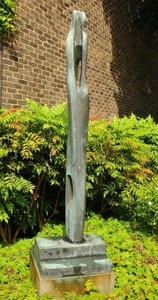
Barbara Hepworth’s “Seated Nude” embodies the core tenets of modernist sculpture—abstraction, geometric form, and an exploration of human presence within space. Executed in 1947 during a pivotal period for Hepworth's artistic development, coinciding with her relocation to St Ives and her burgeoning collaboration with Ben Nicholson, this piece exemplifies the influence of Surrealist ideas on British art at the time. The sculpture’s simplicity belies its profound conceptual depth; Hepworth eschewed representational detail in favor of conveying a sense of stillness and contemplation through carefully considered curves and planes.

Form and Technique: A Dialogue Between Materiality and Space

Hepworth skillfully utilized Cornish alabaster—a creamy white limestone known for its translucency—to achieve an ethereal quality that transcends mere physicality. The sculptor meticulously carved away material to reveal the underlying form, creating a dynamic interplay between solid mass and negative space. This technique is characteristic of Hepworth’s broader oeuvre and reflects her fascination with exploring how sculpture interacts with its environment. The surface texture is subtly roughened, providing visual interest without distracting from the overall geometric harmony. It's important to note that Hepworth was one of the few female sculptors who achieved international acclaim during her lifetime, a testament to her unwavering commitment to artistic innovation and her ability to communicate complex ideas through elegant forms.

Historical Context: Surrealism’s Influence on British Art

The genesis of “Seated Nude” lies within the broader context of Surrealist experimentation in Britain following World War II. Hepworth's involvement with Unit One, alongside Nicholson and others, sought to synthesize Surrealist principles—such as automatism and dream imagery—with abstraction. This movement aimed to liberate art from traditional conventions and explore subconscious impulses. The sculpture’s form echoes the geometric abstractions favored by artists like Gabo and Calder, demonstrating Hepworth's engagement with international artistic currents. It speaks to a desire to capture not just the physical appearance of the human figure but also its psychological essence—a quest for inner stillness and contemplation that resonated deeply with the anxieties and aspirations of the postwar era.

Symbolism: Embodied Presence and Spatial Harmony

Beyond its formal qualities, “Seated Nude” carries symbolic weight. The posture itself conveys a sense of repose and vulnerability, inviting viewers to consider themes of introspection and emotional resonance. Hepworth’s masterful manipulation of alabaster contributes to this effect, creating an illusion of luminosity that suggests the presence of light within darkness—a motif frequently employed in Surrealist art. The sculpture's placement within Hepworth’s garden at St Ives reinforces its connection to nature and underscores the artist’s belief in the transformative power of artistic contemplation. It is a piece that encourages viewers to engage with their own perceptions of beauty and form, prompting reflection on the relationship between human experience and the surrounding world.

Emotional Impact: Tranquility and Contemplation

Ultimately, “Seated Nude” succeeds in conveying a profound sense of tranquility and contemplation. Hepworth’s meticulous attention to detail—particularly her masterful control over material and space—creates an artwork that transcends mere visual representation. It invites viewers into a meditative state, encouraging them to appreciate the subtle nuances of form and texture. The sculpture's enduring appeal lies in its ability to communicate universal themes of stillness, vulnerability, and inner harmony—qualities that continue to resonate with audiences today.

Biografie umělce

Barbara Hepworth: Pioneer of Organic Abstraction

Barbara Hepworth (1903–1975) stands as one of the most influential figures in British modern sculpture, a sculptor whose groundbreaking approach fundamentally reshaped artistic expression during the interwar years and beyond. Born Jocelyn Barbara Hepworth in Wakefield, Yorkshire, her formative years were marked by an early fascination with natural forms—particularly the rugged landscapes of her native Yorkshire—which would become central to her artistic vision. Her father, Herbert Hepworth, was a civil engineer for the West Riding County Council, fostering a practical sensibility alongside an appreciation for geometric precision.
  • Early Education & Influences: Hepworth’s education at Wakefield Girls' High School instilled in her a belief in the importance of intellectual curiosity and artistic exploration. Notably, she befriended Henry Moore during her studies at Leeds School of Art, forging a collaborative relationship that would endure throughout their careers. This connection to Moore—a fellow devotee of exploring natural forms through abstraction—proved pivotal in shaping Hepworth’s aesthetic sensibilities.
  • Royal College of Art & Formal Experimentation: Hepworth's enrollment at the Royal College of Art in 1921 represented a decisive step toward establishing herself as an artist. There, she honed her sculptural skills and embraced the burgeoning modernist movement, experimenting with techniques like direct carving—a method championed by Skeaping—that prioritized working directly with raw materials to achieve organic forms.

Marriage & Artistic Partnership with Ben Nicholson

Her marriage to sculptor John Skeaping in 1925 solidified her artistic life, providing a supportive environment for collaborative endeavors and fostering a shared commitment to exploring the expressive potential of abstraction. The couple moved into Hampstead’s Mall studio in 1926, where Hepworth and Nicholson cultivated an intense creative dialogue that would define their artistic output for decades. Their relationship was marked by both intellectual stimulation and personal challenges, culminating in divorce in 1933. However, Hepworth continued her partnership with Nicholson until 1951, producing some of her most celebrated works during this period—including the monumental *Pierced Hemisphere I* and *Two Forms*, which embody the core principles of their artistic vision.

The St Ives Period & Monumental Sculpture

Following World War II, Hepworth relocated to St Ives, Cornwall, where she established herself as a leading figure in the burgeoning St Ives School of Artists—a collective dedicated to capturing the essence of Cornish landscape and exploring the interplay between form and space. This period witnessed Hepworth’s artistic evolution toward larger-scale sculptures that responded directly to the environment, reflecting her profound connection with nature. Her masterpiece, *Winged Figure*, commissioned by John Lewis for Oxford Street, London, stands as a testament to her ambition and technical prowess—a towering aluminum sculpture that embodies the spirit of modernist abstraction while simultaneously honoring the beauty of the Cornish coastline.

Legacy & Recognition

Barbara Hepworth’s contribution to modern art is undeniable. Her pioneering exploration of organic abstraction challenged conventional artistic norms, establishing a new aesthetic language characterized by sensual materiality and geometric precision. She received numerous accolades throughout her life—including Commander of the Order of the British Empire (CBE) in 1958—and was honored as Dame in 1965 for her enduring influence on art history. Today, Hepworth’s sculptures reside in prominent museums worldwide—most notably The Hepworth Wakefield—where they continue to inspire viewers and scholars alike, cementing her place as one of Britain's most revered artists."
Barbara Hepworthová

Barbara Hepworthová

1903 - 1975 , Spojené království

Stručné informace

  • Artistic Movement Or Style: Modernisme
  • Artists Or Movements Influenced By This Artist: ['Abstraction Création']
  • Artists Who Influenced This Artist: ['Henry Moore']
  • Date Of Birth: 10 janvier 1903
  • Full Name: Jocelyn Barbara Hepworth
  • Nationality: Britannique
  • Notable Artworks:
    • Oval Form
    • Deux formes
  • Place Of Birth: Wakefield, Angleterre