x

 Akryl na plátněObrazová tvorba na stěnuMannerism
 1608Renesance
 112.0 x 92.0 cm
 Metropolitní muzeum umění
Giclée nebo plátěný tisk muzeální kvality s rychlou výrobou a flexibilními možnostmi povrchové úpravy. ( Koupit ručně malovaný obraz Koupit obrázek)





























Vyberte si z našich přednastavených velikostí, které odpovídají původním proporcím díla.

Můžete zadat vlastní rozměry tak, aby výtvor odpovídal konkrétnímu rámu nebo prostoru. Pokud zvolená velikost nebude odpovídat poměru stran původního obrazu, dílo buď ořížeme, nebo obraz rozšíříme pomocí zrcadlového efektu či jednobarevného okraje. Před zahájením výroby vám bude zaslán digitální náhled k schválení.
Mějte prosím na paměti, že náhled na obrazovce neodráží skutečné oříznutí nebo rozšíření. Pouze digitální náhled přesně zobrazí finální kompozici.
Ačkoliv jsou k dispozici i vlastní rozměry, pro zachování původních proporcí doporučujeme vybrat si rozměr z předdefinovaného seznamu.
Celosvětové doručení () do 2 týdnů namísto standardních 4/5 týdnů. (18 srpen)


Útěk pěti věží
Rozměry reprodukce
Doménikos Theotokópoulos, universally known as El Greco – “the Greek” – stands apart from his contemporaries as a painter whose life and artistic output defied easy categorization. Born in Crete in 1541, under Venetian rule, his artistic journey traversed Venice and Rome before finding its ultimate expression in the spiritual heartland of Spain: Toledo. El Greco wasn’t merely a product of these places; he synthesized their influences into something wholly unique—a style that anticipated the emotional intensity of Expressionism and the fragmented forms of Cubism centuries later.
His early training within the Byzantine tradition instilled in him a meticulous attention to detail and a profound understanding of religious iconography. This foundation, however, wouldn’t confine him. He signed his works in Greek, often appending “Krḗs” – Cretan – as a proud declaration of his origins, even as he embraced Mannerism—a stylistic movement that prioritized expressive force over precise representation.
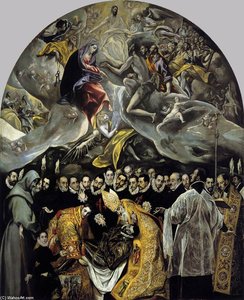
“The Opening of the Fifth Seal,” painted in 1608, exemplifies El Greco’s distinctive Mannerist aesthetic. Measuring 112 x 92 cm and housed at the Metropolitan Museum of Art in New York, this monumental altarpiece embodies El Greco’s unwavering engagement with theological themes. Unlike the serene idealism prevalent in Renaissance art—characterized by balanced compositions and idealized figures—El Greco’s vision pulsates with emotion and spiritual intensity.
The painting depicts a harrowing scene from Revelation 6:9–11–the apocalypse—where the souls of martyrs cry out to God for justice upon their persecutors on Earth. At its core is a man, positioned centrally, his arms outstretched in supplication—a gesture conveying profound yearning and devotion. His robe glows with a luminous blue hue, mirroring the celestial realm and reinforcing the painting’s spiritual atmosphere.
Surrounding him are figures representing angels and saints—a complex interplay of light and shadow that underscores the narrative's dramatic tension. The artist meticulously rendered each detail—from the folds of drapery to the expressions on the faces of the participants—creating a visual experience rich in symbolism. Notably, the man’s hands symbolize openness and vulnerability, reaching upwards towards divine grace.
El Greco’s technique is marked by an extraordinary mastery of oil paint—a medium he skillfully manipulated to achieve unprecedented levels of luminosity and expressive force. His elongated figures defy anatomical realism, prioritizing spiritual impact over precise representation. This stylistic choice aligns perfectly with the painting’s overarching theme: a rejection of earthly constraints in favor of transcendence.
The artist’s use of color—particularly the dominant blue—is equally significant. Blue symbolizes heaven and divine majesty, establishing a visual connection between the earthly realm and the spiritual dimension. Furthermore, El Greco employed “sfumato”—a subtle blending of tones—to soften contours and create an ethereal effect, enhancing the painting’s otherworldly beauty.
Commissioned for the Hospital of Saint John the Baptist in Toledo, Spain, “The Opening of the Fifth Seal” reflects the fervent piety of its patrons—Cardinal Juan de Tavera and his successors—who sought solace and inspiration from religious imagery during a turbulent period marked by political instability and social upheaval.
Interestingly, the painting was cut at the top when it originally conceived as part of a larger altarpiece. The missing portion would have depicted the Throne of God—a powerful symbol of divine authority—further emphasizing the scene’s apocalyptic grandeur. Despite its fragmentary state, “The Opening of the Fifth Seal” remains an enduring testament to El Greco’s artistic genius and his ability to capture the essence of spiritual experience.
For those seeking a stunning reproduction of this masterpiece, Most-Famous-Paintings offers meticulously crafted oil paintings that faithfully recreate El Greco’s luminous palette and dramatic composition. Explore our collection today!


1541 - 1614 , Řecko
Explore the dramatic transition from High Renaissance harmony to Mannerist tension. Discover how masters like El Greco redefined art through distortion and spiritual intensity. An expert guide for art enthusiasts seeking deep historical context and museum-quality inspiration.

Explore the dramatic evolution of Mannerism from High Renaissance perfection to El Greco's spiritual intensity. Discover the history, techniques, and enduring legacy of this transformative era through an expert art-history lens.


Buďte na tahu s nejnovějšími novinkami ze světa umění, exkluzivními nabídkami a inspirativními nápady na dekoraci.
Sdělte nám více o svém projektu a naši odborníci na umění vám připraví 3 personalizované návrhy uměleckých děl.
Nechť pro vás vybereme 3 možnosti – zdarma!


 Náhled
 Sdílet
 Sdílet
 Podrobnosti o díle

 Stáhnout
 Podobné položky
 Rentgenové snímky
 Slideshow
 Zobrazit více







 Skleněná varianta je dostupná pouze u rozměrů menších než 110 cm