x

Ručně malovaná olejná barva na plátně ve vašem zvoleném rozměru i s rámem, vyrobená našimi umělci na zakázku. ( Koupit tisk Koupit obrázek)





























Vyberte si z našich přednastavených velikostí, které odpovídají původním proporcím díla.

Můžete zadat vlastní rozměry pro konkrétní rám nebo prostor. Pokud se vámi vybraná velikost neshoduje s proporcemi původního obrazu, dílo buď ořízneme, nebo jej doplníme ručně malovanými prvky. Před zahájením výroby vám bude zaslán digitální náhled ke schválení.
Upozorňujeme, že náhled na obrazovce neodpovídá skutečnému ořezu ani rozšíření. Pouze digitální náhled přesně zobrazí finální kompozici.
Ačkoliv je možné zvolit vlastní velikost, pro zachování původních proporcí doporučujeme vybrat rozměr z předdefinovaného seznamu.
Celosvětová doprava () za 3–4 týdny namísto standardních 5 týdnů. (18 srpen). Bez kompromisů v kvalitě.


The calla
Rozměry reprodukce
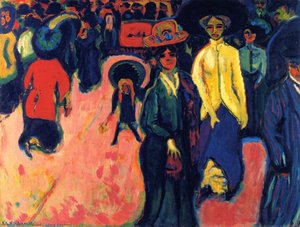
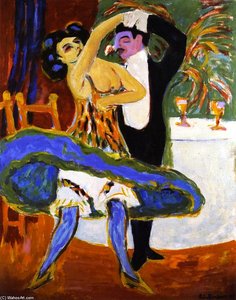
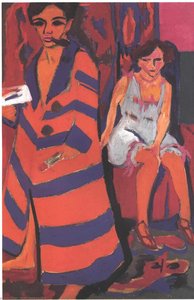
Ernst Ludwig Kirchner's "The Calla" isn’t merely a depiction of a street scene; it’s a visceral plunge into the anxieties and intensities of early 20th-century urban life. Painted in 1913, during a period of immense social and political upheaval in Germany, this oil on canvas explodes with a raw energy characteristic of German Expressionism. Kirchner, a founding member of Die Brücke (The Bridge), sought to move beyond the constraints of academic realism, aiming instead to capture not just what he saw, but how he *felt* about it – a deeply subjective and often unsettling experience. The painting immediately assaults the viewer with its bold color palette dominated by fiery reds, deep greens, and bruised pinks, all grounded in earthy browns, creating a sense of immediate tension and unease. These aren’t colors that describe a pleasant afternoon; they are the hues of a simmering, restless city.
The composition itself is deliberately chaotic, mirroring the perceived disorder of modern urban existence. Kirchner abandons traditional perspective, flattening the space and layering figures in an overlapping mass that seems to press forward, almost overwhelming the viewer. There’s no single focal point; instead, our eye is drawn on a journey through this crowded tableau, encountering fleeting glimpses of faces, fragments of clothing, and the suggestion of movement at every turn. Diagonal lines – evident in the arrangement of figures and the brushstrokes themselves – contribute to this sense of dynamism, as if the scene is perpetually caught in motion. The distortion of forms, particularly the simplified, almost flattened rendering of the human figures, speaks directly to the Expressionist impulse to prioritize emotional impact over accurate representation.
Kirchner’s technique is deliberately loose and expressive, a hallmark of his approach. Thick impasto – the application of paint in heavy, textured layers – is evident throughout the canvas, creating a palpable sense of physicality and immediacy. The brushstrokes are visible, not concealed or blended, adding to the painting's raw energy. Lines aren’t clean or precise; they’re blurred and gestural, contributing to the overall feeling of disorientation and anxiety. This disregard for meticulous detail is central to the Expressionist aesthetic – a rejection of photographic realism in favor of conveying inner experience. The use of complementary colors—particularly the stark juxtaposition of red and green—intensifies the visual drama and amplifies the emotional impact.
“The Calla” is more than just a street scene; it’s a potent symbol of the alienation and anxieties inherent in modern urban life. The densely packed figures, lost within the anonymity of the crowd, represent the individual swallowed by the overwhelming scale of the city. Kirchner masterfully captures this sense of isolation through his deliberate distortion of form and color. The faces are often obscured, their features simplified to suggest a lack of identity. The overall impression is one of unease, as if the figures are trapped in a perpetual state of agitation. Some art historians interpret the painting as a commentary on the social unrest brewing in Germany at the time, reflecting the anxieties surrounding war and political instability. The title itself, “The Calla,” might allude to the ephemeral nature of beauty and life amidst this chaotic backdrop – a fleeting moment of grace within an overwhelming world.
Kirchner’s "The Calla" stands as a powerful testament to the expressive potential of art. It exemplifies the core tenets of German Expressionism, prioritizing emotional impact over objective representation. Its bold colors, distorted forms, and dynamic composition continue to resonate with viewers today, offering a glimpse into the turbulent psychological landscape of early 20th-century Europe. Reproductions of this iconic work offer a unique opportunity to experience Kirchner’s vision firsthand, bringing his intense emotions and unsettling observations to your own space. Considered alongside other works by Kirchner within the context of Die Brücke, “The Calla” provides a crucial window into the birth of modern art and its enduring exploration of the human condition.

1880 - 1938 , Německo

Explore the raw energy of Jean-Michel Basquiat and the Neo-Expressionist movement. Discover how urban rebellion and SAMO© transformed 1980s New York art history through deep academic insight and visual analysis.


Buďte na tahu s nejnovějšími novinkami ze světa umění, exkluzivními nabídkami a inspirativními nápady na dekoraci.
Sdělte nám více o svém projektu a naši odborníci na umění vám připraví 3 personalizované návrhy uměleckých děl.
Nechť pro vás vybereme 3 možnosti – zdarma!


 Náhled
 Sdílet
 Sdílet
 Podrobnosti o díle

 Stáhnout
 Podobné položky
 Rentgenové snímky
 Slideshow

 Zobrazit více







 Skleněná varianta je dostupná pouze u rozměrů menších než 110 cm