


x

 Oil On CanvasWallArtAbstract Expressionism
 1956Modern
 203.0 x 254.0 cm
 Whitney Museum of American Art
Giclée nebo plátěný tisk muzeální kvality s rychlou výrobou a flexibilními možnostmi povrchové úpravy. ( Koupit ručně malovaný obraz Koupit obrázek)





























Vyberte si z našich přednastavených velikostí, které odpovídají původním proporcím díla.

Můžete zadat vlastní rozměry tak, aby výtvor odpovídal konkrétnímu rámu nebo prostoru. Pokud zvolená velikost nebude odpovídat poměru stran původního obrazu, dílo buď ořížeme, nebo obraz rozšíříme pomocí zrcadlového efektu či jednobarevného okraje. Před zahájením výroby vám bude zaslán digitální náhled k schválení.
Mějte prosím na paměti, že náhled na obrazovce neodráží skutečné oříznutí nebo rozšíření. Pouze digitální náhled přesně zobrazí finální kompozici.
Ačkoliv jsou k dispozici i vlastní rozměry, pro zachování původních proporcí doporučujeme vybrat si rozměr z předdefinovaného seznamu.
Celosvětové doručení () do 2 týdnů namísto standardních 4/5 týdnů. (22 srpen)


Mahoning
Rozměry reprodukce
In the pantheon of Abstract Expressionism, few works command the room with such visceral authority as Franz Kline’s “Mahoning,” completed in 1956. To stand before this monumental canvas is to witness a profound dialogue between presence and absence, a struggle captured in the rhythmic collision of black enamel and stark white space. This is not merely a painting; it is an event. As a cornerstone of the New York School, “Mahoning” embodies the very essence of Action Painting, where the artist’s physical gesture becomes the primary subject. The work eschews traditional representation to instead offer a raw, kinetic energy that vibrates with the pulse of mid-century urban life.
The brilliance of Kline’s technique lies in his ability to orchestrate what might initially appear as spontaneous disorder. While many associate the era with the unpredictable drips of Jackson Pollock, Kline’s approach was far more structural and deliberate. He often utilized a projector to enlarge sketches onto massive canvases, allowing him to manipulate the scale of his strokes with architectural precision. In “Mahonoming,” the heavy, black muscularity of the brushwork is balanced by the luminous white voids that press back against the dark forms. Through the meticulous layering of oil and enamel, Kline created a textured, tactile surface that invites the eye to wander through its thick impasto, discovering how light catches the ridges of his energetic, sweeping movements.
Beyond its formalist triumphs, “Mahoning” is deeply rooted in the artist's personal geography and the turbulent zeitgeist of the 1950s. The title itself serves as a poignant tether to Kline’s origins in Pennsylvania, evoking the industrial landscapes and river valleys of his youth. This connection between the monumental scale of the painting and the ruggedness of his namesake suggests a bridge between personal memory and universal abstraction. During the height of the Cold War, as the world grappled with technological shifts and societal anxieties, Kline’s work offered an alternative language—one rooted in primal instinct rather than the sterile rationality of the age.
For the discerning collector or interior designer, “Mahoning” represents a masterclass in tonal balance. Its monochromatic palette provides a sophisticated anchor for modern spaces, offering a sense of dramatic weight that can transform a minimalist room into a gallery-worthy sanctuary. The painting does not merely decorate a wall; it commands the atmosphere, injecting a sense of movement and intellectual depth. Whether viewed as a study of structural tension or an emotional release of energy, this masterpiece remains an enduring symbol of the human struggle to find order within chaos, making it an incomparable centerpiece for any curated collection.


1910 - 1962 , Spojené státy americké
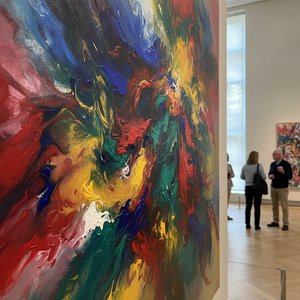
Explore the profound emotional depth of Lyrical Abstraction. Discover how masters like Raymond Parker used color and form to bridge Impressionism and Abstract Expressionism. Learn about this pivotal movement through our expert-led art history guide.

Explore the profound emotional depth of Color Field painting. Discover the history of mid-century abstraction, from Rothko to Newman, and learn how pure color transforms the viewer's experience through our expert art history guide.

Explore the profound history and emotional depth of Abstract Expressionism. From Jackson Pollock to Mark Rothko, master the nuances of the New York School through our expert art history guide. Discover museum-quality hand-painted reproductions for your collection.


Buďte na tahu s nejnovějšími novinkami ze světa umění, exkluzivními nabídkami a inspirativními nápady na dekoraci.
Sdělte nám více o svém projektu a naši odborníci na umění vám připraví 3 personalizované návrhy uměleckých děl.
Nechť pro vás vybereme 3 možnosti – zdarma!


 Náhled
 Sdílet
 Sdílet
 Podrobnosti o díle

 Stáhnout
 Podobné položky
 Rentgenové snímky
 Slideshow
 Zobrazit více







 Skleněná varianta je dostupná pouze u rozměrů menších než 110 cm


![Abstract Composition [triptych] — Vaclav Vytlacil, Abstract Expressionism](/media/artworks/images-thumb/08/3c/083c0675045645fd42d4e6c6d63f1ced.jpg)

