x


 Preview
 Koupit tisk Koupit digitální obrázek
 Sdílet
 Podrobnosti o díle
 Přidat do oblíbených
 Stáhnout
 Podobné položky
 Rentgenové snímky
 Slideshow
Ručně malovaná olejná barva na plátně ve vašem zvoleném rozměru i s rámem, vyrobená našimi umělci na zakázku.





























Vyberte si z našich přednastavených velikostí, které odpovídají původním proporcím díla.

Můžete zadat vlastní rozměry pro konkrétní rám nebo prostor. Pokud se vámi vybraná velikost neshoduje s proporcemi původního obrazu, dílo buď ořízneme, nebo jej doplníme ručně malovanými prvky. Před zahájením výroby vám bude zaslán digitální náhled ke schválení.
Upozorňujeme, že náhled na obrazovce neodpovídá skutečnému ořezu ani rozšíření. Pouze digitální náhled přesně zobrazí finální kompozici.
Ačkoliv je možné zvolit vlastní velikost, pro zachování původních proporcí doporučujeme vybrat rozměr z předdefinovaného seznamu.
Celosvětová doprava () za 3–4 týdny namísto standardních 5 týdnů. (27 červenec). Bez kompromisů v kvalitě.


Lute Player
Rozměry reprodukce
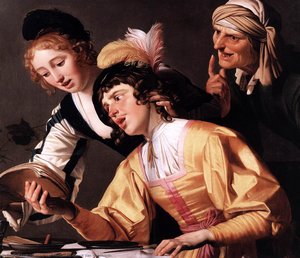
Gerard van Honthorst’s “Lute Player,” a captivating portrait dating from the mid-17th century, offers a glimpse into the opulent world of Dutch Golden Age society. The painting immediately draws the eye to its subject – a woman presented with an arresting blend of elegance and vulnerability. Dressed in a vibrant yellow gown meticulously trimmed with deep blue, she embodies the fashionable sensibilities of her era while simultaneously radiating a quiet introspection. The composition itself is carefully constructed; the lute held delicately in her hand becomes not merely an instrument but a focal point, drawing attention to her gesture and suggesting a moment of private contemplation or perhaps even performance.
Honthorst’s artistic journey was profoundly shaped by his time in Rome, where he encountered the revolutionary work of Caravaggio. This encounter ignited within him a passion for *tenebrism*, a technique characterized by dramatic contrasts between intensely dark shadows and pools of brilliant light. In “Lute Player,” this is evident in the way light dramatically illuminates the woman’s face and gown, creating a sense of theatrical depth and emphasizing her features. The darkness surrounding her isn't merely an absence of light; it actively contributes to the painting’s emotional weight, suggesting hidden depths within the subject’s character. This masterful manipulation of light and shadow is what earned Honthorst his nickname, “Gherardo delle Notti,” or Gerard of the Nights – a testament to his ability to conjure atmosphere and drama with such profound skill.
The setting within the painting provides valuable context for understanding its place in 17th-century Dutch life. The presence of a chair and dining table hints at an aristocratic or wealthy household, suggesting that the subject is likely a member of the upper class. A book resting near her adds another layer of meaning – perhaps representing education, refinement, or even musical knowledge. The inclusion of two other figures, partially visible in the background, subtly expands the narrative, inviting the viewer to imagine the social dynamics and relationships within this domestic scene. These details are not merely decorative; they contribute significantly to the painting’s overall story.
"Lute Player" transcends a simple portrait; it's an exploration of human emotion and psychological depth, a hallmark of Honthorst’s style. The woman’s gentle smile, combined with the dramatic lighting and carefully considered composition, evokes a sense of quiet beauty and perhaps even melancholy. Gerard van Honthorst’s work continues to resonate today because it captures not just a likeness but an essence – a moment frozen in time that speaks to universal themes of grace, contemplation, and the power of artistic expression. Most-Famous-Paintings.com is proud to offer meticulously crafted reproductions of this remarkable piece, allowing you to experience its beauty and historical significance firsthand.


1590 - 1656 , Nizozemsko
Explore the Dutch Golden Age of painting! Discover key artists like Vermeer & ter Borch, their innovative techniques, and the rich cultural context behind these Baroque masterpieces. Learn about collecting & appreciating this iconic art period.

Objevte 10 ikonických děl holandského baroka! Prozkoumejte příběhy Rembrandta, Vermeera a dalších mistrů. Repliky obrazů nejvyšší kvality pro váš interiér na Most-Famous-Paintings.cz – inspirace a umělecké reprodukce online.
Discover the exquisite detail of Jan van Kessel the Elder's Baroque floral still lifes & captivating miniatures. Explore his artistic legacy, scientific precision, and lasting influence on 17th-century Flemish painting.

Explore the artistic brilliance of the 17th-century Dutch Golden Age & Baroque period. Discover Rembrandt, genre painting, and chiaroscuro techniques. Expert insights for art lovers & collectors.

Discover Cornelis van Poelenburch, a pivotal Dutch Baroque landscape painter bridging Mannerism & Italianate styles. Explore his life, key works, and lasting influence on 17th-century art with Most-Famous-Paintings.


Buďte na tahu s nejnovějšími novinkami ze světa umění, exkluzivními nabídkami a inspirativními nápady na dekoraci.
Sdělte nám více o svém projektu a naši odborníci na umění vám připraví 3 personalizované návrhy uměleckých děl.
Nechť pro vás vybereme 3 možnosti – zdarma!


 Sdílet


 Zobrazit více







 Skleněná varianta je dostupná pouze u rozměrů menších než 110 cm