x
Giclée nebo plátěný tisk muzeální kvality s rychlou výrobou a flexibilními možnostmi povrchové úpravy. ( Koupit ručně malovaný obraz Koupit obrázek)
Vyberte si z našich přednastavených velikostí, které odpovídají původním proporcím díla.

Můžete zadat vlastní rozměry tak, aby výtvor odpovídal konkrétnímu rámu nebo prostoru. Pokud zvolená velikost nebude odpovídat poměru stran původního obrazu, dílo buď ořížeme, nebo obraz rozšíříme pomocí zrcadlového efektu či jednobarevného okraje. Před zahájením výroby vám bude zaslán digitální náhled k schválení.
Mějte prosím na paměti, že náhled na obrazovce neodráží skutečné oříznutí nebo rozšíření. Pouze digitální náhled přesně zobrazí finální kompozici.
Ačkoliv jsou k dispozici i vlastní rozměry, pro zachování původních proporcí doporučujeme vybrat si rozměr z předdefinovaného seznamu.
Celosvětové doručení () do 2 týdnů namísto standardních 4/5 týdnů. (18 srpen)


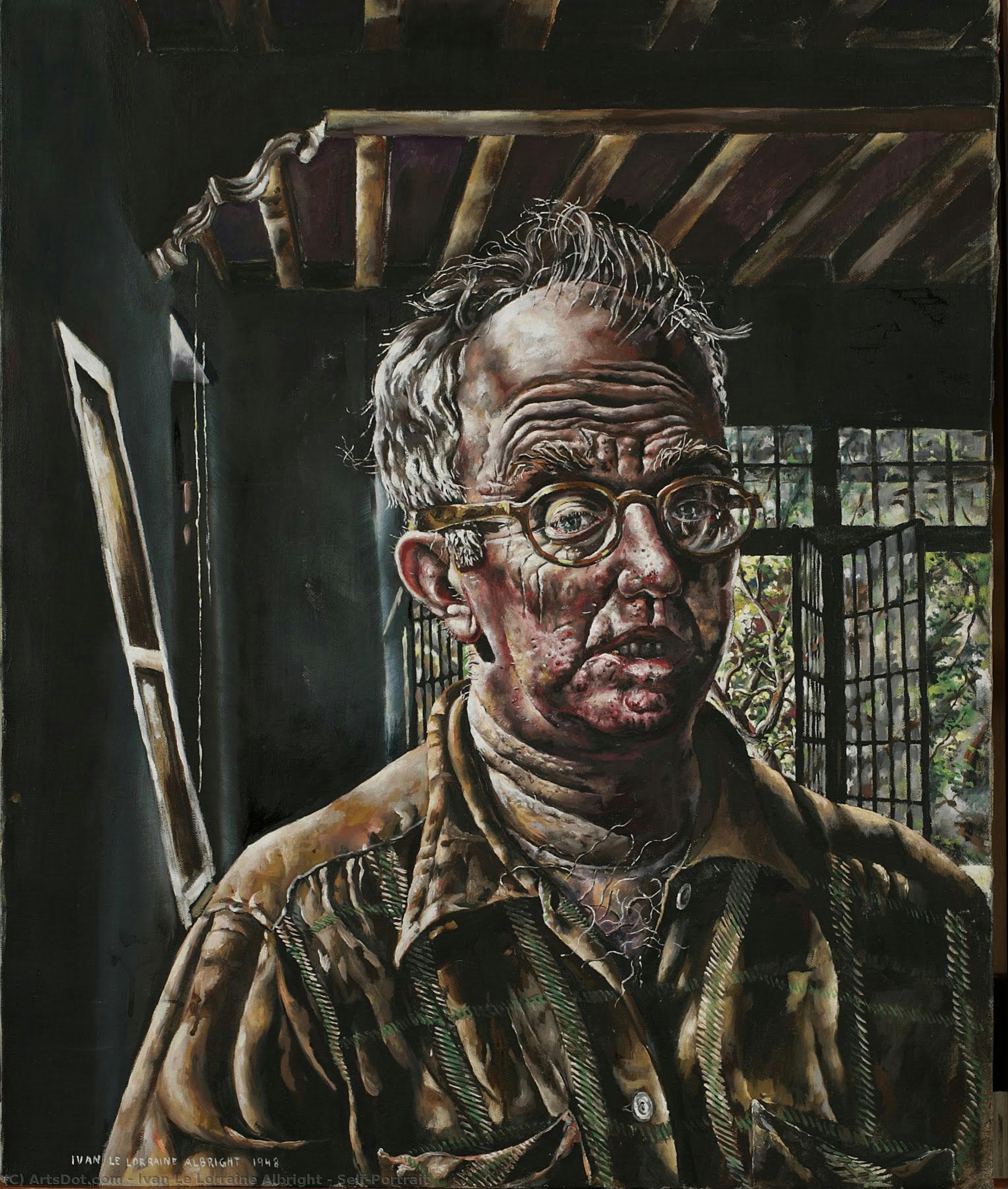
Self-Portrait
Rozměry reprodukce

In the annals of American art, few names evoke as much profound unease and breathtaking admiration as Ivan Le Lorraine Albright. An American master of Magic Realism, Albright did not merely paint subjects; he interrogated them, peeling back the layers of time to reveal the inevitable processes of decay and mortality beneath. Born in 1897 in North Harvey, Illinois, to a family with deep roots in craftsmanship—his father, Adam Emory Albright, was a landscape painter descended from master gunsmiths—Ivan’s life was shaped by a duality of precision and profound psychological depth. Alongside his identical twin brother, Malvin, Ivan navigated a childhood defined by an inseparable bond, eventually finding his true calling at the Art Institute of Chicago. While a mere coin flip determined that he would pursue painting rather than sculpture, the decision would lead to the creation of some of the most meticulously executed works in the history of the medium.
Albright’s artistic evolution was far from linear, shaped by a series of disparate experiences that infused his work with a haunting, clinical intensity. His brief studies in architecture at the University of Illinois and his time performing medical drawings for a hospital in Nantes, France, during World War I, left an indelible mark on his psyche. These early encounters with the structural anatomy of buildings and the fragile, morbid realities of the human body provided the foundation for his later obsession with physical deterioration. After a brief, unfulfilling foray into the worlds of advertising and architecture, Albright retreated from the encroaching tides of commercialism to dedicate himself entirely to the canvas. It was during the 1930s that his signature, painstaking technique truly crystallized—a method so rigorous it often required years of labor to complete a single piece.
To witness an Albright painting is to enter a world where every pore, wrinkle, and speck of dust is rendered with an almost supernatural clarity. His process was one of extreme discipline and obsessive devotion. He did not simply paint; he constructed his visions through a labyrinthine series of preparatory steps:
This hyper-detailed approach allowed Albright to transcend traditional realism, moving into a realm where the physical world feels both more real and more surreal than life itself. By focusing on the microscopic details of decay, he was able to highlight the complex relationships between objects and their environments, creating a sense of stillness that is simultaneously vibrant and deathly.
While his influences can be traced back to the dramatic chiaroscuro of Rembrandt and the elongated, spiritual intensity of El Greco, Albright’s work remains entirely singular. He carved out a niche within American Realism that refused to look away from the uncomfortable truths of existence. His character studies and self-portraits serve as profound meditations on the human condition, capturing the psychological weight of time passing. Through his mastery of light and shadow, he transformed the grotesque into something sublime, forcing the viewer to confront the beauty found within the ephemeral and the decaying.
Today, Ivan Le Lorraine Albright is remembered not just as a painter of remarkable skill, but as a visionary who used the tools of extreme realism to explore the depths of Magic Realism. His legacy persists in the way we perceive the passage of time—reminding us that beneath the surface of all things, there is a complex, beautiful, and inevitable transformation occurring. His works remain enduring landmarks of 20th-century art, standing as monuments to the power of patience, precision, and the courage to look closely at the shadows.

1897 - 1983 , United States of America


Buďte na tahu s nejnovějšími novinkami ze světa umění, exkluzivními nabídkami a inspirativními nápady na dekoraci.
Sdělte nám více o svém projektu a naši odborníci na umění vám připraví 3 personalizované návrhy uměleckých děl.
Nechť pro vás vybereme 3 možnosti – zdarma!


 Náhled
 Sdílet
 Sdílet
 Podrobnosti o díle

 Stáhnout
 Podobné položky
 Rentgenové snímky
 Slideshow
 Zobrazit více




































 Skleněná varianta je dostupná pouze u rozměrů menších než 110 cm