


x
 Oil On CanvasWallArtBaroque
 1668Early Modern
 111.0 x 99.0 cm
 Residenzgalerie
Giclée nebo plátěný tisk muzeální kvality s rychlou výrobou a flexibilními možnostmi povrchové úpravy. ( Přepnout na ručně malovanou reprodukci Přepnout na obrázek)





























Vyberte si z našich přednastavených velikostí, které odpovídají původním proporcím díla.

Můžete zadat vlastní rozměry tak, aby výtvor odpovídal konkrétnímu rámu nebo prostoru. Pokud zvolená velikost nebude odpovídat poměru stran původního obrazu, dílo buď ořížeme, nebo obraz rozšíříme pomocí zrcadlového efektu či jednobarevného okraje. Před zahájením výroby vám bude zaslán digitální náhled k schválení.
Mějte prosím na paměti, že náhled na obrazovce neodráží skutečné oříznutí nebo rozšíření. Pouze digitální náhled přesně zobrazí finální kompozici.
Ačkoliv jsou k dispozici i vlastní rozměry, pro zachování původních proporcí doporučujeme vybrat si rozměr z předdefinovaného seznamu.
Celosvětové doručení () do 2 týdnů namísto standardních 4/5 týdnů. (11 srpen)


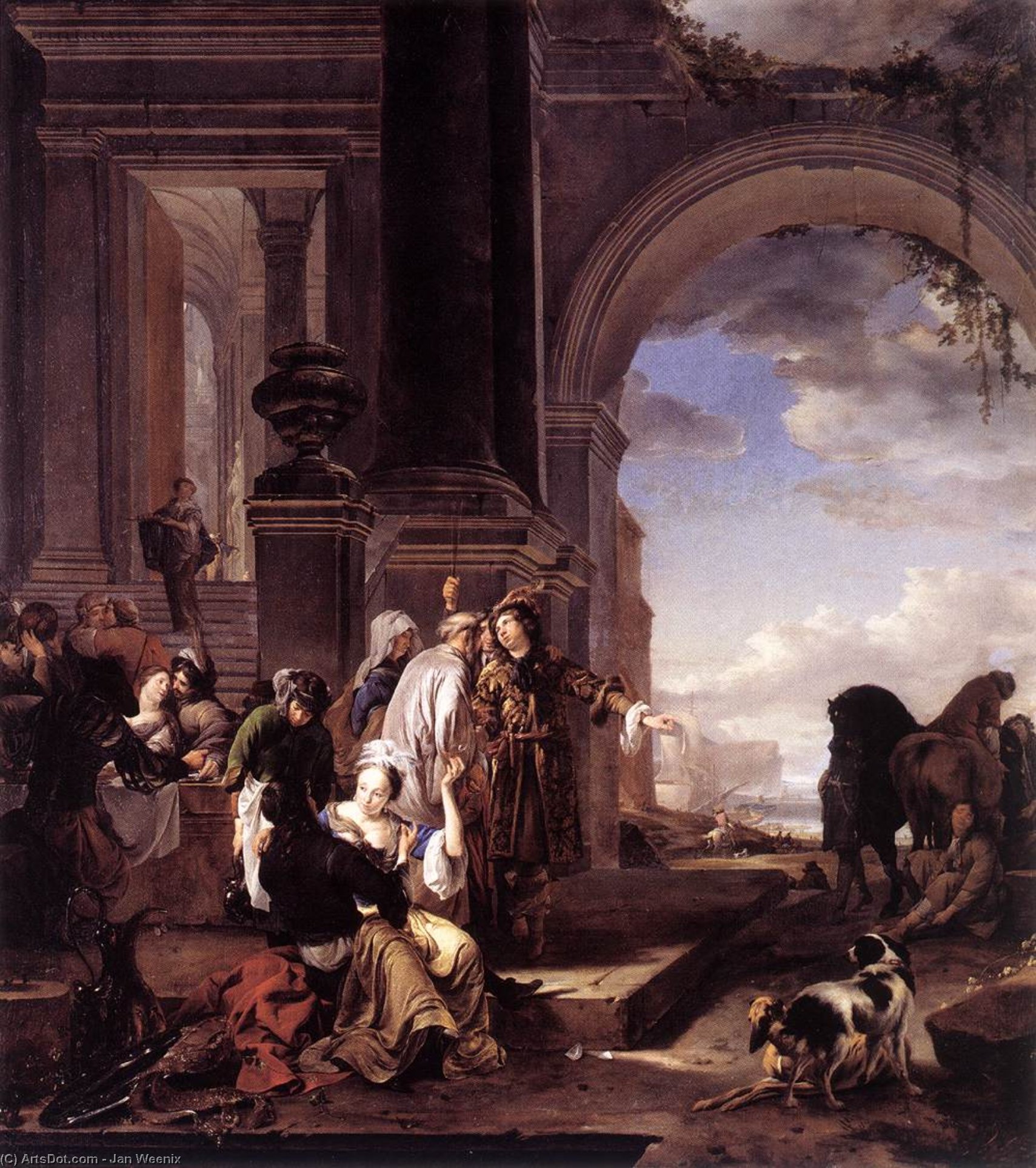
The Prodigal Son
Rozměry reprodukce
In the profound depths of Jan Weenix’s 1668 masterpiece, The Prodigal Son, viewers are transported into a world of intense theatricality and raw human emotion. This classical oil painting serves as a breathtaking window into the Baroque era, capturing a moment of profound vulnerability and communal grief. The composition is masterfully orchestrated, drawing the eye through a complex arrangement of figures gathered around a fallen protagonist. Set against the evocative backdrop of an architectural ruin, the scene utilizes a powerful arched doorway to create a sense of immense depth, pulling the observer into the very heart of the tragedy. The interplay of light and shadow—a hallmark of the period—casts a dramatic glow upon the central figures, highlighting the textures of weathered stone and the heavy folds of drapery, while plunging the periphery into mysterious, somber shadows.
The technical prowess displayed in this work reflects the pinnacle of Dutch Golden Age skill. Weenix employs a sophisticated layering technique, utilizing glazes to achieve a luminous quality that breathes life into skin tones and the rich, earthy palette of ochres, deep reds, and warm browns. Every brushstroke serves a purpose, from the delicate rendering of facial expressions caught in moments of anguish to the more vigorous, textured applications used to define the decaying masonry of the ruins. This meticulous attention to detail creates a tactile experience for the viewer, where the smoothness of fine silk contrasts sharply with the rugged, crumbling edges of the ancient architecture, suggesting a world where human fragility meets the inexorable passage of time.
Beyond its visual splendor, The Prodigal Son is a profound meditation on loss, decay, and the cyclical nature of life. The fallen figure at the center of the composition acts as a powerful symbol of mortality, serving as the emotional anchor for the surrounding crowd. The architectural ruins that frame the scene are not merely decorative; they represent the inevitable decline of all earthly structures and the transient nature of human glory. As the eye wanders toward the distant seascape visible through the archway, there is a poignant contrast between the stillness of death within the ruins and the eternal, rhythmic movement of the sea. This juxtaposition invites collectors and enthusiasts to contemplate themes of redemption, consequence, and the enduring legacy of our actions.
For the discerning interior designer or art collector, this painting offers more than just aesthetic beauty; it provides a narrative soul for a space. The warm, somber tones and the commanding presence of the composition make it an ideal focal point for a room designed to evoke contemplation and grandeur. Whether placed in a traditional study or as a conversation piece in a contemporary gallery setting, The Prodigal Son commands attention through its ability to stir the spirit. It is a work that transcends mere decoration, offering a timeless connection to the mastery of Jan Weenix and the enduring power of classical storytelling.


1641 - 1719 , Nizozemsko

Explore the profound mastery of light and shadow in Dutch Golden Age art. From Rembrandt's chiaroscuro to Vermeer's luminosity, discover the techniques that defined an era and learn how to bring these museum-quality masterpieces into your home through expert oil reproductions.


Buďte na tahu s nejnovějšími novinkami ze světa umění, exkluzivními nabídkami a inspirativními nápady na dekoraci.
Sdělte nám více o svém projektu a naši odborníci na umění vám připraví 3 personalizované návrhy uměleckých děl.
Nechť pro vás vybereme 3 možnosti – zdarma!


 Náhled
 Sdílet
 Sdílet
 Podrobnosti o díle

 Stáhnout
 Podobné položky
 Rentgenové snímky
 Slideshow
 Zobrazit více







 Skleněná varianta je dostupná pouze u rozměrů menších než 110 cm


