x

 Acrylic On CanvasWallArtSpatialism
 191.0 x 115.0 cm
 Galleria Civica di Arte Moderna e Contemporanea Torino
Ručně malovaná olejná barva na plátně ve vašem zvoleném rozměru i s rámem, vyrobená našimi umělci na zakázku. ( Koupit tisk Koupit obrázek)





























Vyberte si z našich přednastavených velikostí, které odpovídají původním proporcím díla.

Můžete zadat vlastní rozměry pro konkrétní rám nebo prostor. Pokud se vámi vybraná velikost neshoduje s proporcemi původního obrazu, dílo buď ořízneme, nebo jej doplníme ručně malovanými prvky. Před zahájením výroby vám bude zaslán digitální náhled ke schválení.
Upozorňujeme, že náhled na obrazovce neodpovídá skutečnému ořezu ani rozšíření. Pouze digitální náhled přesně zobrazí finální kompozici.
Ačkoliv je možné zvolit vlastní velikost, pro zachování původních proporcí doporučujeme vybrat rozměr z předdefinovaného seznamu.
Celosvětová doprava () za 3–4 týdny namísto standardních 5 týdnů. (18 srpen). Bez kompromisů v kvalitě.


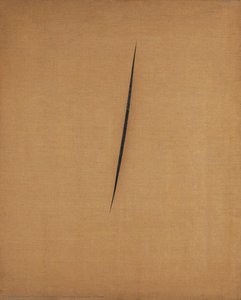
Spatial Concept. Waiting
Rozměry reprodukce
Lucio Fontana's "Spatial Concept, Waiting," painted in 1960, isn’t merely a canvas bearing cuts; it’s an invitation – a deliberate disruption of the established boundaries between painting and space. Born in Rosario, Argentina, in 1899, Fontana embarked on a lifelong quest to redefine artistic expression, ultimately founding Spatialism, a movement that sought to liberate art from the constraints of traditional two-dimensionality. This particular work embodies the core tenets of his philosophy: a radical rejection of illusion, an embrace of the tangible, and a profound exploration of the infinite.
The painting itself is deceptively simple – a pristine white canvas, seemingly untouched until you examine it closely. A series of precisely executed cuts, arranged in a dynamic, almost organic pattern, traverse the surface. These aren’t random gestures; they are meticulously planned interventions, often described by Fontana as “buchi” (holes) or “tagli” (slashes). The technique involved using a utility knife to create these incisions, a method that deliberately introduced an element of controlled violence – a forceful assertion against the static nature of conventional painting. The cuts aren’t uniformly spaced; instead, they cluster and disperse, creating a sense of movement and suggesting a hidden depth beyond the visible surface.
Fontana's journey to this groundbreaking style began in the late 1940s. Frustrated with the limitations he perceived in traditional painting – its reliance on illusion and representation – he sought a new language for art, one that engaged directly with space. This pursuit led him to develop the concept of “Spatialism,” articulated in his 1946 Manifesto Bianco (White Manifesto). He envisioned an art form that transcended the flat plane of the canvas, incorporating elements of color, sound, movement, and time into a unified whole. The "buchi" and "tagli" were not simply decorative; they were fundamental to this vision – a way of revealing the underlying structure of space and inviting the viewer to participate in its creation.
The historical context surrounding this work is crucial to understanding its significance. Post-World War II Europe was grappling with profound shifts in perspective, questioning established norms and seeking new ways to interpret reality. Fontana’s art resonated deeply with this spirit of experimentation and a desire for radical change. His work mirrored the broader cultural currents of the time – a fascination with technology, a growing interest in psychology, and a yearning for something beyond the confines of the familiar.
The symbolism embedded within “Spatial Concept, Waiting” is layered and complex. The cuts themselves represent a rupture – a breaking through of the surface to reveal an unseen space. Fontana described this act as "creating a new dimension," suggesting that the painting wasn’t simply depicting reality but actively constructing it. The use of gauze behind the canvas further enhances this sense of mystery, creating an illusion of depth and inviting the viewer to contemplate what lies beyond.
The title, “Waiting,” adds another layer of interpretation. It suggests a suspension, a pause before revelation – a feeling of anticipation as if something profound is about to emerge. Fontana’s intention wasn't to provide answers but to pose questions, prompting the viewer to engage in a dialogue with the artwork and their own perceptions of space and reality. The work evokes a sense of both vulnerability and exhilaration, reflecting the sublime – that paradoxical experience of awe and terror that lies at the heart of Fontana’s vision.
Lucio Fontana's influence on 20th-century art is undeniable. His radical approach to painting paved the way for countless artists who followed, challenging conventional notions of form and pushing the boundaries of artistic expression. Today, high-quality reproductions of “Spatial Concept, Waiting” offer a unique opportunity to experience this groundbreaking work firsthand, bringing its profound ideas into any interior space.
When selecting a reproduction, consider the detail and accuracy with which the cuts are rendered – a crucial element in capturing the essence of Fontana’s vision. Most-Famous-Paintings offers meticulously hand-painted reproductions that faithfully recreate the texture, depth, and emotional impact of the original painting, allowing you to bring this iconic work into your home or studio.

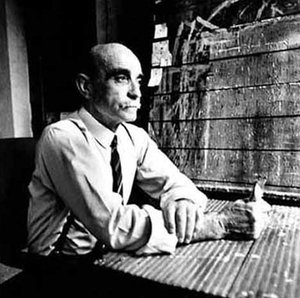
1899 - 1968 , Argentina


Buďte na tahu s nejnovějšími novinkami ze světa umění, exkluzivními nabídkami a inspirativními nápady na dekoraci.
Sdělte nám více o svém projektu a naši odborníci na umění vám připraví 3 personalizované návrhy uměleckých děl.
Nechť pro vás vybereme 3 možnosti – zdarma!


 Náhled
 Sdílet
 Sdílet
 Podrobnosti o díle

 Stáhnout
 Podobné položky
 Rentgenové snímky
 Slideshow
 Zobrazit více







 Skleněná varianta je dostupná pouze u rozměrů menších než 110 cm