Prodávejte své umění
Seznam přání Nákupní košík Cart
NáhledNáhled Náhled v ARNáhled v AR Koupit tisk Koupit tiskKoupit obrázek Koupit obrázek SdíletSdílet
Podrobnosti o dílePodrobnosti o díle Přidat do oblíbených Přidat do oblíbených StáhnoutStáhnout Podobné položkyPodobné položky Rentgenové snímkyRentgenové snímky SlideshowSlideshow

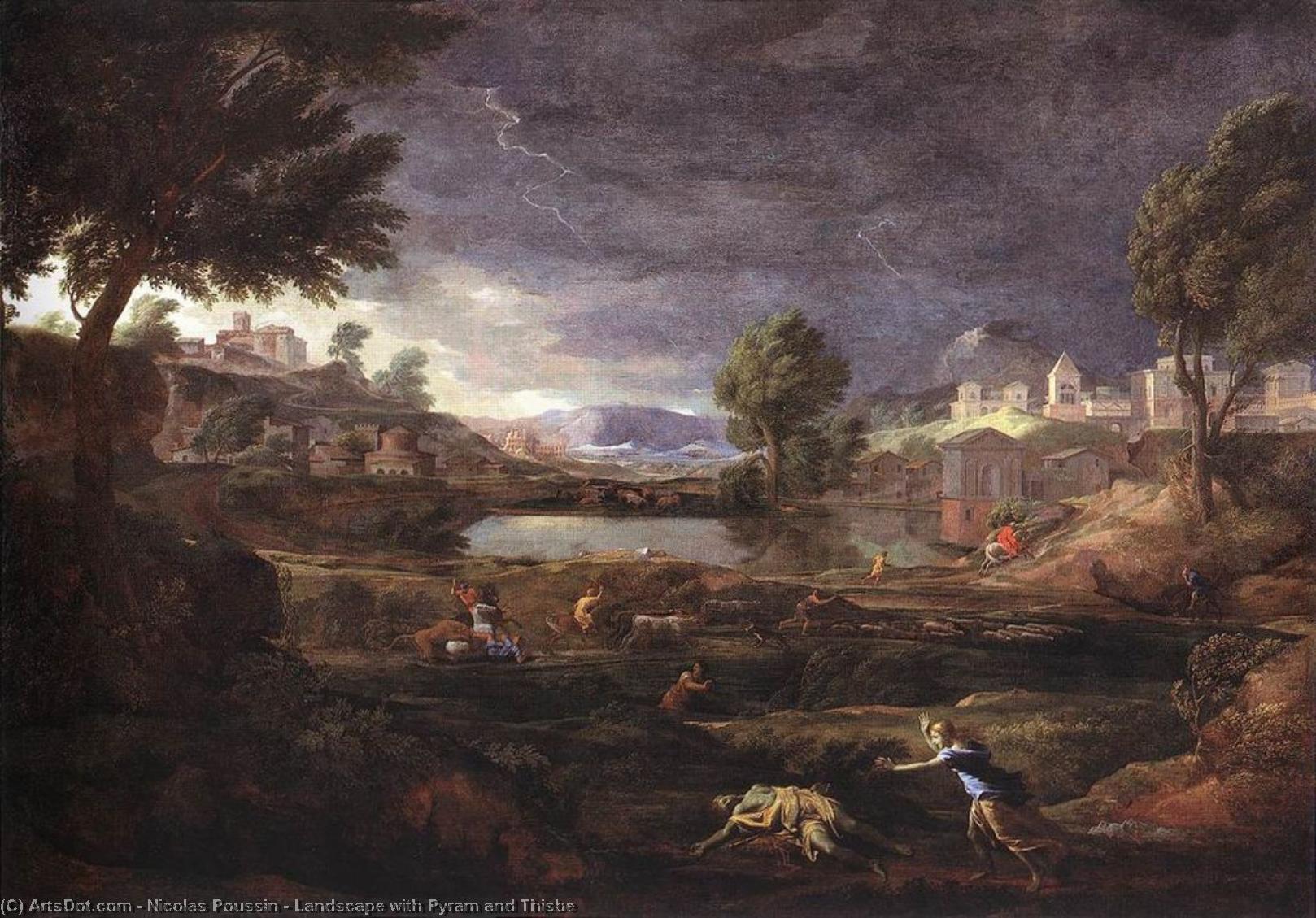
Landscape with Pyram and Thisbe

Explore Nicolas Poussin’s 'Landscape with Pyram and Thisbe,' a dramatic Baroque masterpiece featuring turbulent skies, fleeing figures & a poignant narrative. Rich oil painting evokes emotion & timeless beauty.

Objevte mistrovské barokní díla Nikolase Poussina – známé pro klidné krajinky a mytologické příběhy inspirované klasickou antickou kulturou. Najdete ikonické výtvarné dílo na Most-Famous-Paintings.

Ručně malovaná olejová reprodukce

Ručně malovaná olejná barva na plátně ve vašem zvoleném rozměru i s rámem, vyrobená našimi umělci na zakázku. (Koupit tisk Koupit tiskKoupit obrázek Koupit obrázek)

P118B $10
P118H $10
P118W $10
P438Z $10
P508JH $12
P508YH $12
P805H $10
P805Z $10
P919BZ $10
P919G $10
P919XJ $10
P959ZH $10
P968JZ $12
W106C $8
W218G $10
W218JH $8
W218Y $10
W307PJ $10
W316G $10
W316PJ $8
W316Y $10
W398PJ $8
W4111J $10
W500HY $15
W500JH $15
W692G $12
W849H $8
W940BG $15
W953PJ $8

Standard
custom
CM
INCH

Vyberte si z našich přednastavených velikostí, které odpovídají původním proporcím díla.

šířka
výška

Můžete zadat vlastní rozměry pro konkrétní rám nebo prostor. Pokud se vámi vybraná velikost neshoduje s proporcemi původního obrazu, dílo buď ořízneme, nebo jej doplníme ručně malovanými prvky. Před zahájením výroby vám bude zaslán digitální náhled ke schválení.
Upozorňujeme, že náhled na obrazovce neodpovídá skutečnému ořezu ani rozšíření. Pouze digitální náhled přesně zobrazí finální kompozici.
Ačkoliv je možné zvolit vlastní velikost, pro zachování původních proporcí doporučujeme vybrat rozměr z předdefinovaného seznamu.

Příklady možných změn: Nahrazení obličeje vlastní fotografií; Přidání domácího mazlíčka (např. nahrazení kočky psem); Vložení skrytého vzkazu do pozadí; Změna krajiny nebo prvků v pozadí.
Po přijetí objednávky vám tým Most-Famous-Paintings.com zašle e-mail s pokyny a poskytne náhledovou verzi.

Celosvětová doprava () za 3–4 týdny namísto standardních 5 týdnů. (19 srpen). Bez kompromisů v kvalitě.

why_choose_icon
Zdarma celosvětová expresní doprava
why_choose_icon
Vysoce kvalitní lněné plátno
why_choose_icon
Kompletní přepravní pojištění
why_choose_icon
Záruka vrácení celního poplatku
why_choose_icon
Záruka přesného barevného shodu
why_choose_icon
60denní lhůta pro vrácení zboží (pouze při vadách výroby)
why_choose_icon
100% garance vrácení peněz
why_choose_icon
Sleva při hromadné objednávce

Celková cena

$ 272

reproduction

Landscape with Pyram and Thisbe

Technika reprodukce

Rozměry reprodukce

-

Celková cena za výběr

$ 272

Základní informace

  • medium: Oil paint
  • dimensions: Unknown
  • notable elements: Dramatic landscape, turbulent weather, pyramidal composition, figures in flight/interaction
  • title: Landscape with Pyram and Thisbe
  • artist: Nicolas Poussin
  • style: Classical Baroque

Kvíz o umění

U každé otázky je pouze jedna správná odpověď.

Otázka 1:
The painting 'Landscape with Pyram and Thisbe' is most strongly associated with which artistic movement?
Otázka 2:
Nicolas Poussin, despite spending much of his career in Rome, remained deeply connected to the artistic traditions of which country?
Otázka 3:
What is a prominent compositional technique used in 'Landscape with Pyram and Thisbe' to draw the viewer’s eye into the scene?
Otázka 4:
The description notes a sense of 'impending doom.' How does Poussin primarily convey this feeling in the painting?
Otázka 5:
The subject matter of the artwork references a story from what source?

Popis díla

A Scene of Passion and Foreboding: Unveiling Poussin’s *Landscape with Pyram and Thisbe*

This captivating landscape by Nicolas Poussin transports us to a world steeped in classical mythology and dramatic tension. The painting vividly depicts the tragic tale of Pyram and Thisbe, lovers forbidden from being together whose miscommunication leads to their untimely deaths – a story predating even Romeo and Juliet. While seemingly a serene vista at first glance, closer inspection reveals a scene brimming with emotional weight and symbolic resonance.

Stylistic Mastery: Baroque Classicism

Poussin stands as a pivotal figure bridging the High Renaissance and the Baroque periods. *Landscape with Pyram and Thisbe* exemplifies his unique style – a harmonious blend of classical composure and Baroque dynamism. Unlike the overtly theatrical compositions favored by some of his contemporaries, Poussin’s work prioritizes clarity, order, and intellectual rigor. The composition is carefully constructed, employing a pyramidal structure to anchor the figures within the expansive landscape. This deliberate arrangement guides the viewer's eye, creating a sense of balance and narrative flow. The influence of earlier masters like Raphael and Titian is evident in Poussin’s use of idealized forms and harmonious color palettes, yet he infuses these traditions with a distinctly Baroque sensibility through dramatic lighting and heightened emotional expression.

Technique and Materials

Executed in oil on canvas, the painting showcases Poussin's masterful technique. He builds up layers of translucent glazes to achieve subtle gradations of light and shadow, lending depth and realism to the scene. His brushwork is remarkably refined, particularly in rendering the figures and architectural details. The landscape itself is not merely a backdrop but an active participant in the drama, rendered with meticulous attention to detail – from the rustling leaves of the trees to the shimmering reflections on the water’s surface. Poussin's commitment to drawing, evident in the precise outlines and carefully modeled forms, underscores his belief in the importance of intellectual control over artistic expression.

Mythological Narrative & Symbolism

The story of Pyram and Thisbe, drawn from Ovid’s *Metamorphoses*, unfolds before us. We see figures enacting key moments of the tragedy: perhaps Thisbe fleeing from a lion, or Pyram discovering her abandoned veil. The small town nestled in the distance represents civilization – a world oblivious to the private anguish playing out in nature. The turbulent sky and stormy waters serve as potent symbols of the lovers’ inner turmoil and impending doom. The very landscape seems to mourn their fate. Poussin often imbued his landscapes with moral or philosophical meaning, inviting viewers to contemplate themes of love, loss, and the fragility of human existence.

Historical Context & Legacy

Born in France but spending most of his career in Rome, Nicolas Poussin (1594-1665) became a leading figure of the Classical Baroque style. He was highly sought after by aristocratic patrons and played a crucial role in establishing French painting as a force to be reckoned with on the international stage. His emphasis on reason, order, and classical ideals profoundly influenced generations of artists, including Jacques-Louis David and Paul Cézanne. Poussin’s landscapes, in particular, were groundbreaking for their time, elevating the genre from mere scenery to a vehicle for profound emotional and intellectual expression.

Emotional Resonance & Interior Design Considerations

*Landscape with Pyram and Thisbe* evokes a complex range of emotions – vulnerability, anxiety, sorrow, and a sense of inevitable tragedy. The painting’s dramatic lighting and dynamic composition create a captivating focal point for any space. Its muted color palette—dominated by blues, greens, and browns—lends itself well to both traditional and contemporary interiors. A high-quality reproduction would be particularly striking in a library, study, or dining room, adding an air of sophistication and intellectual depth. The artwork’s scale demands attention, making it ideal for larger rooms where its details can be fully appreciated.

Biografie umělce

Nicolas Poussin – A Life Steeped in Classical Reverie

Nicolas Poussin, a name synonymous with the grandeur of French Baroque painting, was nonetheless a soul deeply rooted in Italian soil for much of his artistic life. Born in Les Andelys, Normandy, in June 1594, his early years remain somewhat veiled in mystery, yet they undoubtedly laid the foundation for a career that would become pivotal in shaping the classical tradition within French art. Though he briefly studied in Paris during the early 1610s, absorbing influences from lesser-known artists of the time, it was his journey to Rome in 1624 that truly ignited his artistic destiny. This wasn’t merely a geographical relocation; it was an immersion into the heart of antiquity, a pilgrimage to the very source of inspiration that would define his aesthetic vision. Poussin's initial forays into painting were marked by a sensuous quality reminiscent of Venetian masters like Titian, yet even in these early works, a nascent sense of order and intellectual rigor began to emerge—a foreshadowing of the style he would so masterfully refine.

Early Influences and Parisian Years

His formative years were spent honing his skills under Quentin Varin, a respected artist who instilled in him an appreciation for draughtsmanship and observation. Shortly thereafter, Poussin ventured into Paris, where he engaged with the artistic currents of the era—particularly those championed by Raphael and Giulio Romano—artists whose harmonious compositions and graceful forms would profoundly shape his subsequent style. The Parisian environment fostered intellectual curiosity and exposed him to humanist scholarship, influencing his worldview and fueling his desire for artistic excellence. During this period, Poussin produced a series of mythological drawings that showcased his burgeoning talent and demonstrated his commitment to capturing the beauty and dignity of classical ideals. These early works established a foundation for his later explorations of history and myth—themes he would revisit throughout his illustrious career.

The Roman Years: Forging a Classical Ideal

Rome proved to be more than just a studio for Poussin; it became his intellectual crucible. He found himself amidst a vibrant circle of scholars, archaeologists, and fellow artists, notably Cassiano dal Pozzo, whose profound understanding of classical antiquity profoundly influenced the artist’s approach. Dal Pozzo's dedication to meticulously documenting ancient remains instilled in Poussin a deep respect for historical accuracy and a desire to imbue his paintings with a sense of timelessness. This period saw Poussin move away from the flamboyant exuberance of some of his contemporaries, instead embracing a style characterized by clarity, balance, and a deliberate emphasis on linear composition. He meticulously studied Raphael’s works, absorbing their harmonious arrangements and graceful forms, while simultaneously drawing inspiration from ancient sculptures and literary sources like Ovid's *Metamorphoses*. His paintings began to populate with figures drawn from classical history and mythology, rendered not as mere decorative elements but as embodiments of moral virtues and philosophical ideals. He became acquainted with Cardinal Francesco Barberini, whose patronage provided him with invaluable support and access to a stimulating intellectual milieu.

Style and Technique: Classical Restraint Amidst Baroque Flourish

Poussin’s artistic style distinguished itself from the prevailing Baroque trends—characterized by dramatic emotion and opulent ornamentation—through its unwavering commitment to classical principles. He rejected excessive theatricality in favor of serene beauty, prioritizing compositional clarity and harmonious color palettes. His technique involved painstaking draughtsmanship, utilizing precise lines and subtle shading to create illusions of depth and perspective that mirrored the achievements of Renaissance masters. The artist’s meticulous attention to detail—evident in his depictions of drapery folds, facial expressions, and landscape vistas—reflected a profound understanding of artistic craftmanship. He skillfully blended influences from Venetian painters like Titian with the stylistic refinements of Raphael, resulting in an oeuvre marked by both sensuous richness and intellectual rigor.

Legacy: Shaping French Art and Beyond

Nicolas Poussin’s influence extended far beyond his own lifetime, establishing a cornerstone of French Classical painting. His unwavering devotion to classical ideals served as inspiration for subsequent generations of artists—Jacques-Louis David and Paul Cézanne among them—who acknowledged their debt to Poussin's stylistic precision and philosophical depth. He championed the pursuit of beauty and order, advocating for artistic training rooted in humanist scholarship and informed by a deep appreciation for antiquity. His enduring legacy resides not merely in his magnificent paintings but also in his contribution to shaping the intellectual landscape of France—a testament to an artist who transcended mere aesthetic achievement to become a symbol of cultural excellence. He remains one of the most revered figures in French art history, celebrated for his mastery of technique and his profound engagement with timeless themes.
Nikolás Poussin

Nikolás Poussin

1594 - 1665 , Francie

Rychlé fakta

  • Artistic Movement Or Style: Baroko, Klasicismus
  • Artists Or Movements Influenced By This Artist: ['Jacques-Louis David']
  • Artists Who Influenced This Artist:
    • Raphael
    • Titian
  • Date Of Birth: Les Andelys, Francie
  • Date Of Death: Řím, Italie
  • Full Name: Nicolas Poussin
  • Nationality: Francouzský
  • Notable Artworks:
    • Mrtvý Němcův
    • Sedm Sakramentů Série
    • Římanská cesta
  • Place Of Birth: Francie
Prozkoumejte umělecká díla uspořádaná podle témat, stylů a charakteristik.