x

 Koupit tisk Koupit digitální obrázek
 Sdílet
 Podrobnosti o díle
 Přidat do oblíbených
 Stáhnout
 Podobné položky
 Rentgenové snímky
 Slideshow
 WatercolorWallArtPost-Impressionism
 188219th Century
 38.0 x 20.0 cm
Ručně malovaná olejná barva na plátně ve vašem zvoleném rozměru i s rámem, vyrobená našimi umělci na zakázku.





























Vyberte si z našich přednastavených velikostí, které odpovídají původním proporcím díla.

Můžete zadat vlastní rozměry pro konkrétní rám nebo prostor. Pokud se vámi vybraná velikost neshoduje s proporcemi původního obrazu, dílo buď ořízneme, nebo jej doplníme ručně malovanými prvky. Před zahájením výroby vám bude zaslán digitální náhled ke schválení.
Upozorňujeme, že náhled na obrazovce neodpovídá skutečnému ořezu ani rozšíření. Pouze digitální náhled přesně zobrazí finální kompozici.
Ačkoliv je možné zvolit vlastní velikost, pro zachování původních proporcí doporučujeme vybrat rozměr z předdefinovaného seznamu.
Celosvětová doprava () za 3–4 týdny namísto standardních 5 týdnů. (21 červenec). Bez kompromisů v kvalitě.


Medea
Rozměry reprodukce
Paul Cézanne's Medea, created in 1882, stands as a poignant example of his evolving Post-Impressionist style. This watercolor painting, measuring 38 x 20 cm, transcends a simple depiction; it’s an exploration of human emotion rendered through innovative formal techniques.
Medea emerged during a pivotal period in art history. Post-Impressionism arose as a reaction against the fleeting, light-focused depictions of Impressionism. Cézanne, alongside artists like Vincent van Gogh and Paul Gauguin, sought to imbue their works with deeper emotional resonance and structural solidity. While Impressionists aimed to capture momentary visual impressions, Post-Impressionists delved into subjective experiences and explored formal elements—color, line, and composition—to convey meaning. This movement, predominantly French, spanned roughly from 1886 to 1905, laying the groundwork for subsequent modern art movements like Cubism.
The painting portrays a nude female figure seated on what appears to be a rocky outcrop. She cradles a child in her arms, creating an immediate sense of intimacy and maternal tenderness. Two indistinct figures are visible in the background, adding depth and suggesting a narrative beyond the central subject. Cézanne’s use of watercolor is particularly striking; the fluid medium allows for layered washes of color that create a sense of atmosphere and vulnerability. The lines are not precise but rather expressive, conveying movement and emotion over strict realism. Notice how Cézanne uses tonal variations within the foliage in the background to suggest depth, despite the somewhat flattened perspective characteristic of his style. This technique prioritizes feeling and visual impact over photographic accuracy.
The title Medea alludes to the tragic figure from Greek mythology—a powerful sorceress known for her passionate nature and devastating actions. While Cézanne’s painting doesn't explicitly depict a scene from the myth, it evokes its underlying themes of strength, resilience, and perhaps even despair. The nude figure can be interpreted as representing fertility, a connection to nature, or the raw vulnerability of human emotion. The overall composition suggests a moment of quiet contemplation amidst potential turmoil—a powerful portrayal of maternal instinct and inner fortitude.
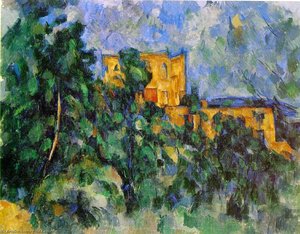
Cézanne drew inspiration from various artistic sources, including Pierre-Auguste Renoir, whose works often explored themes of love and family. However, Cézanne’s approach diverged significantly; he sought to move beyond the purely aesthetic concerns of Impressionism towards a more structured and emotionally charged representation of reality. Consider Well by the Winding Road in the Park of Chateau Noir, another notable work by Cézanne, which demonstrates his ability to capture landscapes with a sense of tranquility while employing his signature geometric approach. His later explorations into form would profoundly influence artists like Pablo Picasso and Georges Braque, solidifying his place as a pivotal figure in the transition from 19th-century art to modernism.


1839 - 1906 , Francie
Prozkoumejte 25 ikonických děl Paula Cézanna – průkopníka moderního umění a impresionismu. Obdivujte jeho still life, krajiny a portréty. Reprodukce obrazů v nejvyšší kvalitě na Most-Famous-Paintings.com. Inspirace pro váš interiér!

Objevte 25 ikonických děl Paula Kleeho – od abstraktních kompozic po barevné sny. Ponořte se do světa expresionismu, Bauhausu a jedinečného uměleckého stylu. Reprodukce obrazů nejvyšší kvality pro váš interiér na Most-Famous-Paintings.com

Prozkoumejte 10 ikonických děl impresionismu od Monet, Renoir a dalších. Objevte příběhy za obrazy plnými světla a barev. Reprodukce nejvyšší kvality pro váš interiér na Most-Famous-Paintings.com

Objevte 10 legendárních akvarelů od Turner, Monet a dalších mistrů! Ponořte se do historie umění a inspirujte se pro váš interiér. Kvalitní reprodukce na Most-Famous-Paintings.com.

Prozkoumejte 25 ikonických děl Claude Moneta – mistra impresionismu. Obdivujte vodní lilie, krajiny a secesní obrazy plné světla a barev. Najděte inspiraci pro váš interiér s reprodukcemi nejvyšší kvality na Most-Famous-Paintings.com


Buďte na tahu s nejnovějšími novinkami ze světa umění, exkluzivními nabídkami a inspirativními nápady na dekoraci.
Sdělte nám více o svém projektu a naši odborníci na umění vám připraví 3 personalizované návrhy uměleckých děl.
Nechť pro vás vybereme 3 možnosti – zdarma!


 Sdílet

 Zobrazit více







 Skleněná varianta je dostupná pouze u rozměrů menších než 110 cm