x

Koupě vysoce rozlišeného, vylepšeného digitálního obrazu, který je mnohem kvalitnější než online náhled.
Každý soubor je pečlivě připraven našimi odborníky pomocí pokročilých nástrojů a expertní manuální retuše. Zajišťujeme, aby každý obraz disponoval výjimečnou ostrostí, přesnou barevnou věrností a jemnými detaily.
Finální soubor vám bude do 72 hodin zaslán e-mailem, optimalizovaný pro okamžité použití v profesionálním, redakčním i tiskovém prostředí. Nabízíme stejnou kvalitu, které důvěřují špičková designová studia, nakladatelství i galerie.
Stáhněte si soubor ve vysokém rozlišení pro osobní prohlížení, tisk a kreativní projekty. ( Koupit tisk Koupit ručně malovaný obraz)
Když si vyberete Most-Famous-Paintings.com, nezískáváte pouze obrázek – získáváte digitální umělecké dílo s profesionálně vylepšenými detaily, zpracované s precizností a podpořené zárukou za spokojenost. Zde je vše, co vaše objednávka automaticky obsahuje:

Váš digitální obraz ve vysokém rozlišení vám bude zaslán e-mailem do 72 hodin od objednávky – připraven k okamžitému použití.

Vaše umělecké dílo je profesionálně optimalizováno pomocí pokročilých nástrojů umělé inteligence a manuální úpravy, což zajišťuje maximální úroveň detailu, ostrosti a přesnosti barev.

Soubor jste omylem smazali nebo ztratili? Žádný problém – kdykoliv vám ho znovu zašleme zcela zdarma.

Užijte si své umělecké dílo okamžitě bez celních poplatků, daní nebo nákladů na dopravu – digitální stažení je vždy bez daňových povinností.

Pomocí profesionálních nástrojů a správy barev zajišťujeme, aby váš digitální obraz odrážel původní barvy co nejvěrněji.

Pokud nebudete s digitální fotografií spokojeni, provedeme její revizi nebo vám vrátíme 100% během 60 dnů – bez jakýchkoliv dotazů.

Nespokojeni? Získejte plnou částku zpět do 60 dní od přijetí vašeho digitálního souboru – bez jakýchkoliv dotazů.

Koupěte si 3 obrazy, ušetřete 10% - Koupěte si 5, ušetřete 15% - Koupěte si 10+, ušetřete 20%. Ideální pro kreativní projekty, galerie a agentury.
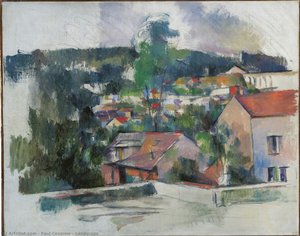
Paul Cézanne's "Untitled (2078)" isn’t merely a landscape; it’s an invitation to contemplate the very essence of perception. Painted in the twilight years of his career, around 1906, this work stands as a pivotal bridge between the fleeting impressions of Impressionism and the nascent explorations of Cubism – a testament to Cézanne's profound understanding of how we truly *see* the world. The canvas unfolds like a carefully constructed architectural study, dominated by a dense grove of trees that seem to both exist within and independently shape the surrounding space. It’s a scene rooted in the Provençal countryside near his beloved Aix-en-Provence, yet transcends simple representation, becoming instead an embodiment of Cézanne's relentless pursuit of formal structure and underlying geometry.
The style is undeniably Post-Impressionist, but one that deliberately rejects the ephemeral qualities favored by its predecessors. Cézanne wasn’t interested in capturing a momentary sunset or the shimmering effect of light; he sought to distill nature down to its fundamental components – cylinders, spheres, and cones – as he famously articulated. This is evident in the way the trees are rendered: not as soft, hazy forms, but as sharply defined planes stacked upon one another, creating an illusion of depth and solidity. The composition itself is vertically oriented, emphasizing the towering presence of the arboreal subjects and drawing the eye upwards into the atmospheric haze above.
Cézanne’s technique is immediately arresting – a deliberate departure from the smooth, blended brushstrokes of Impressionism. Instead, he employs a thick, broken application of paint known as *impasto*, building up layers of color with visible, tactile strokes. These aren't delicate whispers; they are assertive declarations, each mark contributing to the overall structure and form of the painting. Notice how the greens – ranging from deep forest hues to lighter, almost yellowish tones – are applied in distinct patches, creating a sense of texture and volume. The subtle use of ochre and yellow in the foreground grounds the scene, providing a warm counterpoint to the cool blues and greens of the sky and distant hills. The canvas itself feels alive with the artist’s hand; you can almost trace the individual movements as he built up the surface.
He utilized oil paints on canvas, meticulously layering them to achieve his desired effects. The deliberate roughness of the paint application adds a remarkable sense of immediacy and presence to the work – it feels as though Cézanne was working directly onto the canvas, capturing the essence of the scene in real-time. The scale of the *impasto* is particularly noteworthy; it’s not merely decorative but integral to the painting's structural integrity, reinforcing the idea that nature itself is a complex system of interlocking forms.
Beyond its formal qualities, “Untitled (2078)” resonates with a quiet sense of solitude and contemplation. The dense forest creates an enclosure, suggesting a retreat from the outside world – a space for introspection and connection with nature. The distant hills, rendered in muted tones, offer a subtle suggestion of human presence, perhaps a small dwelling or structure nestled within the landscape. This secondary element serves not as a focal point but rather as a reminder of our place within the larger natural order.
Cézanne’s work is deeply rooted in his personal experience and philosophical outlook. He sought to capture not just what he *saw*, but how he *felt* about what he saw – a profound appreciation for the beauty and enduring power of nature. The painting evokes a sense of timelessness, inviting viewers to lose themselves in its tranquil atmosphere and contemplate the mysteries of perception and existence. It’s a reminder that art can be both intellectually stimulating and emotionally resonant, offering a pathway to deeper understanding and connection.
Cézanne's influence on subsequent generations of artists is undeniable. His exploration of form, color, and perspective paved the way for the revolutionary developments of Cubism and other avant-garde movements. Artists like Picasso and Braque were profoundly inspired by his ability to deconstruct reality and represent it in a new and innovative way. “Untitled (2078)” stands as a prime example of this legacy – a work that continues to challenge our perceptions and inspire artists today. Reproductions, while capturing the essence of the original, can never fully replicate the tactile richness and emotional depth of Cézanne’s masterful brushwork.


1839 - 1906 , Francie


Buďte na tahu s nejnovějšími novinkami ze světa umění, exkluzivními nabídkami a inspirativními nápady na dekoraci.
Sdělte nám více o svém projektu a naši odborníci na umění vám připraví 3 personalizované návrhy uměleckých děl.
Nechť pro vás vybereme 3 možnosti – zdarma!


 Náhled
 Sdílet
 Sdílet
 Podrobnosti o díle

 Stáhnout
 Podobné položky
 Rentgenové snímky
 Slideshow

 Zobrazit více