


x

 Akryl na plátněObrazová tvorba na stěnuCubism
 1913Raný středověk
 96.0 x 64.0 cm
 Kröller-Müller Museum
Koupě vysoce rozlišeného, vylepšeného digitálního obrazu, který je mnohem kvalitnější než online náhled.
Každý soubor je pečlivě připraven našimi odborníky pomocí pokročilých nástrojů a expertní manuální retuše. Zajišťujeme, aby každý obraz disponoval výjimečnou ostrostí, přesnou barevnou věrností a jemnými detaily.
Finální soubor vám bude do 72 hodin zaslán e-mailem, optimalizovaný pro okamžité použití v profesionálním, redakčním i tiskovém prostředí. Nabízíme stejnou kvalitu, které důvěřují špičková designová studia, nakladatelství i galerie.
Stáhněte si soubor ve vysokém rozlišení pro osobní prohlížení, tisk a kreativní projekty. ( Koupit tisk Koupit ručně malovaný obraz)
Když si vyberete Most-Famous-Paintings.com, nezískáváte pouze obrázek – získáváte digitální umělecké dílo s profesionálně vylepšenými detaily, zpracované s precizností a podpořené zárukou za spokojenost. Zde je vše, co vaše objednávka automaticky obsahuje:

Váš digitální obraz ve vysokém rozlišení vám bude zaslán e-mailem do 72 hodin od objednávky – připraven k okamžitému použití.

Vaše umělecké dílo je profesionálně optimalizováno pomocí pokročilých nástrojů umělé inteligence a manuální úpravy, což zajišťuje maximální úroveň detailu, ostrosti a přesnosti barev.

Soubor jste omylem smazali nebo ztratili? Žádný problém – kdykoliv vám ho znovu zašleme zcela zdarma.

Užijte si své umělecké dílo okamžitě bez celních poplatků, daní nebo nákladů na dopravu – digitální stažení je vždy bez daňových povinností.

Pomocí profesionálních nástrojů a správy barev zajišťujeme, aby váš digitální obraz odrážel původní barvy co nejvěrněji.

Pokud nebudete s digitální fotografií spokojeni, provedeme její revizi nebo vám vrátíme 100% během 60 dnů – bez jakýchkoliv dotazů.

Nespokojeni? Získejte plnou částku zpět do 60 dní od přijetí vašeho digitálního souboru – bez jakýchkoliv dotazů.

Koupěte si 3 obrazy, ušetřete 10% - Koupěte si 5, ušetřete 15% - Koupěte si 10+, ušetřete 20%. Ideální pro kreativní projekty, galerie a agentury.
Piet Mondriaan's *Tableau no. 1*, painted in 1913, isn’t merely a composition of rectangles and lines; it’s a pivotal moment in the birth of abstract art, a visual distillation of the artist’s relentless pursuit of pure form and underlying reality. Emerging from his early training as a landscape painter – works like *The Red Mill* demonstrating a meticulous study of nature – Mondrian embarked on a radical transformation, driven by encounters with Cubism and a profound desire to transcend the limitations of representation. This piece embodies that journey, offering a glimpse into the nascent stages of his groundbreaking style.
The painting’s immediate impact is one of controlled dynamism. A dense network of grey, ochre, and muted brown rectangles and squares dominates the canvas, creating an intricate tapestry that seems to both contain and explode outwards. The lines are crisp and decisive, defining each shape with unwavering precision, yet there's a subtle suggestion of curvature within them – a delicate balance between rigidity and fluidity. It’s not a chaotic jumble, but rather a carefully orchestrated structure, reflecting Mondrian’s belief that the universe itself operates according to geometric principles. The underdrawing of a tree, barely discernible beneath the layered paint, hints at his previous life, a ghost of naturalism fading into abstraction.
*Tableau no. 1* firmly establishes Mondrian’s engagement with analytical cubism, a movement characterized by its deconstruction of objects into fragmented planes. Unlike the more sculptural approach of Picasso and Braque, Mondrian reduces his subject to its essential components – lines and shapes – stripping away all extraneous detail. The object isn't presented as it appears; instead, it’s dissected, broken down, and reassembled in a complex, multi-faceted structure. This process is evident in the overlapping planes and the blurring of edges, creating an illusion of depth without relying on traditional perspective. The painting feels like a carefully constructed puzzle, inviting the viewer to actively engage with its spatial relationships.
A significant departure from his earlier work is Mondrian’s restricted palette – primarily shades of grey, ochre, and brown. This deliberate limitation wasn't a rejection of color entirely, but rather a strategic choice to emphasize the underlying structure of the composition. Color becomes less about describing reality and more about defining relationships between forms. The warm tones of ochre provide a subtle grounding, while the cool greys create a sense of balance and restraint. This move towards a monochromatic aesthetic reflects Mondrian’s belief that color could be reduced to its purest essence – a means of conveying spiritual truth rather than merely imitating the visual world.
While *Tableau no. 1* is undeniably abstract, it's not devoid of symbolic meaning. The geometric forms themselves can be interpreted as representing fundamental building blocks – lines for verticality and horizontality, squares and rectangles for stability and order. Mondrian described his artistic ambition as moving “towards ‘the unchanging pure reality behind the changeable forms of nature’”. This painting represents a crucial step in that direction, suggesting an attempt to capture not the appearance of things, but their underlying essence – a timeless, universal truth expressed through simple geometric shapes. The piece invites contemplation on the relationship between form and content, structure and meaning, ultimately offering a glimpse into Mondrian's profound philosophical vision.

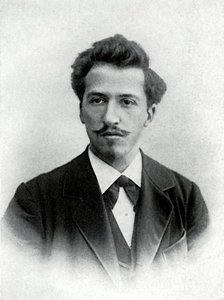
1872 - 1944 , Nizozemsko


Buďte na tahu s nejnovějšími novinkami ze světa umění, exkluzivními nabídkami a inspirativními nápady na dekoraci.
Sdělte nám více o svém projektu a naši odborníci na umění vám připraví 3 personalizované návrhy uměleckých děl.
Nechť pro vás vybereme 3 možnosti – zdarma!


 Náhled
 Sdílet
 Sdílet
 Podrobnosti o díle

 Stáhnout
 Podobné položky
 Rentgenové snímky
 Slideshow
 Zobrazit více


