x

Giclée nebo plátěný tisk muzeální kvality s rychlou výrobou a flexibilními možnostmi povrchové úpravy. ( Koupit ručně malovaný obraz Koupit obrázek)





























Vyberte si z našich přednastavených velikostí, které odpovídají původním proporcím díla.

Můžete zadat vlastní rozměry tak, aby výtvor odpovídal konkrétnímu rámu nebo prostoru. Pokud zvolená velikost nebude odpovídat poměru stran původního obrazu, dílo buď ořížeme, nebo obraz rozšíříme pomocí zrcadlového efektu či jednobarevného okraje. Před zahájením výroby vám bude zaslán digitální náhled k schválení.
Mějte prosím na paměti, že náhled na obrazovce neodráží skutečné oříznutí nebo rozšíření. Pouze digitální náhled přesně zobrazí finální kompozici.
Ačkoliv jsou k dispozici i vlastní rozměry, pro zachování původních proporcí doporučujeme vybrat si rozměr z předdefinovaného seznamu.
Celosvětové doručení () do 2 týdnů namísto standardních 4/5 týdnů. (22 srpen)


Ion-20
Rozměry reprodukce
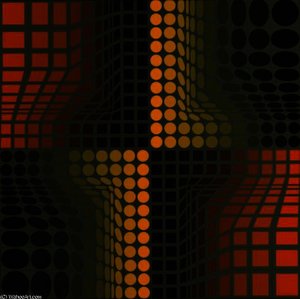
“Ion-20,” created by the visionary Victor Vasarely, is more than just a painting; it's an invitation to question your perception. This striking work, rendered in vibrant red, blue, and white hues, exemplifies the groundbreaking style of Op Art – Optical Art – that captivated the art world in the mid-20th century. Vasarely, born Károly Vaszary in 1906 in Pécs, Croatia, initially pursued a medical career before dedicating himself to exploring the fascinating relationship between mathematics and visual experience. His journey began with formal training at the Podolini-Volkmann Academy and the influential Műhely workshop under Sándor Bortnyik, where he absorbed the principles of functional design and geometric abstraction – concepts that would become the bedrock of his artistic practice.
At first glance, “Ion-20” appears as a chaotic jumble of squares. However, a closer examination reveals a meticulously constructed illusion. Vasarely’s genius lies in manipulating color and form to create an optical effect, deliberately disrupting our natural tendency to perceive objects as stable and unified. The overlapping shapes, varying sizes, and contrasting colors actively engage the viewer's eye, generating a sense of movement and depth that seems to defy the two-dimensional surface. This technique, central to Op Art, challenges the brain’s processing of visual information, creating a dynamic and mesmerizing experience. The painting’s title, “Ion-20,” subtly hints at the underlying mathematical principles – specifically, the concept of ionization – that informed Vasarely's artistic explorations.
Created using oil on canvas, "Ion-20" is a prime example of Op Art’s broader aims. Emerging in the 1960s, Op Art sought to translate scientific theories about perception and visual illusions into artistic expression. Artists like Vasarely were fascinated by the way our eyes and brains interpret patterns and shapes, leading them to create works that deliberately tricked the viewer's senses. This movement was heavily influenced by developments in psychology and neuroscience, reflecting a growing interest in understanding how we see the world. Vasarely’s work anticipated later explorations in motion graphics and digital art, demonstrating the enduring power of manipulating visual perception.
"Ion-20" doesn't convey explicit narrative content; its strength lies in its purely formal qualities. The geometric abstraction represents a detachment from representational imagery, focusing instead on the fundamental elements of form and color. The vibrant palette evokes feelings of energy, dynamism, and perhaps even a slight sense of disorientation – mirroring the perceptual challenges presented by the artwork. This piece is an invitation to contemplate the nature of perception itself, prompting viewers to consider how their brains actively construct reality.

1906 - 1997 , Chorvatsko

Explore the science of Op Art through the lens of masters like Victor Vasarely. Discover how geometric abstraction uses optical illusions to create movement and delve into the neuroaesthetics of perception with our expert art history guide.


Buďte na tahu s nejnovějšími novinkami ze světa umění, exkluzivními nabídkami a inspirativními nápady na dekoraci.
Sdělte nám více o svém projektu a naši odborníci na umění vám připraví 3 personalizované návrhy uměleckých děl.
Nechť pro vás vybereme 3 možnosti – zdarma!


 Náhled
 Sdílet
 Sdílet
 Podrobnosti o díle

 Stáhnout
 Podobné položky
 Rentgenové snímky
 Slideshow

 Zobrazit více







 Skleněná varianta je dostupná pouze u rozměrů menších než 110 cm