


x

Ručně malovaná olejná barva na plátně ve vašem zvoleném rozměru i s rámem, vyrobená našimi umělci na zakázku. ( Koupit tisk Koupit obrázek)
Vyberte si z našich přednastavených velikostí, které odpovídají původním proporcím díla.

Můžete zadat vlastní rozměry pro konkrétní rám nebo prostor. Pokud se vámi vybraná velikost neshoduje s proporcemi původního obrazu, dílo buď ořízneme, nebo jej doplníme ručně malovanými prvky. Před zahájením výroby vám bude zaslán digitální náhled ke schválení.
Upozorňujeme, že náhled na obrazovce neodpovídá skutečnému ořezu ani rozšíření. Pouze digitální náhled přesně zobrazí finální kompozici.
Ačkoliv je možné zvolit vlastní velikost, pro zachování původních proporcí doporučujeme vybrat rozměr z předdefinovaného seznamu.
Celosvětová doprava () za 3–4 týdny namísto standardních 5 týdnů. (22 srpen). Bez kompromisů v kvalitě.


Search
Rozměry reprodukce

In the grand tapestry of American history, certain names are woven into the fabric of military triumph, while others reside in the quiet, contemplative corners of fine art. William Frederick Halsey Jr. (1882–1959) is a figure who occupies both realms, though his identity is often bifurcated by the sheer magnitude of his naval command. Born on October 30, 1882, in Elizabeth, New Jersey, Halsey’s early years were shaped by a discipline that would later define his leadership during World War II. Before he was a Fleet Admiral commanding vast oceanic theaters, he was a young man navigating the academic and social landscapes of the University of Virginia and the United States Naval Academy. His time at the Academy was marked not only by rigorous study but by a spirited athleticism, earning his letter in football as a fullback and contributing to the "Lucky Bag" yearbook—a subtle hint at the creative inclinations that would persist beneath his military exterior.
While history books predominantly celebrate his strategic brilliance and his role in shaping United States Navy strategy, there exists a more delicate, artistic dimension to his life. Halsey’s engagement with the arts provides a fascinating counterpoint to the steel and salt of his naval career. His work, though often overshadowed by the thunder of naval battles, possesses a quiet dignity that speaks to the observant eye of a man accustomed to watching the horizon. This artistic pursuit was not merely a hobby but a way of interpreting the world through a lens of composition and light, finding beauty in the maritime environments that would later become his professional domain.
The art of William Frederick Halsey Jr. is characterized by its connection to the sea and the subtle nuances of American life. Unlike the grand, sweeping historical canvases of his era, much of his contribution lies in a more subdued, evocative style that captures the essence of maritime themes. His ability to translate the vastness of the ocean and the specificities of naval atmosphere into visual form allows us to glimpse the world through the eyes of a commander who lived among the waves. This connection is most notably seen in works such as Search, which resides within the prestigious Gibbes Museum of Art in Charleston, showcasing his ability to contribute meaningfully to the American artistic canon.
His collection of work serves as a bridge between the rigid structure of military life and the fluid expression of fine art. The presence of his pieces in significant institutions highlights a legacy that transcends the battlefield:
To study Halsey is to study the complexity of a man who could command fleets and contemplate canvas with equal intensity. His life serves as a profound testament to the multifaceted nature of human endeavor. While his naval achievements—reaching the highest ranks and influencing the course of global conflict—are well-documented and undeniably monumental, his artistic endeavors offer a more intimate portrait of his character. He was a man of action, yes, but also a man of observation.
The historical significance of Halsey lies not just in the victories won at sea, but in the quiet persistence of his creative spirit. He reminds us that even amidst the most harrowing responsibilities of leadership, there remains a space for the aesthetic and the contemplative. His legacy is a dual one: a pillar of American military strength and a subtle, enduring contributor to the visual history of his nation. Through his art, we are invited to look past the uniform and discover the soul of an artist hidden within the commander.

1882 - 1959 , United States of America

Prozkoumejte 25 ikonických děl Marka Rothka, mistra abstraktního expresionismu. Objevte příběhy za jeho barevnými plátny a emoce v umění. Reprodukce obrazů nejvyšší kvality na Most-Famous-Paintings.com.

Explore the rich symbolism of the red dress in art history! From ancient power displays to iconic portraits like Cézanne’s 'Madame Cezanne', discover the cultural and artistic significance behind this captivating color. Expert analysis & insights.
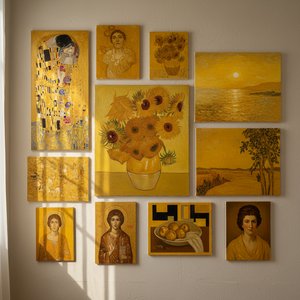
Objevte top 10 slavných obrazů v odstínech žluté охry od Van Gogha, Rembrandta a Moneta. Inspirujte se uměleckými reprodukcemi pro váš interiér! Historie, techniky a emoce nejikoničtějších děl na Most-Famous-Paintings.com.

Objevte top 10 slavných obrazů ovládaných chromovou žlutou! Prozkoumejte příběhy Van Gogha, Moneta a dalších mistrů impresionismu. Najděte inspiraci pro váš interiér s uměleckými reprodukcemi na Most-Famous-Paintings.com.

Explore the rich symbolism & emotional power of yellow in art history! From Van Gogh to Kandinsky, discover how artists used this vibrant hue. Expert analysis & high-quality reproductions at Most-Famous-Paintings.


Buďte na tahu s nejnovějšími novinkami ze světa umění, exkluzivními nabídkami a inspirativními nápady na dekoraci.
Sdělte nám více o svém projektu a naši odborníci na umění vám připraví 3 personalizované návrhy uměleckých děl.
Nechť pro vás vybereme 3 možnosti – zdarma!


 Náhled
 Sdílet
 Sdílet
 Podrobnosti o díle

 Stáhnout
 Podobné položky
 Rentgenové snímky
 Slideshow


 Zobrazit více




































 Skleněná varianta je dostupná pouze u rozměrů menších než 110 cm


