x

Giclée- oder Leinwanddruck in Museumsqualität mit schneller Produktion und flexiblen Veredelungsoptionen. ( Handgemalte Reproduktion bestellen Bild kaufen)





























Wählen Sie aus unseren vordefinierten Formaten, die den ursprünglichen Proportionen des Kunstwerks entsprechen.

Sie können Ihre eigenen Maße eingeben, um ein bestimmtes Format oder einen speziellen Platz einzupassen. Wenn das von Ihnen gewählte Format nicht den Proportionen des Originalbildes entspricht, werden wir das Kunstwerk entweder beschneiden oder das Bild mit einem gespiegelten oder einfarbigen Rand erweitern. Ein digitaler Entwurf wird Ihnen zur Genehmigung zugesandt, bevor die Produktion beginnt.
Bitte beachten Sie, dass die Vorschau auf dem Bildschirm nicht den tatsächlichen Zuschnitt oder die Erweiterung widerspiegelt. Nur der Entwurf zeigt die endgültige Komposition präzise an.
Obwohl Sondermaße verfügbar sind, empfehlen wir die Auswahl eines Maßes aus der vordefinierten Liste, um die ursprünglichen Proportionen zu bewahren.
Weltweiter Versand () innerhalb von 2 Wochen statt der üblichen 4/5 Wochen. (19 August)


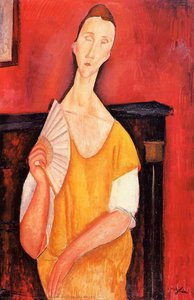
ohne Titel (8645)
Format der Reproduktion
Amedeo Modigliani's “Untitled (8645)” is not merely a portrait; it’s an embodiment of melancholy, a whispered echo of the artist’s own turbulent life and profound artistic vision. Painted in the early 1920s, during his tragically brief but intensely productive period in Paris, this work captures a woman with arresting features – most notably, her prominent nose, rendered with a deliberate, almost sculptural quality. The painting unfolds within a carefully constructed domestic setting: a simple wooden chair positioned centrally, suggesting both intimacy and observation. Beyond the primary subject, subtle figures hint at a life lived alongside others, adding layers of narrative to this intimate tableau. The muted yellow tones dominate the palette, creating an atmosphere of quiet contemplation, tinged with a poignant sense of isolation.

Understanding “Untitled (8645)” requires delving into the life of Amedeo Modigliani himself. Born in Livorno, Italy, in 1884, he was a figure deeply shaped by hardship and artistic yearning. His early childhood was marked by illness – recurring pleurisy and typhoid fever – which instilled within him a sensitivity to fragility and perhaps fueled his desire to capture the ephemeral beauty of human experience on canvas. His family’s financial struggles added another layer of complexity, forcing them to relocate frequently and shaping his worldview. Modigliani's artistic education was unconventional; he initially studied at the Accademia di Belle Arti in Florence, absorbing the influence of Renaissance masters like Leonardo da Vinci and Michelangelo, but quickly rejected academic conventions, forging a distinctly modern style characterized by elongated forms, expressive eyes, and a haunting emotional depth. His circle included fellow expatriate artists such as Pablo Picasso, Constantin Brâncuși, and Max Jacob, all navigating the vibrant, experimental art scene of Paris.
Modigliani’s technique is immediately recognizable. He employed a simplified, almost schematic approach to form, particularly evident in the elongated features of his subjects – the prominent nose being a defining characteristic. The use of yellow tones isn't merely decorative; it contributes significantly to the painting’s mood, evoking a sense of nostalgia and perhaps even melancholy. The brushstrokes are loose and expressive, conveying a feeling of immediacy and capturing the fleeting quality of emotion. He often worked on multiple canvases simultaneously, layering paint and experimenting with different textures. The background figures, rendered in a more subdued manner, serve to anchor the portrait within a domestic space, while also subtly suggesting a narrative beyond the immediate subject.
“Untitled (8645)” is often interpreted as a meditation on beauty, loneliness, and the passage of time. The woman’s prominent nose—a recurring motif in Modigliani's work—has been suggested to represent vanity or perhaps an awareness of mortality. The clock hanging above her head serves as a potent symbol of time’s relentless march, reinforcing the painting’s underlying sense of melancholy. The seated posture and averted gaze suggest introspection and a certain detachment from the world. It is believed that Modigliani was deeply influenced by his relationship with Jeanne Hébuterne, who became his muse and tragically died in 1920. The portrait may be seen as an attempt to capture her beauty and preserve her memory—a poignant expression of grief and longing. The painting’s enduring power lies in its ability to evoke a profound emotional response, inviting viewers to contemplate the complexities of human experience.


1884 - 1920 , Italien

Entdecken Sie die 25 ikonischsten Gemälde von Amedeo Modigliani! Erfahren Sie mehr über seine einzigartigen Porträts, den Expressionismus & seinen Stil. Hochwertige Kunstdrucke auf Most-Famous-Paintings.com – für Kunstliebhaber & stilvolles Wohnen.
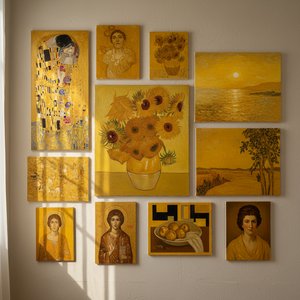
Entdecken Sie die Top 10 berühmter Gemälde, dominiert von warmen Gelbochtönen! Von Van Gogh bis Monet – erfahren Sie die Geschichten hinter den Meisterwerken und lassen Sie sich für Ihre Wohnraumgestaltung inspirieren. Hochwertige Kunstdrucke auf

Entdecken Sie die Top 10 berühmter Gemälde in faszinierenden Pilztönen! Von Van Gogh bis Monet – erleben Sie Kunstgeschichte und lassen Sie sich von warmen Farben inspirieren. Hochwertige Kunstdrucke auf

Entdecken Sie die Top 10 Gemälde in faszinierenden Sandtönen! Von Van Gogh bis Monet – erleben Sie Meisterwerke des Impressionismus & mehr. Finden Sie hochwertige Reproduktionen für Ihr Zuhause auf
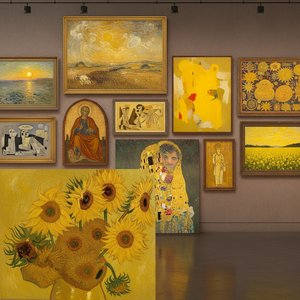
Entdecken Sie die 10 berühmtesten Gemälde, dominiert von der leuchtenden Farbe Chromgelb! Von Van Gogh bis Monet – erfahren Sie Geschichten hinter Meisterwerken & finden Sie Ihre perfekte Kunst-Reproduktion auf Most-Famous-Paintings.com.


Bleiben Sie über die neuesten Kunstnachrichten, exklusive Angebote und Dekorationsideen auf dem Laufenden.
Erzählen Sie uns von Ihrem Projekt, und unsere Kunstexperten erstellen für Sie drei personalisierte Kunstvorschläge.
Wir kuratieren 3 Optionen exklusiv für Sie – kostenlos!


 Vorschau anzeigen
 Versenden
 Teilen
 Details anzeigen

 Herunterladen
 Ähnliche Objekte
 Röntgenaufnahme
 Diashow
 Weiterlesen







 Die Glasoption ist nur für Größen unter 110 cm verfügbar.